Showing posts with label 1973. Show all posts

Friday, July 27, 2018

Bruce Springsteen - Greetings From Asbury Park, N.J. (1973)

“Greetings From Asbury Park, N.J.” by Bruce Springsteen (1973)

Release Date: January 5, 1973
Produced by Mike Appel and Jim Cretecos
Genre: Rock, Heartland Rock, Folk Rock, Classic Rock
Label: Columbia

Chart Positions: #35 (Sweden), #41 (UK), #60 (US), #71 (Australia), #181 (Japan)
Certifications: 2xPlatinum (US), Gold (Australia), Silver (UK)
Awards: N/A

Singles and Chart Positions: 
“Blinded By The Light” (No chart data)
“Spirit In The Night” (no chart data)
 Singles Certifications: N/A
Other Charting Tracks: N/A

Best Tracks: All Tracks – Solid album from beginning to end


Trivia: This is where it all started for Bruce Springsteen. It was a humble start as the album only made it to #60 in the US and #41 in the UK. But the critics loved him as they called him a “daring new artists” with comparisons to Bob Dylan. It would take another 2 ½ years, with the release of “Born To Run,” before the public realized the genius of Bruce Springsteen.

Springsteen and his first manager Mike Appel recorded the album at the low-priced, out-of-the-way 914 Sound Studios to save as much as possible of the Columbia Records advance and cut most of the songs in a single week.

There was a dispute not long after the record was recorded—Appel and John Hammond preferred the solo tracks, while Springsteen preferred the band songs. As such, a compromise was reached—the album was to have five songs with the band ("For You", "Growin' Up", "Does This Bus Stop at 82nd Street?" "It's Hard to be a Saint in the City", and "Lost in the Flood") and five solo songs ("Mary Queen of Arkansas", "The Angel", "Jazz Musician", "Arabian Nights", and "Visitation at Fort Horn").

However, when Columbia Records president Clive Davis heard the album, he felt that it lacked a hit single. As such, Springsteen wrote and recorded "Blinded by the Light" and "Spirit in the Night". Because pianist David Sancious and bassist Garry Tallent were unavailable to record these songs, a three-man band was used—Vini Lopez on drums, Springsteen on guitar, bass, and piano, and the previously missing Clarence Clemons on saxophone. These two songs bumped "Jazz Musician", "Arabian Nights", and "Visitation at Fort Horn", leaving a total of seven band songs and two solo songs. The album was originally slated to be released in the fall of 1972, but it was moved back to early 1973 to avoid the pre-Christmas crush.

Both "Blinded by the Light" and "Spirit in the Night" were released as singles by Columbia, but neither reached the US charts. Manfred Mann's Earth Band released a version of "Blinded by the Light" on their album The Roaring Silence, which reached #1 on both Billboard's Hot 100 and the Canadian RPM chart. This recording of "Blinded by the Light" is Springsteen's only number one single as a songwriter on the Hot 100. His best showing on the Hot 100 as a performer was in 1984, with "Dancing in the Dark", which peaked at number two for 4 weeks.[4] Greetings from Asbury Park, N.J. first charted in the United Kingdom on June 15, 1985, in the wake of Springsteen's Born in the USA tour arriving in Britain; it remained in the top 100 for ten weeks.

According to Springsteen, “Blinded By The Light” came about from going through a rhyming dictionary in search of appropriate words. The first line of the song, "Madman drummers, bummers, and Indians in the summers with a teenage diplomat" is autobiographical—"Madman drummers" is a reference to drummer Vini Lopez, known as "Mad Man" (later changed to "Mad Dog"); "Indians in the summer" refers to the name of Springsteen's old Little League team; "teenage diplomat" refers to himself. The remainder of the song tells of many unrelated events, with the refrain of "Blinded by the light, cut loose like a deuce, another runner in the night".

"Blinded by the Light" was the first song on, and first single from Greetings from Asbury Park, N.J. Springsteen's version was commercially unsuccessful and did not appear on the music charts.

Manfred Mann's Earth Band's recording of the song changes the lyrics. The most prominent change is in the chorus, where Springsteen's "cut loose like a deuce" is replaced with "revved up like a deuce." This is commonly misheard as "wrapped up like a douche" (the V sound in "revved" is almost unpronounced, and the S sound in "deuce" comes across as "SH" due to a significant lisp). Springsteen himself has joked about the controversy, claiming that it was not until Manfred Mann rewrote the song to be about a feminine hygiene product that it became popular.

Blinded by the Light (1973)

Manfred Mann’s Earth Band also released their version of “Spirit In The Night” which made it to #40 on the US Billboard singles chart. The song was originally featured on their 1975 album “Nightingales and Bombers” and was released as a single to moderate success. After the huge success of “Blinded By The Light”, they re-recorded the and rereleased as a single in 1977.

Although "Spirit in the Night" was one of the last songs written for the album, it did grow out of an earlier version of the song that Springsteen had played live prior to receiving his recording contract. The lyrics themselves describe a group of teenagers — Wild Billy, Hazy Davy, Crazy Janey, Killer Joe, G-Man and Mission Man, who is the person in the song telling the story — going to a spot called "Greasy Lake" near "Route 88" for a night of freedom, sex, and drinking. But their escape to the freedom of Greasy Lake is short-lived, the emphasis is on the friends' togetherness. The lyrics of the song echo the Crazy Jane poems of Irish poet William Butler Yeats.
The follow-up album to “Greetings from Asbury Park, N.J.,” “The Wild, the Innocent & the E Street Shuffle,” features a song entitled "Wild Billy's Circus Story".

In an attempt to capitalize on the success of “Blinded By The Light” and to a lesser degree “Spirit In The Night,” Manfred Mann’s Earth Band” recorded and released a third song, “For You,” from “Greetings For Asbury N.J.” They only made it to #106 in 1981 with the song.

The lyrics of “For You” are about a woman who has attempted suicide. She does not need the singer's "urgency" even though her life is "one long emergency" as Springsteen sings in the chorus (along with "and your cloud line urges me, and my electric surges free"). The singer is committed to doing anything to save her and admires her ability to hang on. Once again, the lyrics are evocative of images and not details.

The following review was written by Lester Bangs for the July 5, 1973 issue of Rolling Stone Magazine:
Remember P.F. Sloan? Sure you do. It was back when every folk rocker worth his harmonica holder was flushed with Dylan fever and seeing how many syllables he could cram into every involuted couplet. There was Tandyn Almer, of "Along Comes Mary" fame ("The psychodramas and the traumas hung on the scars of the stars in the bars and cars" -- something like that), and David Blue had his own Highway 61 too, but absolutely none of 'em could beat 'ol P.F. He started out writing surf songs, but shook the world by the throat with his masterpieces "Eve of Destruction" and "Sins of a Family," and all his best material was just brimming with hate.

Boy howdy, the first thing the world needs is a P.F. Sloan for 1973, and you can start revving up yer adrenaline, kids, because he's here in the person of Bruce Springsteen. Old Bruce makes a point of letting us know that he's from one of the scuzziest, most useless and plain uninteresting sections of Jersey. He's been influenced a lot by the Band, his arrangements tend to take on a Van Morrison tinge every now and then, and he sort of catarrh-mumbles his ditties in a disgruntled mushmouth sorta like Robbie Robertson on Quaaludes with Dylan barfing down his neck. It's a tuff combination, but it's only the beginning.

Because what makes Bruce totally unique and cosmically surfeiting is his words. Hot damn, what a passel o' verbiage! He's got more of them crammed into this album than any other record released this year, but it's all right because they all fit snug, it ain't like Harry Chapin tearing right-angle malapropisms out of his larynx. What's more, each and every one of 'em has at least one other one here that it rhymes with. Some of 'em can mean something socially or otherwise, but there's plenty of 'em that don't even pretend to, reveling in the joy of utter crass showoff talent run amuck and totally out of control:

"Madman drummers bummers and Indians in the summer with a teenage diplomat/In the dumps with the mumps as the adolescent pumps his way into his hat" begins the very first song, and after that things just keep getting more breathtakingly complicated. You might think it's some kinda throwback, but it's really bracing as hell because it's obvious that B.S. don't give a shit. He singshoots his random rivets at you and you can catch as many as you want or let 'em all clatter right off the wall which is maybe's where they belong anyway. Bruce Springsteen is a bold new talent with more than a mouthful to say, and one look at the pic on the back will tell you he's got the glam to go places in this Gollywoodlawn world to boot. Watch for him; he's not the new John Prine.

This review showed up in Billboard Magazine – February 1973
“The comparisons with Dylan as far as lyrics are concerned will be inevitable, but this new artist proves himself highly original and able to run the gamut from humorous to rather sad songs. Best cuts include "Blinded By The Light," "Growin' Up," "Lost In The Flood," "For You" and "Spirit In The Night." LP should gain strong play from FM stations.”


Bruce Springsteen (1973)


BRUCE SPRINGSTEEN

Monday, June 25, 2018

Antonio Carlos Jobim - Jobim (1973)

“Jobim” by Antonio Carlos Jobim (1973)
Release Date: January 1, 1973
Produced by Claus Ogerman
Genre: Bossa Nova, Jazz, Latin Jazz
Label: MCA

Chart Positions: N/A
Certifications: N/A
Awards: N/A

Singles and Chart Positions: N/A
 Singles Certifications: N/A
Other Charting Tracks: N/A
Best Tracks: “Aguas de Marco,” “Mantiqueira Range,” “Nuvens Douradas”


“Jobim” is heavily orchestral and more on the easy listening side and less Bossa Nova, but not to fear the album certainly has it’s share of the Bossa Nova sound for which Antonio Carlos Jobim is famous.

“Jobim” was an experiment for Jobim putting less of an emphasis on the bass and rhythmic style of bossa nova and more priority on a bigger symphonic sound. The record lets listeners in on another side of Jobim, a classical interpretation of moody instrumental tone poems for films based on the works of Debussy and Villa Lobos. Jobim continued with his symphonic orchestrations throughout the 70s.

It is the symphonic orchestrations which brings this album to life. Jobim hired Claus Ogerman to produce the album. Ogerman had worked previously with Jobim (since 1963) on a total of five albums before this one and two more afterward. Ogerman also arranged and conducted the orchestral arrangements. Ogerman a famed German composer, conductor and arranger also worked with Frank Sinatra, Billie Holiday and in his later years with Diana Krall. Though he worked mainly with in the jazz genre arranging musicians such as Bill Evans, Wes Montgomery and Cal Tjader, Ogerman did foray into pop music and composed arrangements for several pop hits including Solomon Burke's "Cry To Me" and Leslie Gore's "It's My Party," "Judy's Turn To Cry" and "She's A Fool."

Aguas de Marco (1973)

“Aguas de Marco” has grown to become a classic for Jobim. He wrote the lyrics for the song originally in Portuguese and later in English. The inspiration for the song came from Rio De Janeiro's rainiest month. March is typically marked by sudden storms with heavy rains and strong winds.


Antonio Carlos Jobim (1973)


ANTONIO CARLOS JOBIM

Thursday, August 24, 2017

Sammy Johns by Sammy Johns (1973)

“Sammy Johns” by Sammy Johns (1973)

Release Date: 1973
Produced by Jay Senter, Jefferson Lee, Larry Knechtel
Genre: Country Rock, Folk, Pop
Label: General Recording

Chart Positions: #148 (US)
Certifications: N/A

Singles: “Rag Doll,” #52 (US), #34 (US Adult Contemporary), “Chevy Van” #5 (US), #2 (New Zealand), #8 (Canada), #80 (US Country), “America” (No Chart Data), “Early Morning Love” #68 (US), #79 (Canada), #19 (US Adult Contemporary), #79 (US Country), “Friends Of Mine” (No Chart Data)
Singles Certifications: “Chevy Van” (US Gold)

Other Charting Tracks: N/A
Best Tracks: “Early Morning Love,” “Chevy Van,” "Rag Doll," “Holy Mother, Aging Father”


Trivia: Sammy Johns was signed to his solo recording contract in 1973 to General Recording Corporation Records (also known as GRC). His first official recording was “Early Morning Love,” which was later released as a single in 1974, it was the fourth single release from his debut album “Sammy Johns.” Johns’ first single release “Rag Doll,” a country influenced ballad came and went without notice. “Chevy Van” was the second single which also came and went without notice. Two more singles were released (“America” and “Early Morning Love”) again no chart action. Finally 18 months after the album was released GRC recognized the hit potential of “Chevy Van” and re-released it as a single in 1975 and promoted the song. This time around it became a huge hit reaching #5 in the US and the top ten in New Zealand and Canada.  Due to the success of “Chevy Van” GRC re-released “Early Morning Love” and “Rag Doll” as singles and like "Chevy Van," both made it onto the charts. Much of the album has a country music character about it. Songs such as “We Will Shine” are reminiscent of John Denver while “Friends of Mine” begins with a twangin’ country music guitar.

"Chevy Van" (1975)

"Chevy Van" was written by Sammy as were most of the songs from his album. The song epitomizes an era when hitchhiking was popular and picking up strangers for a one night stand was a lifestyle for many. The million selling "Chevy Van" struck a chord so much that van sales dramatically increased in the next year, making it one of the most popular vehicles of the time period. "Chevy Van" inspired the 1977 low budget teen film "The Van" in which Danny DeVitto was one of the stars and prominently featured Johns' epic tune.

Sammy's second biggest single "Rag Doll" was written by popular songwriter Steve Eaton. The melancholy song with its open feel and memorable harmony received a fair amount of airplay on some radio stations across the US but failed to reach the heights of "Chevy Van." Despite the song is one of Johns' best recordings and is well remembered by his fans. Songwriter Steve Eaton's songs have been recorded by many top rate artists such as Anne Murray's "Out On The Road," Lee Greenwood's "I'll Still Be Loving You" and probably his best known song "All You Get From Love Is A Love Song" by the Carpenters. "Rag Doll" was first recorded by Sammy Johns but has since been recorded by Art Garfunkel and Glen Campbell.


SAMMY JOHNS


Monday, June 12, 2017

Kool & The Gang - Wild And Peaceful (1973)

“Wild and Peaceful” by Kool & The Gang (1973)

Release Date: September 1973
Produced by Kool & The Gang
Genre: Funk, R&B
Label: De-Lite
Chart Positions: #33 (US), #53 (Canada)
Certifications: Gold (US)

Singles: “Funky Stuff” #6 (Brazil), #17 (UK), #29 (US), #58 (Japan), “Jungle Boogie” #3 (Brazil), #4 (US), #29 (Canada), #45 (Germany), “Hollywood Swinging” #6 (US), #15 (Canada), #25 (Japan)
Singles Certifications: "Jungle Boogie" (Gold US), "Hollywood Swinging" (Gold US)

Kool and the Gang hit the scene in 1969 producing a sound that was heavily jazz and funk influenced. By 1973 their sound had changed radically dropping the jazz vibes and trading it in for an R&B funk sound more true to the genre. Wild and Peaceful is the fourth studio album released by the funk band Kool & the Gang, and is their commercial breakthrough album. The album was released in 1973 and was hugely successful on the Billboard R&B chart reaching #6 and charting for 36 weeks. It also reached #33 on the Pop charts, making it the band's first entry into that chart's Top 40.


By 1973, funk music was in high swing. The Godfather of Soul, James Brown, the originator and founder of funk, continued to keep funk going with his albums and singles such as “I Got Ants in My Pants,” “Stoned to the Bone” and his smash tune with Fred Wesley & The JBs, “Doing It to Death.”  Other groups and artists kept the funk going strong, including Sly & the Family Stone, Parliament/Funkdadelic, The Isley Brothers, Earth, Wind & Fire, the Ohio Players, Cymande and Mandrill, among others. But there was one group that had been on the music scene for a while but was about to break open into the mainstream with their new album. The group is Kool & the Gang.

“Wild & Peaceful,” was released in September 1973 and became an instant hit and was popular at both house parties and underground clubs (which would soon be more commonly known as discos). There were songs you could dance your butt off to and songs you could relax to. The album has what the group called “The New York Sound.”

The first single release “Funky Stuff,” was Kool and the Gang’s first Top 40 hit reaching #29 and their first to make it into the US R&B charts top ten making it to #8. “Funky Stuff” which opens with the shrill sound of a party whistle and goes into a mid-tempo groove highlighted by horns, guitars and the celebratory sounds of party whistles and the catchy chorus of “can’t get enough of that funky stuff” and the “whoa whoa whoa” hook. (Queen of Soul Aretha Franklin even stated “can’t get enough of that funky stuff” in her 1976 scorcher “Something He Can Feel.”)

The horn led - jazz tinged, “Jungle Boogie” is noted for the Tarzan yell heard at the song's end and the grunting, panting, and the scatting heard throughout and was the second single release and is the single that set Kool and the Gang on fire. This song went all the way to #4 on the US singles chart their first of many twelve 10 hits. The song also made it to #2 on the US R&B chart and remains one of the five biggest hits of their entire career. The song sold more than a million copies and was certified Gold by the RIAA on February 2, 1974.

"Jungle Boogie" is the best remembered of the early Kool & The Gang hits up there with the best work by Parliament and Barry White. The song not only received heavy radio airplay but was hugely popular in dance clubs and house parties.

The main spoken vocals on "Jungle Boogie" were performed by then-roadie, Donald Boyce, who became better known as "The Boogie Man." Boyce's vocals on the hit were so popular he was invited to sing back-up and perform "vocal effects" on a number of Kool & The Gang singles, including "Spirit of the Boogie," "Open Sesame," and "Slick Superchick." Boyce performed with the band from 1973 to 1977.

Finally the third single from the album “Hollywood Swinging” was another huge Top ten hit reaching US #6 and was their first #1 hit on the R&B charts. The song was their second Gold certified single. “Hollywood Swinging” kept the hard funk groove going featuring lead vocals by band’s keyboardist, Ricky West, in which he sang about being inspired of becoming a part of a band after seeing a Kool & the Gang concert. The cut’s celebratory horns and its “hey hey hey, whatcha got to say” hook, along with its steady groove, made for some serious partying. The song is anchored by Robert "Kool" Bell's circus-funk bass line when blended with the rest of the outstanding musicianship turns this song into a memorable song for the generations.

Hollywood Swinging (1973)

Rick West was a driving force in creating the track, which tells the story of seeing Kool & the Gang live onstage and wanting to become "a bad piano-playing man." Ronald Bell explained: "Rick wrote the verses, and it's a true story. We did play in Hollywood [to record Live at P.J.s] and he was taken by it. But while it was a true story, it was really for everybody. As kids, Kool and I used to go see John Coltrane, Hank Mobley, Art Blakey, all the jazz greats. We looked up to them and wanted to 'get into a band'."

“Hollywood Swinging” packs appropriate punch and became a favorite of the brit-funkers. Jungle Boogie demonstrated the exceptionally tight groove of bassist 'Kool'’ and drummer 'Funky' George Brown. Quentin Tarantino made it the main title theme of Pulp Fiction in 1995 and the world suddenly realized that Kool and The Gang had a life before their Celebration hit-making years.

Album highlight “More Funky Stuff” takes off where “Funky Stuff” left off at with horns, guitars and the “la di da di da” chant. “More Funky Stuff” was the b-side of the single “Funky Stuff” and received moderate airplay in clubs and radio.

The title track, "Wild and Peaceful" changes the pace of the album, this sit back and chill number showcases the band's deep jazz roots and their ability to produce a top notch month groove. The song received a fare amount of airplay on jazz stations and still does to this day.

Kool & The Gang (1973)


KOOL & THE GANG

Tuesday, May 9, 2017

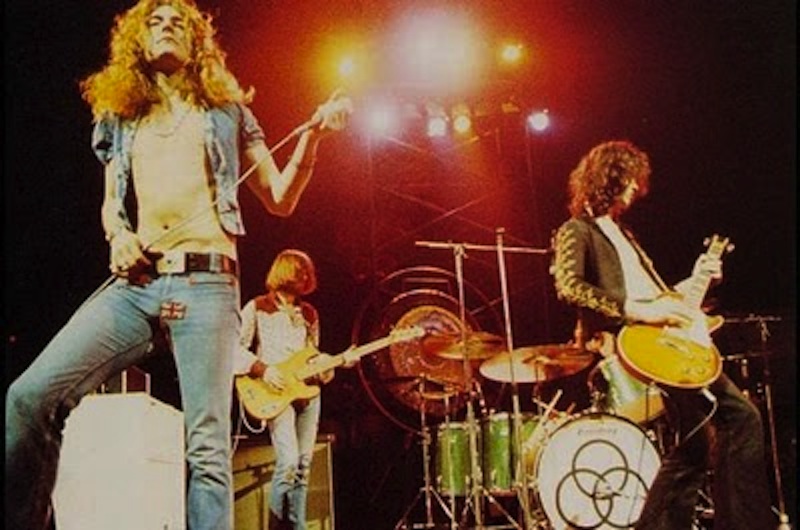
Led Zeppelin - Houses Of The Holy

“Houses Of The Holy” by Led Zeppelin (1973)

Release Date: March 28, 1973
Produced by Jimmy Page
Genre: Hard Rock, Heavy Metal, Blues Rock
Label: Atlantic

Chart Positions: #1 (US, UK, Canada, Australia), #3 (Austria, Netherlands, Japan), #4 (Norway), #8 (Germany), #9 (New Zealand, Spain), #11 (Finland), #12 (Portugal), #15 (Sweden), #17 (Italy), #20 (Switzerland, Belgium), #24 (Denmark), #29 (France)
Certifications: 11xPlatinum (US), Platinum (UK, France), Gold (Germany, Argentina, Spain)

Singles: “Over The Hills and Far Away” #51 (US), #63 (Canada), “D’yer Mak’er” #20 (US), #2 (France), #7 (Canada, Poland)

One of the most iconic record covers of the 1970s is Led Zeppelin’s fifth album, Houses of the Holy, released on 28 March 1973 by Atlantic Records. It is their first album composed of entirely original material and it represents a turning point in musical direction for the band, who had begun to record songs with more layering and production techniques.


This was Led Zeppelin's final studio release on Atlantic Records before forming their own label, Swan Song Records, in 1974. It was also the only Led Zeppelin album that contained complete printed lyrics for each song. Although intended for release in January 1973, delays in producing the album cover meant that it was not released until March, when the band was on its 1973 European tour. They had trouble designing and printing the unique album cover by the artistic company Hipgnosis, with the band completely rejecting the initial artwork and the first prints of the final artwork accidentally coming out with a strong purple tint. When they finally got the artwork correct, the album was banned from sale in many locations because of the naked children on the cover who pay homage to the Arthur C. Clarke novel Childhood’s End. The album was nominated for a Grammy Award in the category of best album package.

The Houses of the Holy album cover was not a small army of naked children with wigs on, it was only two kids, a brother and sister, who were photographed over the course of ten days at dawn and at dusk. One of them went on to become a world famous TV presenter, Stefan Gates, of the BBC’s popular Cooking in the Danger Zone show.

Gates, who was five at the time said in an interview years later, “For the Zeppelin cover we went to Ireland during the Troubles. I remember arriving at the airport and seeing all these people with guns. We stayed in this little guest house near the Giant’s Causeway and to capture the so-called magic light of dawn and dusk we’d shoot first thing in the morning and at night. I’ve heard people saying they put wigs on several children. But there was only me and my sister and that’s our real hair. I used to love being naked when I was that age so I didn’t mind. I’d whip off my clothes at the drop of a hat and run around having a great time, so I was in my element. My sister was older so she was probably a bit more self-conscious.”

Produced by guitarist Jimmy Page (like all Zeppelin albums), the album featured sophisticated layered guitars, the addition of obscure instrumentation, and other rich production techniques. The album featured styles and sub-genres not heard on previous Led Zeppelin albums, such as funk, reggae, and doo-wop. The album is an indirect tribute to their fan base, who were showing up in record numbers to their live shows.  It perfectly straddles the bands early, more blues-based period from their later work, which consisted of more richly produced studio albums that tilted more towards pop and modern rock. Bass player and keyboardist John Paul Jones temporarily left the band for a few days during this album’s recording but soon returned and stayed with the band until the end.

There were also several recorded songs not included on Houses of the Holy but released on later albums such as Physical Graffiti and Coda. “Physical Graffiti” contained the songs “The Rover,” “Houses of the Holy” and “Black Country Woman.” While “Coda” contained “Walter’s Walk.”

In 1976 Led Zeppelin released their first live album named “The Song Remains The Same” the opening track of “Houses of the Holy.” Prior to the album's sessions the song had been rehearsed with the working title "Worcester and Plumpton Races," which was a reference to Page and Plant's homes. Successive titles were "The Overture" and "The Campaign." Finally as Plant was fine tuning the lyrics the title "The Song Remains The Same" was born.

"The Rain Song" was written in response to a conversation Jimmy Page had with George Harrison. Harrison asked Page why Led Zeppelin had never recorded any ballads.

The first single release “Over The Hills and Far Away” was a moderate hit in North America reaching #51 in the US and #63 in Canada. This evolved from the Yardbirds song "White Summer," an acoustic solo by Jimmy Page. Many of the same riffs and chords are in it. After The Yardbirds broke up, Led Zeppelin continued to play "White Summer" live. Jimmy Page and Robert Plant originally constructed the song in 1970 at Bron-Yr-Aur, a small cottage in Wales where they stayed after completing a gruelling North American concert tour. The song was first called "Many, Many Times", as shown on a picture of the original master on the Led Zeppelin website.

"D'yer Mak'er" (1973)

The second single “D’yer Mak’er” did better on the charts reaching US #20, #2 in France and #7 in both Poland and Canada. The title is a play on the word "Jamaica" when spoken in a British accent. The name of the song is derived from an old joke, where two friends have the following exchange: "My wife's gone to the West Indies." "Jamaica?" (which has a similar pronunciation as "D'you make her?") "No, she wanted to go". This song was meant to imitate reggae and its "dub" derivative emerging from Jamaica in the early 1970s. Its genesis is traced to Led Zeppelin's rehearsals at Stargroves in 1972, when drummer John Bonham started with a beat similar to 1950s doo-wop, and then twisted it into a slight off beat tempo, upon which a reggae influence emerged. The distinctive drum sound was created by placing three microphones a good distance away from Bonham's drums. Led Zeppelin had a curious history of single releases in America. While the band was active, they released just 10 singles, which typically did just well enough to get a mention from Casey Kasem on American Top 40. "D'yer Mak'er" was one of those singles (backed with "The Crunge"), peaking at #20. Zeppelin was never a "singles band," so these releases were intended to drive sales of the albums, which they did. They often sold well enough to make the charts, however, leaving poor Mr. Kasem to wonder how to pronounce the title to this one.

The third single “The Ocean” was released only in Germany and Austria and charted only in Germany at #8. "The Ocean" refers to the sea of fans seen from the stage at Led Zeppelin concerts, to whom this song was dedicated. The voice on the intro is drummer John Bonham. When he says, "We've done four already, but now we're steady and then they went, 1... 2... 3... 4...," he is referring to the takes. They had tried to record it 4 times prior but couldn't get it right, so as a pep talk he said his famous line. In the last line, the "Girl who won my heart" is Robert Plant's daughter Carmen, who was 3 years old at the time.

The album is filled with highlight after highlight, “The Crunge” is a funk tribute to Wilson Pickett, Otis Redding and James Brown and evolved out of a jam session built around Bonham’s off-beat drums and a bass riff by Jones. This song was used as the b-side to the single “D’yer Mak’er.” “Dancing Days” used as the b-side to “Over The Hills and Far Away” was the closest that Led Zeppelin ever came to writing a pop song. It was inspired by an Indian tune that Jimmy Page and Robert Plant heard while traveling in Bombay.

"Houses of the Holy (1973) Inside Gatefold Artwork

Led Zeppelin (1973)


LED ZEPPELIN

Thursday, May 4, 2017

Gladys Knight and The Pips - Neither One Of Us (1973)

“Neither One Of Us” by Gladys Knight and the Pips (1973)

Release Date: March 1973
Produced by Joe Porter, Johnny Bristol, Clay McMurray, Nick Zesses, Dino Fekaris and Hal Davis
Genre: R&B, Soul, Pop
Label: Soul Records (Motown)
Chart Positions: #9 (US)
Certifications: N/A

Singles: “Neither One Of Us” #2 (US), #5 (Brazil), #9 (France), #11 (Canada), #31 (UK), “Daddy Could Swear, I Declare” #19 (US)

“Neither One Of Us” is Gladys Knight and the Pips ninth studio album and their first to make it into the US Top Ten. The Soul Records label released the album shortly after the group left the label for Buddah Records while the title track was rising up the charts.


Two singles were released from the album including the title track “Neither One Of Us,” the song rose to #2 in the US and was a hit in various parts of the world including France, Brazil, Canada and the UK. The song also topped the US R&B charts for four weeks, their fourth of ten to top the chart. It was preceded by the O’Jays’ “Love Train” and followed by The Temptations’ “Masterpiece.” “Neither One Of Us” was written by Jim Weatherly who also wrote “Midnight Train To Georgia” and “Best Thing That Ever Happened To Me” both hits for Gladys and the Pips. In March 1974, at the Grammy Awards ceremony, Gladys Knight & The Pips won their first Grammy Award for Best Pop Vocal Performance by a Duo or Group for "Neither One of Us (Wants To Say Goodbye)." That same night, they won a second Grammy for Best R&B Vocal Performance by a Duo or Group for "Midnight Train to Georgia".

Neither One Of Us

The second single “Daddy Could Swear, I Declare” was a minor hit reaching US #19 and #2 on the US R&B chart.

The album contains a dusky and smoky slower soul ballad rendition of Stevie Wonder’s “For Once In My Life.”

Famed songwriter, arranger, musician Michael O'Martian composed the musical arrangement for the tracks "Who Is She" and "Neither One Of Us."

Gladys Knight and The Pips (1973)


GLADYS KNIGHT AND THE PIPS

Tuesday, April 4, 2017

Judy Collins - True Stories and Other Dreams (1973)

“True Stories and Other Dreams” by Judy Collins (1973)

Release Date: January 1973
Produced by Mark Abramson and Judy Collins
Chart Positions: #27 (US)
Certifications: N/A
Singles: “Cook With Honey” (US #32), “Secret Gardens” (US #122)

“True Stories and Other Dreams” was Judy Collins’ ninth studio album. For the first half-dozen albums of her career, Judy Collins sang only traditional folk tunes and material by other songwriters. Even when she began to write songs in the late 1960s, her compositions were outnumbered by tunes from other sources on the records she issued during the next five years or so. The 1973 LP True Stories and Other Dreams, however, marked the first album on which her own songs comprised the majority of the material. As usual, though, the record also featured astutely selected tunes from a variety of other contemporary singer-songwriters, some of who had also been recording since the early days of the folk revival, and some of who were newcomers to the music scene.


True Stories and Other Dreams also marked the first occasion on which she received a producer's credit, shared with Mark Abramson, who'd produced her recordings since the mid-1960s. As Judy elaborates, however, throughout their association, "we produced together, truly. I would never have denied him his production credit. But it was also my choices, my thinking, my determination, and then Mark backing me up, helping me get what I wanted to get done. And we knew all these wonderful people, of course." On True Stories and Other Dreams, that support cast included her longtime friend Eric Weissberg on acoustic guitar, banjo, and upright bass; Bill Keith, whose pedal steel lent an occasional country flavor; and even Latin jazzman Ray Barretto on congos and bongos.

The songs on the album showcased Judy’s varied musical interests. The single “Cook With Honey” was alight flavored pop song that reached #32 on the US singles chart. The protest song, “The Hostage” brought us back to Judy’s folk roots. “Secret Gardens,” the second single from the album is a beautiful orchestral ballad about her family. The song bubbled under the US singles chart making it to #122. Opening with Judy’s tender keyboard playing, the wistful “Holly Ann” is about Judy’s sister. Of course there are the fantastic story songs like “Fisherman Song,” where Judy excels. Judy recalls, "I took a little time off in 1972 and went out to Long Island just to do some songwriting," remembers Judy today. "At that point, I wrote 'Fishermen Song.' I was on the beach there and these fishermen sing; they bring in the fish, and they would hand me a fresh bluefish or something for me to cook. So 'Fishermen Song' is really about that experience of watching them fish."

"Song For Martin"

“Song For Martin” is a poignant album highlight about Martin Hoffman, a school teacher, who composed the music for a poem written by Woody Guthrie titled “Deportee.” Hoffman and Judy became friends in the 1960s. Collins remembers, "He was the first person I ever heard sing 'This Land Is Your Land,' up at Lookout Mountain in Colorado," says Judy. "He was a wonderful man, just a sweet man." Hoffman committed suicide prior to the recording of “True Stories and Other Dreams.”

The album closes with the dramatic politically charged “Che.” In an entirely different vein, the seven-and-a-half-minute "Ché"–inspired, of course, by the famous revolutionary Ché Guevara – is one of the most ambitious compositions Collins ever put on disc. She'd been thinking about "the people who betrayed him, and how they might feel, because they were probably Catholics, they were probably poor, they were probably peasants in South America," she reflects. "And I thought, I want to see if I can paint that picture of him. Because all these people get told by leaders what they should do, and how they should live, and it must get to be a burden."

Judy Collins (1973)


JUDY COLLINS


Thursday, March 30, 2017

Roberta Flack - Killing Me Softly (1973)

“Killing Me Softly” by Roberta Flack (1973)

Release Date: August 1, 1973
Produced by Joel Dorn
Chart Positions: #3 (US), #40 (UK), #6 (Norway), #9 (Netherlands), #11 (Australia), #13 (Canada), #47 (Germany)
Certifications: 2xPlatinum (US), Gold (Canada)
Singles: “Killing Me Softly With His Song” (#1 US, Canada, New Zealand, Australia, #3 Holland, #4 Netherlands, Norway, #5 France, #6 UK, Brazil, #8 South Africa, #17 Belgium, #19 Austria, #30 Germany, #32 Switzerland)
“Jesse” (#23 Canada, #24 Australia, #30 US)

Killing Me Softly reached US #3 and #2 on the US Soul chart. The Recording Industry Association of America (RIAA) certified the album GOLD on August 27, 1973, and double platinum on January 30, 2006. It was nominated for a Grammy Award for Album of the Year, which it lost to Stevie Wonder's 1973 album Innervisions. The album's title track was released as a single and topped the Billboard Hot 100 and won the 1974 Grammy Award for Record of the Year.


“Killing Me Softly” is Roberta Flack’s fourth studio album (her fifth if you include the collaboration albums with Donny Hathaway). She spent 18 months recording the album with producer Joel Dorn. Dorn, a jazz and R&B producer, has produced albums for Max Roach, Herbie Mann, the Neville Brothers and others. Dorn and Flack took a less is more approach in producing an album full of soulful heartfelt tunes. They left out all the catchy pop hooks that were popular in the 70s and went for a straightforward smooth soulful sound that has paid off as time has past. The album is still as fresh and heart felt as it was in 1973.

The first single “Killing Me Softly With His Song,” written by Charles Fox and Norman Gimbel, became a huge hit single and received major airplay all over AM and FM radio being played on Top 40 Pop, Easy Listening, R&B and Jazz radio stations. Gimbel and Fox also wrote the theme songs to the TV shows Happy Days and Laverne & Shirley. Lori Lieberman was the first to record the song in late 1971, releasing it in early 1972. Helen Reddy has said she was sent the song, but "the demo sat on my turntable for months without being played because I didn't like the title." Roberta Flack first heard the song on an airline, when the Lieberman original was featured on the in-flight audio program. After scanning the listing of available audio selections, Flack would recall: "The title, of course, smacked me in the face. I immediately pulled out some scratch paper, made musical staves then played the song at least eight to ten times jotting down the melody that I heard. When I landed, I immediately called Quincy Jones at his house and asked him how to meet Charles Fox. Two days later I had the music." Shortly afterwards Flack rehearsed the song with her band in the Tuff Gong Studios in Kingston, Jamaica but did not then record it.

In September 1972, Flack was opening for Marvin Gaye at the Greek Theater; after performing her prepared encore song, Flack was advised by Gaye to sing an additional song. Flack – "I said well, I got this song I've been working on called "Killing Me Softly..." and he said "Do it, baby." And I did it and the audience went crazy, and he walked over to me and put his arm around me and said, "Baby, don't ever do that song again live until you record it." Released in January 1973, Flack's version spent a total of five non-consecutive weeks, more weeks than any other record in 1973 at #1. Billboard ranked it as the #3 song for 1973. Charles Fox suggested that Flack's version was more successful than Lieberman's because Flack's "version was faster and she gave it a strong backbeat that wasn't in the original."[7] According to Flack: "My classical background made it possible for me to try a number of things with [the song's arrangement]. I changed parts of the chord structure and chose to end on a major chord. [The song] wasn't written that way."[14] Flack plays electric piano on the track. Several well known jazz musicians performed on the song including bass is by Ron Carter, guitar by Hugh McCracken and drums by Ray Lucas. Flack won the 1973 Grammy Award for Record of the Year and Best Pop Vocal Performance, Female, for the single, with Gimbel and Fox earning the Song of the Year Grammy. According to Lori Lieberman, who performed the original recording in 1972, the song was born of a poem she wrote after experiencing a strong reaction to the Don McLean song "Empty Chairs." She then related this information to Gimbel, who took her feelings and put them into words. Then Gimbel passed the words to Fox, who set them to music.


"Killing Me Softly"

The next single, the beautiful and somber, “Jesse” written by singer/songwriter Janis Ian. The song appeared on Ian’s 1974 album “Stars” of which its title track was inspired by Don McLean. Janis Ian began writing this song in the mid 1960s when she was around 14-15 years old. The song was going to be about a Vietnam vet coming home from the war. But then she thought that was too limiting. She ended up writing the song to have a more universal meaning, as the song could relate to anyone wondering when, or if, a loved one will return home. The song was a semi-hit reaching US #30, Australia #24 and Canada #23.

One of the album’s highlights is the upbeat and optimistic “When You Smile,” with Dixieland flavored guitars, banjo and horns the song has a universal groove that we don’t hear much from Flack. This would have made a great single. Written by jazz musician Ralph MacDonald, Roberta Flack was the first person to record the song. MacDonald also co-wrote “Where Is The Love” a Top 10 hit for Roberta Flack and Donny Hathaway in 1972. MacDonald also co-wrote “Just The Two of Us” a song that has become a standard as released in 1981.

Roberta Flack (1973)


ROBERTA FLACK

Thursday, March 23, 2017

Stevie Wonder - Innervisions (1973)

“Innervisions” by Stevie Wonder (1973)

Release Date: August 3, 1973
Produced by Stevie Wonder, Robert Margouleff, Malcolm Cecil
Chart Positions: #4 (US), #8 (UK), #11 (Canada), #26 (Australia), #264 (Japan)
Certifications: Gold (UK, Canada)
Singles: “Higher Ground” (US #4, US R&B #1, UK #29, Canada #9, Netherlands #28)
“Living For The City” (US #8, US R&B #1, UK #15, Canada #17, Germany #20)
“Don’t You Worry ‘Bout A Thing” (US #16, US R&B #2, Canada #13, Netherlands #19)
He’s Misstra Know It All (UK #10)

Stevie Wonder is one of the most popular and prolific musicians in the history of recorded music, having sold well over 100 million records worldwide. He has had ten #1 singes and ten top five albums.

Just a year earlier Stevie added a rock sound to his music with the single “Superstition,” suddenly he was being played on FM classic rock stations as well as the R&B/Soul stations. With 1973’s “Innervisions” Stevie capitalized on that rock style and incorporated heavier guitars and propulsive drum work into songs such as “Higher Ground” and “Living For The City.” 1973 brought on a new direction for Stevie Wonder, rock and funk were now part of his sound. He was recording a heavier FM radio sound getting away from the AM radio format.


Innervisions is Stevie’s 16th studio album, released August 3, 1973, on the Tamla label for Motown Records, a landmark recording of his "classic period". The nine tracks of Innervisions encompass a wide range of themes and issues: from drug abuse in "Too High", through inequality and systemic racism in "Living for the City", to love in the ballads "All in Love Is Fair" and "Golden Lady".

As with many of Stevie Wonder's albums, the lyrics, composition and production are almost entirely his own work, with the ARP synthesizer used prominently throughout the album. The instrument was a common motif among musicians of the time because of its ability to construct a complete sound environment. Wonder was the first black artist to experiment with this technology on a mass scale, and Innervisions was hugely influential on the subsequent future of commercial black music. He also played all or virtually all instruments on six of the album's nine tracks, making most of Innervisions a representative one-man band. Critics received this album with overwhelming positive response.

“Innervisions” was Stevie Wonder’s second of eight consecutive top five albums. The album also won the Grammy Award for “Album of the Year,” this was his first of three albums to win the award, “Fulfillingness’ First Finale” and “Songs In The Key Of Life” are the other two. Wonder has won a total of 22 Grammy awards.

The first single release “Higher Ground” was released a month before the album and quickly sailed up to #4 on the US chart as well as reaching #1 on the US R&B chart, this was Wonder’s 7th out of 19 songs to top the R&B chart. Wonder wrote and recorded the song in a three-hour burst of creativity in May 1973. The album version of the song contains an extra verse and runs 30 seconds longer than the single version. The unique wah-clavinet sound in the song was achieved with a Mu-Tron III envelope filter pedal. The bass line is provided by a Moog synthesizer and using overdubs, Wonder played all instruments on the track, including drums and percussion.

The lyrics in “Higher Ground” deal with getting a second chance ("So darn glad he let me try it again") and making the most of it. Strangely, Wonder recorded it three months before he was almost killed on his way to a benefit concert in Durham, North Carolina. The car he was riding in was behind a truck carrying a load of logs, which stopped suddenly, sending a log through the windshield and hitting Wonder in the head. The accident put Wonder in a coma for four days. His road manager and good friend, Ira Tucker Jr., knew that Stevie liked to listen to music at high volume, so he tried singing this song directly into his ear. At first he got no response, but the next day, he tried again and Wonder's fingers started moving in time with the song - the first sign that he was going to recover. Recalling his time in the coma, Wonder said, "For a few days I was definitely in a much better spiritual place that made me aware of a lot of things that concern my life and my future and what I have to do to reach another higher ground. This is like my second chance for life, to do something or to do more and to face the fact that I am alive."

Wonder was a huge influence on The Red Hot Chili Peppers, who remade “Higher Ground” with a more up-tempo beat on their Mother's Milk album. They even thank him in the lyrics by adding the phrase "You know what Stevie says."

"Higher Ground"

The second single “Living For The City” was another smash hit receiving a huge amount of airplay on both AM and FM radio stations. It was one of the first soul songs to deal directly with systematic racism and use everyday sounds of the street like traffic, voices and sirens, which were combined with the music recorded in the studio. Wonder played all the instruments on the song and was assisted by Malcolm Cecil and Robert Margouleff for recording engineering and synthesizer programming. The song reached US #8 and US R&B #1 and also won a Grammy Award for Best Rhythm & Blues Song. This was the second year in a row he won this award. In the previous year his hit “Superstition” won the award.

The third single “Don’t You Worry ‘Bout A Thing” had a bit more of a pop funk vibe to it while maintaining the more urban edge Wonder had recently adopted. It reached #16 on the Billboard Pop Singles chart, #10 and #2 on the R&B chart. The song's lyrics convey a positive message, focusing on taking things in one's stride and accentuating the positive. The song's second chorus begins with Stevie taking the vocals up an octave with two vocal overdubs singing the same line. He also sings two other background overdub vocals, mimicking a horn line with the Spanish phrase "Todo 'stá bien chévere", which, loosely translated, means "Everything's really great."

The album’s closer, “He’s Misstra Know It All,” was the fourth single release and possibly the most controversial song from the album. The song is a scathing attack on then-US President Richard Nixon, similar to Wonder's song a year later, "You Haven't Done Nothin'". The mellow ballad with a steady beat charted only in the UK and made it to #10. In the US the song did not receive airplay most likely due to the nature of its rebellious lyrics.

Stevie Wonder (1973)


STEVIE WONDER

Sunday, March 19, 2017

Maria Muldaur (1973)

"Maria Muldaur" by Maria Muldaur (1973)

Considered a one-hit wonder, Maria Muldaur, had been on the music scene for ten years performing with various musicians and bands including a band her then husband, Geoff Muldaur, was in called Jim Kweskin and The Jug Band. After the Jug Band broke up Geoff and Maria released tow albums as a duo in 1968 and 1972. Finally in 1972 Maria began her solo career and released her first album "Maria Muldaur" in 1973. Her album featured some of the great musicians of the time including David Lindley, Ry Cooder, Andrew Gold and Dr. John.


The album featured a mostly bluesy New Orleans jazz style, a sound that Dr. John had been known for throughout his career. The track "Any Old Time," written by country singer/songwriter Jimmie Rodgers, features a decidedly blues vocal with New Orleans styled piano and Hawaiian influenced guitar by David Lindley (we remember Lindley for his classic tune "Mercury Blues"). "Three Dollar Bill" is one of the album's highlights. Co-written by Mac Rebennack (aka Dr. John), "Three Dollar Bill" showcases the great Dr. John in a great horn arrangement and the prolific Jim Gordon on piano. Jim Gordon has worked with many luminaries including Elvin Bishop, Paul Butterfield, Linda Ronstadt, Delaney Bramlett, Jessi Colter, Waylon Jennings, Bonnie Raitt, The Band, Rod Stewart, Rita Coolidge and many others. Andrew Gold, singer and songwriter of the song, "Thank You For Being A Friend" was prominently featured playing acoustic guitar on the jazzy "Vaudeville Man," a song in which Dr. John tinkles the ivories. Maria does a charming rendition of Dolly Parton’s “My Tennessee Mountain Home.”

The album's prominent highlight is the smash single "Midnight At The Oasis" which reached #6 in the US and #21 in the UK in 1973. The song enjoyed a major amount of radio airplay that lasted several years. The song impressed critics and peers alike so much that it was nominated for Record of the Year and Song of the Year at the 17th Annual Grammy Awards held in 1975.

David Nichtern, songwriter of “Midnight At The Oasis said, "I wrote the song before I started working with Maria... the details are a little bit intimate, but let's just say there was a girl, a waterbed, feta cheese and grape leaves, and a Martin 000-18 (acoustic guitar) near by.

I actually produced the demo (in Woodstock) that got Maria her Warner Bros solo artist deal, so I was on the map already with them to that extent. On that demo was a song I wrote called 'I Never Did Sing You a Lovesong' which made it onto her album as well as a track that Wendy Waldman wrote called 'Mad Mad Me (I Love You)' which made it onto the album as it was so I got producer credit for that track.
My memory is that I came out to LA and got to play rhythm guitar on several tracks. From there I got more and more involved with the record. At a rehearsal, I played 'Midnight at the Oasis' for Lenny Waronker and he liked it and wanted to include it on the record. We recorded it with some great musicians - Jim Gordon on drums (who later went crazy and killed his own mother and went to prison for life I think). Freebo played bass, Mark Jordan on piano and me on acoustic guitar. Later, Famous Amos Garrett added that amazing electric guitar part and solo, which in some circles is as famous as the song itself. Warner’s released the album and then Midnight as the first single... they hung in there with it for something like nine months until it took off.... that might not happen today... the rest is herstory as they say..."


In an interview with Maria, she explained: “I was making my first solo album for Warner Brothers in 1973, and I had just recently separated from my then-husband, Geoff Muldaur, who not only was my partner, but also my musical partner, and sort of the mastermind of, musically, whatever we did together. So being a solo artist was completely strange and alien and rather scary territory for me.

And so I was out in California finding myself in the studio with all the top guns: Dr. John, Ry Cooder, David Lindley; I mean, all the fabulous guys that played on my first album. And I had been working with a young guitarist named David Nichtern when I first separated from Geoffrey. He was very encouraging and told me, 'You can do this.' I was just sobbing and I was a mess. We had a little talk and he would say, 'Look, people still know you from the Jug Band, and if I can get work in these little coffee houses, you can, too.' And so we put together a few tunes, and he got us some gigs. This was real low-profile stuff. I'd be crying all the way up to the gig, and he'd say, 'Okay, dry your eyes and wash your face. We're on in half an hour.' And he was just a very supportive little brother to me.

And so when I found myself out in California doing this solo album, I was going to do one of his songs. He's a very lovely songwriter and he'd written this beautiful song called 'I Never Did Sing You a Lovesong.' Very lyrical little waltz-y, kind of a country waltz kind of thing. And he knew I had all these really fabulous musicians at the studio. But he came out on his own dime, because he just felt, well, maybe they'll let him play rhythm guitar on his own tune or something. So he came on out in his little VW bug and slept on a mattress on my living room floor in the Hollywood Hills and came to the studio, was observing everything, and did get to play on his own song.

And then we were almost finished recording, the producer came in the studio and said, 'You know, I've been listening to the rough mixes, and I think we're in pretty good shape.' He said, 'You know, we've got some up tempo stuff and we've got some nice ballads. I think if we had one more medium tempo song, then the album would be nicely balanced out, we'd be in good shape. Does anything come to mind?'

So David was standing right there, and just off the top of my head, kind of as a gesture of gratitude to him because he had been so supportive to me, kind of holding my hand through all of this, which was very overwhelming, you know, I'd never been in that position before of being a solo artist and trying to make my way through an album that was all about me. And I said, 'Well, David has this song. It's a funny little song, really, but it is medium tempo.' I said, 'David, play them 'Midnight at the Oasis' and see what you think.' Which I'd heard before and I thought it was just a goofy little song; I didn't think much of it one way or the other. So he whipped out his guitar and started to play it on the guitar, and I sang it. And the producer cocked his head, he said, 'Oh, that's cute, okay, wanna do that one?' So as a gesture to David, I said, 'Yeah, let's do that one. I have no other bright ideas.' And we called in some great studio players and we cut it. And the rest is history."

After “Midnight At The Oasis” had been a hit Maria came back in 1974 with her second hit “I’m A Woman,” which made it to #12 on the US single chart. Saving her from being a one hit wonder.

"Midnight At The Oasis"