Showing posts with label Tom Dowd. Show all posts

Saturday, May 27, 2017

Aretha Franklin - Young, Gifted and Black (1972)

“Young, Gifted and Black” by Aretha Franklin (1972)

Release Date: January 24, 1972
Produced by Tom Dowd, Arif Mardin, Jerry Wexler
Genre: R&B, Soul, Southern Soul
Label: Atlantic
Chart Positions: #11 (US), #53 (Australia)
Certifications: Gold (US)

Singles: “Border Song (Wholly Moses)” #37 (US), #35 (Canada), “Rock Steady” #9 (US), #4 (Canada), #44 (Germany), “Oh Me Oh My (I’m A Fool For You Baby)”(b-side) #73 (US, Canada), “Day Dreaming” #5 (US), #9 (Canada), “All The King’s Horses” #26 (US), #70 (Canada), “April Fools” (b-side)

Young, Gifted and Black is the twentieth studio album by American singer Aretha Franklin, Released on January 24, 1972 by Atlantic Records. The album is Top 10 Gold-certified and won the 1972 Grammy Award for Best Female R&B Vocal Performance of the year. It takes its title from the 1958 Nina Simone song "To Be Young, Gifted and Black."
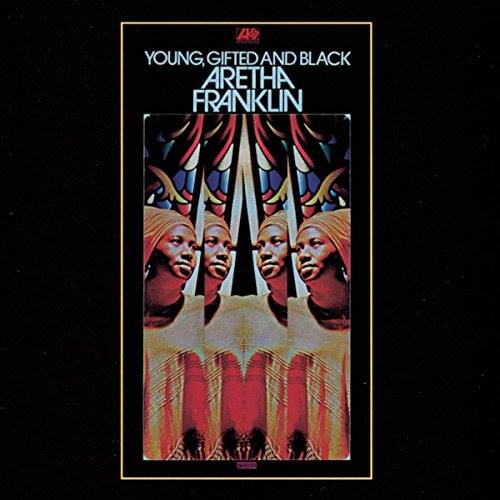

Aretha Franklin released eleven studio album during the 1970s, “Young, Gifted and Black” was her most successful of the decade as well as producing the most hit singles. In the whole of Aretha’s recorded output, the album remains one of her finest efforts. It was cutting edge for the day with it’s blending of Gospel, jazz, funk and R&B creating a sound and style that rang true to the heart of Black-Oriented Radio of the 70s. But the album struck more than just the BOR listeners. It hit with the hippie movement of the time as well as with the college-age generation. This was an album that spoke to many parts of the American culture. It’s not even so much because the songs are about protest or anguish because it is an album full of love songs, but it was the title of the album that struck a chord in many. Many people of the counter-culture were embracing the thought that being gifted and exceptional belongs to all factions of the US population. The title track says it all with its opening lyrics “To be young, gifted and black. Oh, what a lovely and precious thing.” Nina Simone (who wrote the song) followed that line with her cry to the world, “Open your heart is all I need.” This song was a cry for acceptance and love, pure and simple.

“Young, Gifted and Black” is an album full of highlights. Each song builds upon the previous. Quite honestly an album that merits play from beginning to end. Recorded over a seven-month period in 1970 and 1971, "Young Gifted And Black" captures Aretha Franklin at the peak of her artistic and commercial powers. Aretha Franklin was in her prime here, not only in terms of voice but also in terms of confidence -- you can just feel her exuding her status as the best of the best. The album represented a transitional period for Aretha, she was moving from her 60s R&B style to a more gentle soul sound, one could call her “smooth grooves” period. Earlier diehard fans may not have been keen to the idea initially but soon grew to love the new outlook from Aretha.

The album was like a who’s who of popular R&B, soul, jazz and pop music of the time including such luminaries as Billy Preston, Donny Hathway, Dr. John, Hubert Laws and Eric Gale. Aretha’s sisters Carolyn Franklin and Erma Franklin performed backing vocals for the album.

The first single, which was released a full year and two months before the album was an inspirational cover of Elton John’s “Border Song (Wholly Moses).” Franklin took the song to #37 in the US and #35 in Canada.

The album’s second single “Rock Steady” was originally released in February 1971 on the Criteria record label. It was later re-released in October 1971 on Atlantic Records and became a top ten ht reaching US #9 (as well as #2 on the R&B charts). Aretha Franklin wrote the uptempo funk song which was made all the more poignant with Donny Hathaway's swinging organ. The b-side “Oh Me Oh My (I’m A Fool For You Baby)” charted due to heavy airplay on R&B radio stations and reached #73 on the pop charts and #9 on the R&B charts.

The third single is one that many consider being the album’s highlight, “Day Dreaming,” another Aretha Franklin original composition reached #5 on the US pop chart as well as #1 on the R&B chart. The song achieved a rare feat for Franklin in that it was also a hit on the Easy Listening chart reaching #11. The song sold more than a million copies and was certified Gold by the RIAA (“Rock Steady” was also agold-certifiedd hit). The legendary Natalie Cole recorded “Day Dreaming” and was her last single release before her untimely passing. Corinne Bailey Rae also recorded the song which showed up on her debut album from 2006 as a bonus track.

"Day Dreaming"

The fourth and last single from the album is “All The King’s Horses” another Franklin original composition. This one reached #26 on the pop charts and #7 on the R&B charts. The b-side “April Fools” (A Burt Bacharach/Hal David tune) received a small amount of airplay.

In total five songs from “Young, Gifted and Black” charted on the US singles chart.

Nina Simone and poet Weldon Irvine, who contributed the lyrics, wrote the title track “To Be Young, Gifted and Black”. Simone told Irvine she wanted lyrics that "will make black children all over the world feel good about themselves forever." Franklin never released the song as a single but it did receive it’s fair share of airplay in the early 70s and has become one of Aretha's best known recordings. Aretha started the song out slow with a deliberate pace of a traditional spiritual, and rises to triumphant highs punctuated with dramatic stops and starts. The song is accented in a crescendo of church choir celebration. Aretha knew this song had a meaning deeper than the others on the album. Nina Simone wrote the song based on a stage play named "To Be Young, Gifted and Black," which was written in tribute to Lorraine Hansberry's writing and poetry. Hansberry is best known for her 1957 play "A Raisin in the Sun," the story of a black family living under racial segregation in Chicago that tries to better themselves after an insurance payout following the death of the father.

Franklin’s soulful cover of the Beatles’ “The reinvented Long and Winding Road” features Beatles sideman Billy Preston on the organ. Aretha put a bit of a funk twist to her recording of the Delfonics’ “(Didn’t I) Blow You Mind.”

Aretha Franklin (1972)


ARETHA FRANKLIN

Wednesday, April 5, 2017

Rod Stewart - A Night On The Town (1976)

“A Night On The Town” by Rod Stewart (1976)

Release Date: June 18, 1976
Produced by Tom Dowd
Genres: Rock, Pop, Classic Rock, Adult Contemporary
Chart Positions: #1 (UK, Australia, Canada, Norway, New Zealand, Sweden), #2 (US), #5 (Netherlands), #23 (Japan), #29 (Germany)
Certifications: 6xPlatinum (Australia), 2xPlatinum (US, Canada), Platinum (UK)

Singles: “Tonight’s The Night” (#1 US, Canada), #2 (Brazil, Ireland, New Zealand), #3 (Australia), #4 (France), #5 (Netherlands), (UK), #6 (Norway), #7 (Sweden, Holland), #13 (Belgium), #26 (Germany), #2 (US Adult Contemporary)
“The Killing Of Georgie” ##2 (UK), #7 (Canada), #9 (France), #24 (Holland), #25 (Netherlands), #30 (US), #36 (Germany), #38 (Australia)
“The First Cut Is The Deepest” #1 (UK, Germany, Netherlands), #4 (Ireland), #5 (New Zealand), #10 (France), #21 (US), #3 (US Adult Contemporary)
Singles Certifications: "Tonight's The Night" Gold (US, Canada), "The First Cut Is The Deepest" Silver (UK)

A Night on the Town is Rod Stewart's seventh album, released in 1976. The cover art is based on Pierre-Auguste Renoir's painting Bal du moulin de la Galette, with Stewart inserted in the centre in period costume. Stewart performed "Big Bayou" regularly with The Faces during their final US tour the previous year, although the version found on "A Night On The Town" was based on the one Ronnie Wood released on his 1975 solo album, Now Look.


“A Night On The Town” was a star-studded event with guest players such as Eagles band-member Joe Walsh on guitar, David Lindley (“Mercury Blues”) on guitar, legendary record producer and songwriter David Foster (known for his 1985 hit “Love Theme from St. Elmos Fire) playing keyboards, R&B and Blues musician Booker T. Jones on keyboards, Tower of Power on horns and Arif Mardin composing the strings arrangement. Producer Tom Dowd produced many other popular acts of the time including Kenny Loggins, Chicago, Eric Clapton, Lynyrd Skynyrd, Meatloaf, J. Geils Band, Diana Ross, Willie Nelson, The Eagles as well as many jazz greats such as Charles Mingus, Herbie Mann, Ornette Coleman, Thelonius Monk, John Coltrane, Charlie Parker and a host of others.

The first single release “Tonight’s The Night (Gonna Be Alright)” shot up the charts instantly and was a huge hit throughout the world. This was his comeback hit in the US. His previous Top 15 US hit was 1972’s “You Wear It Well.” The song was 1977’s #1 song in the US and Canada.

According to Dan Peek of America, Stewart's inspiration for "Tonight's the Night" was America's Top 30 hit "Today's the Day": Peek recalls that one evening when he and his guest Rod Stewart were playing together in Peek's home recording studio: "I played 'Today's the Day', the song I had been working on. Rod said that he liked it and that it gave him an idea for a song. Of course after his recording of 'Tonight's the Night' came out I laughed when I remembered what he'd said. I'm sure I probably smacked my forehead and said: 'Why didn't I think of that?'"

The song features a French spoken part from Britt Ekland who was Stewart's girlfriend at the time. Some listeners have interpreted the song as an incestuous pedophile's successful seduction of his daughter. Stewart's persona explicitly refers to his partner as his "virgin child," and among her French comments at the end, she asks, "What is Mama going to say?" The song was partially banned in some parts of the UK because of its suggestive lyrics. Later the ban was dropped due to public demand.

“The Killing of Georgie” was the album’s second single release. This was a personal song to Rod. The song tells the story of a gay man who was killed in New York City. A two-part song, Part I was the more popular hit and was blended into the more melancholy and sombre Part II. The song's lyrics tell the tale of a friend of the narrator's, a gay man, the eponymous Georgie. The song follows Georgie through his life. When Georgie reveals his sexuality to his parents his father asks, "How can my son not be straight, after all I've said and done for him?" Georgie, cast out by his parents, leaves home and heads for New York City where he becomes successful and popular in Manhattan's upper class, "the toast of the Great White Way". The narrator visits him in Summer 1975, when Georgie tells him he's in love; the narrator is pleased for him. Georgie attends the opening night of a Broadway musical, but has no interest in lingering afterward so he leaves "before the final curtain call" and heads crosstown. He is attacked near East 53rd Street by a New Jersey gang of thieves that was waiting in a car on a "darkened side street" and one thief inadvertently kills him. The narrator remembers Georgie's advice on living life to the full while young, before it ends. The song ends with the narrator begging Georgie to stay.
The year of Georgie's death is given as 1975 purely for the purposes of the song's rhyme. The murder of the individual on which the song is based occurred in 1974.

"The Killing of Georgie"

In the May 1995 issue of Mojo, Stewart explained: "That was a true story about a gay friend of The Faces. He was especially close to me and Mac. But he was knifed or shot, I can't remember which. That was a song I wrote totally on me own over the chord of open E." The switchblade knife in the song's lyrics implies that Georgie was stabbed to death.

When he was asked about writing a song with a gay theme, Stewart said, "It's probably because I was surrounded by gay people at that stage. I had a gay PR man, a gay manager. Everyone around me was gay. I don't know whether that prompted me into it or not. I think it was a brave step, but it wasn't a risk. You can't write a song like that unless you've experienced it. But it was a subject that no one had approached before. And I think it still stands up today."

The third and final single from “A Night On The Town,” “The First Cut Is The Deepest” was released in the UK as a double a-side coupled with “I Don’t Want To Talk About It.” In the US the song was released with “Balltrap” as its b-side. “The First Cut Is The Deepest” was written by Cat Stevens and was first recorded by P.P. Arnold in May 1967. P.P. Arnold did a good amount of recording with Small Faces in 1967 and also recorded a duet with Rod Stewart the same year. Stevens released his version a few months later on his album “New Masters.”

Album highlight “Pink Flamingo” was recorded in 1966 by Manfred Mann and was a #1 hit in the UK and Top 30 hit in the US for them.

Written by Rod Stewart, “Fool For You” takes him back to his early 70s days with a sound similar to “Maggie Mae” and “You Wear It Well.” "Fool for You" is a melodic and heart-breaking tale of a man realizing he's involved with a woman who lives in a world in which he will never belong. He feels his out of his league and can never make her happy so he's breaking off the relationship (by letter, of course) with great sadness as he is still very much in love.(He's even leaving her his records!

Rod Stewart 1976


ROD STEWART