Release Date: May 1975 Produced by Willie Nelson Genre: Country, Outlaw Country Label: Columbia
Chart Positions: #28 (US), #88 (Australia), #90 (Canada), #1 (US Country), #7 (Canadian Country) Certifications: 2xPlatinum (US), Gold (Canada) Awards: Grammy Award for Best Country Vocal Performance for “Blue Eyes Crying In The Rain”
Singles and Chart Positions: “Blue Eyes Crying In The Rain” #21 (US), #40 (Canada), #57 (Australia), #1 (US Country), #12 (US Adult Contemporary), #2 (Canadian Country), #9 (Canadian Adult Contemporary), “Remember Me” #67 (US), #78 (Canada), #2 (US Country), #6 (Canadian Country) “Singles Certifications: N/A Other Charting Tracks: N/A Best Tracks: “Time of the Preacher,” “Blue Eyes Crying In The Rain,” “Red Headed Stranger,” “O’er The Waves,” “Hands On The Wheel,” “Bandera”
“Red Headed Stranger” is Willie Nelson’s 18th studio album and his first for Columbia Records. A concept album, Red Headed Stranger is about a fugitive on the run from the law after killing his wife and her lover. The content consists of songs with brief poetic lyrics and arrangements of older material such as Fred Rose's "Blue Eyes Crying in the Rain", Wolfe Gilbert's "Down Yonder" and Juventino Rosas' "O'er the Waves". Despite Columbia's doubts and the limited instrumentation, Red Headed Stranger was a blockbuster among country music and mainstream audiences. It was certified multi-platinum, and made Nelson one of the most recognized artists in country music. The cover of "Blue Eyes Crying in the Rain," released as a single, previous to the album’s full release became Nelson's first number one country music hit. The title of the album would become a lasting nickname for Nelson. The song also won the Grammy Award for Best Male Country Vocal Performance. Also nominated that year were; "Country Boy (You've Got Your Feet In L.A.) by Glen Campbell, "Thank God I'm A Country Boy" by John Denver, "Before The Next Teardrop Falls" by Freddy Fender, "Are You Sure Hank Done It This Way" by Waylon Jennings and Misty" by Ronnie Milsap.
The concept for the album was inspired by the "Tale of the Red Headed Stranger", a song that Nelson used to play as a disk jockey on his program in Fort Worth, Texas.
In 1973 Nelson signed a contract for $25,000 per year with Atlantic Records, the first country artist signed by the label. His first album with Atlantic was the critically acclaimed Shotgun Willie, which was followed by one of the first concept albums in country music, Phases and Stages. Due to the success of these recordings, Nelson signed with Columbia Records, and was given complete creative control.
During his return to Austin, after a ski trip in Colorado, Nelson was inspired by his then-wife, Connie Koepke, to write a western concept album. Koepke suggested the inclusion of Arthur "Guitar Boogie" Smith's "Tale of the Red Headed Stranger", which Nelson sang during his radio shows on KCNC in Fort Worth and previously, to his children at bedtime. Nelson decided to write a complete story that included details of events prior to the ones described in the song. As he spontaneously composed the songs, Koepke wrote down the lyrics. With his original writings, Nelson included on the story, Fred Rose's "Blue Eyes Crying in the Rain", Wolfe Gilbert's "Down Yonder", Juventino Rosas' "O'er the Waves", Hank Cochran's "Can I Sleep in Your Arms?", Eddy Arnold's "I Couldn't Believe it Was True", and Billy Callery's "Hands on the Wheel". When he arrived in Austin, Nelson recorded a demo of the songs on a tape recorder accompanied with his guitar at his ranch in Fitzhugh Road.
"Blue Eyes Crying In The Rain" (1975)
Red Headed Stranger's critical success cemented Nelson's outlaw image, and made him one of the most recognized artists in country music. Rolling Stone writer Paul Nelson wrote: "Red Headed Stranger is extraordinarily ambitious, cool, tightly controlled.... Hemingway, who perfected an art of sharp outlines and clipped phrases, used to say that the full power of his composition was accessible only between the lines; and Nelson, on this LP, ties precise, evocative lyrics to not quite remembered, never really forgotten folk melodies to create a similar effect, haunting yet utterly unsentimental. Meanwhile, music critic Chet Flippo wrote in a Texas Monthly article entitled "Mathew, Mark, Luke and Willie: Willie Nelson's latest album is more than a good country music; it's almost Gospel": "The difference between Nelson's Red Headed Stranger and any current C&W album, and especially what passes for a soundtrack for Nashville, is astounding. What Nelson has done is simply unclassifiable; it is the only record I have heard that strikes me as otherworldly. Red Headed Stranger conjures up such strange emotions and works on so many levels that listening to it becomes totally obsessing".
Prior to the success of "Blue Eyes Crying in the Rain," Nelson had enjoyed widespread success primarily as a songwriter, with such songs as "Crazy" (Patsy Cline) and "Hello Walls" (Faron Young). As a performer, meanwhile, Nelson had hit the Top 10 of the Billboard magazine Hot Country Singles chart just twice; it had happened in 1962, once as a solo artist ("Touch Me") and again as part of a duet with Shirley Collie ("Willingly"). Thereafter, Nelson had approached the Top 20 on occasion, but went 13 years without a Top 10 hit.
In October 1975, the song became Nelson's first #1 country music hit as a singer, and at year's end was the third-biggest song of 1975 on the Billboard Hot Country Singles chart. In addition, the song gained modest airplay on Top 40 radio, reaching #21 on the Billboard Hot 100.
In 2004, Rolling Stone ranked "Blue Eyes Crying in the Rain" #302 on its list of the 500 Greatest Songs of All Time.
Billboard Magazine Review (June 14, 1975):
One of country's all-time great writers and performers and a man whose material is equally well known to the pop world ("Funny How Time Slips Away," "Night Life," "Crazy," "Hello Walls") comes up with a concept LP that is already receiving strong pop FM play. Lots of instrumental work and particularly fine piano from Bobbie Nelson and the usual distinct highly stylized Willie Nelson vocals. Best Cuts: "Red Headed Stranger," "Can I Sleep In Your Arms," "Remember Me," "time of the Preacher."
Release Date: February 4, 1977 Produced by Fleetwood Mac, Ken Caillat, Richard Dashut Genre: Soft-Rock, Pop-Rock, Pop, Classic Rock Label: Warner Brothers
Singles: “Go Your Own Way,” “Dreams,” “Don’t Stop,” “You Make Lovin’ Fun”
Singles Certifications: “Go Your Own Way”: Silver (UK), Gold (US), “Dreams”: Silver (UK), Gold (US)
Other Charting Tracks: "The Chain" #81 (UK), #93 (Ireland), #6 (US Rock Digital Tracks), "Songbird" #115 (UK), "Never Going Back Again" #35 (US Rock Digital Tracks) Best Tracks: All Tracks
By the time "Rumours" was released Fleetwood Mac had been in existence for near ten years and they did achieve success in the UK with four top ten hits and top ten top albums. But once 1971 rolled around the hits dried up for this British band lead by John McVie and Mick Fleetwood. What was the next move? They added a female vocalist, Christine mcVie (John's wife) and American guitarist, songwriter and singer Bob Welsh, who had been gaining a name with his band Head West. But not much really came of this new collaboration - although they were gaining a steady popularity in the US. Finally it was the end of 1974 and Bob Welch left the band. The band was in peril - they lost a bit of direction. It was New Year's Eve 1974 (going into 1975) that American's Lindsey Buckingham and Stevie Nicks joined the band. Lindsey Buckingham's and Stevie Nicks' influence was felt instaneously after joining. The album "Fleetwood Mac" was released in the summer of 1975 and was the band's first major worldwide hit. Though "Fleetwood Mac" was highly successful, it was the next album "Rumors" that went way over the top. It far surpassed all expectations.
When it came time for the band to record "Rumors" they were falling apart. 1975's "Fleetwood Mac" was such a huge success but with that success came turmoil. John and Christine's marriage ended, they began having problems in the summer of 1973 and as their music grew more successful the stress on their marriage also grew. Lindsey Buckingham's and Stevie Nicks' romantic relationship also ended. Their new found success and wealth led to heavy consumption of alcohol and drugs as well as deep misunderstandings. If that wasn't enough Mick Fleetwood and Stevie ended up having an affair - this just complicated things much further. With all this going on the challenges of recording an album seemed all the more heightened. Stevie Nicks had commented, "It took thirteen months to record and it took every bot of inner strength we had. It was very hard on us." Maybe it was all this drama that made "Rumours" the great album it is. The songs were brutally honest with the most personal and touching lyrics the band has written in their entire career - prior to and after "Rumors." As well the performances (both vocal and instrumentally) are deep and to the soul. The record has an inbred soul about it that soak right into your very being.
Christine McVie said, "We refused to let let our feelings derail our commitment to the music." In the end their commitment paid off with one of the most successful albums of the decade and of all-time. The album spent 31 non-consecutive weeks at #1 on the US albums chart and has sold more than 40 million copies worldwide. The album won the Album of The Year Grammy Award along with being nominated for a Grammy for Best Pop Performance by a Duo or Group with Vocals. It also won two American Music Awards and one Juno.
When it came time to edit the album and test running orders for side one and two once again drama arose. Seeing that in 1976/1977 vinyl albums were limited to around 20 minutes per side some songs had to be eliminated and/or cut down in length. One such song to be eliminated was Stevie Nicks' "Silver Springs." The original version was over six minutes long and it was decided the song was too long for the album. This was done without Stevie's knowledge. Ken Caillat and Lindsey Buckingham later took Stevie out to the studio parking lot to break the news. To appease her they told her they were replacing the song with "I Don't want To Know," a song she had written a few years earlier. Nicks was furious with this news as she really loved "Silver Springs" and felt it was one of her best works.
Two months before "Rumours" was released Lindsey Buckingham's "Go Your Own Way" was released as a single and the band chose "Silver Springs" as it's b-side, hoping this would make Stevie happy. Instead it added insult to injury. Nicks' "masterpiece" had been relegated to b-side status and at that the a-side, written by Buckingham, was less than complimentary to her with lines such as "you can go your own way" and "shacking up is all you want to do."
The release of "Go Your Own Way" saw an excited anticipation coming from Fleetwood Mac fans around the world. Fans got their first glance of what was just around the corner. This was the first Fleetwood Mac hit to be written by Lindsey Buckingham and to feature his lead vocals. In recording the drum parts for the song Lindsey Buckingham envisioned a pattern to similar to Charlie Watts' drum fills on the Rolling Stones' "Street Fighting Man." Buckingham passed this idea to drummer Mick Fleetwood. In the studio Fleetwood did his best to mimic what he heard. But the result was far from what Watts had played. Despite the quirky rhythm and disoriented style Buckingham felt Mick's drum work was a perfect fit for the song. Mick credited his dyslexia for the eclectic drum patterns.
"Go Your Own Way" was Buckingham's message song to Stevie Nicks. In short he was telling her "go ahead date other men and live your miserable life. Buckingham was not one to mince words. He was pretty forward about how he felt and made it known to Stevie.
Lindsey Buckingham wrote or co-wrote four songs on the album and sang or shared lead vocals on six songs. Buckingham's voice was heard on the album more than anybody else's. He had the fortune of having the first single release and the opening track on the album. "Second Hand News," which began it's life as an acoustic demo titled "Strummer," saw "Rumours" beginning the tale of the break-up of the Nicks-Buckingham romance. Stevie Nicks commented that Lindsey's songs may have been a bit on the angry side, but they were honest. The first lyrics, "I know there's nothing to say, someone has taken my place," set the mood for the song. The aggressive drum beat symbolizes the songs angst. Buckingham wanted to infuse a slight disco beat similar to the chugging rhythms he heard in the Bee Gees' 1975 hit "Jive Talking'." Buckingham tried several different way to replicate that sound. He ended up pounding on the seat of a naugahyde chair in the studio and discovered the perfect time and sound for the song.
Lindsey Buckingham's "Second Hand News" was followed by Stevie Nicks' "Dreams," which in many ways was an answer to songs to the Buckingham song. Maybe Nicks' motive was not as intentional. In an effort to not rock the boat anymore than it had already been shaken Buckingham pretty much kept "Second Hand News" a secret from Stevie - until the last minute. Stevie's message wasn't quite as "in your face" as Lindsey's was. Stevie said she was trying to be philosophical and he was just plain mad. She used quite a bit of symbolism in her phrasing, but the message still came across loud and clear. In the opening line Stevie says, "Now here you go again, you say you want your freedom." Makes one wonder was it Mr. Buckingham that originate this breakup? Stevie follows it up with, "Well who am I to keep you down?" Possibly the split was a mutual agreement.
"Dreams" (1977)
Despite the fact that Stevie Nicks' presence and voice with Fleetwood Mac was a major driver of the success for both "Fleetwood Mac" and "Rumors," her participation was actually very low. She was the only band member that did not play an instrument on the album. She experienced a fair amount of down time between her parts. In the meantime Stevie would walk over to an unused studio down the hall from the Record Plant studio Fleetwood Mac recorded their sessions. This studio had been built for Sly Stone. Nicks would take her crocheting, electric piano, books and art as sources of stimulation. As she sat on a big black velvet bed that was set up that studio with red wall surrounding her, she wrote "Dreams," within ten minutes. Nicks often called "Go Your Own Way" and "Dreams" twin songs as they both chronicled the struggle to untangle their toxic romantic partnership from their wildly successful professional one.
"Dreams" was the second song on the album and became the second single. Where "Go Your Own Way" was a huge and memorable hit, "Dreams" was an even bigger hit sailing quickly to #1 and has the status of being Fleetwood Mac's only hit to top the US charts (the song their first of two #1 hits in Canada). This had to have been a great source of vindication for Stevie in that her song connected with more music listeners than Lindsey's did and though in many ways she was overshadowed by Christine McVie it was Stevie that wrote and sang the band's biggest hit.
The Buckingham/Nicks drama continued with the next song "Never Going Back Again." The lyrics were sparse in this song but once again in Lindsey Buckingham's style they were to the point. Basically he was talking about eh hurt and pain he experienced in love and that he will never go down that road again. The song was used as the b-side to "You Make Loving fun" on the UK pressing of the single.
"Don't Stop," the album's third single release was written and sung by Christine McVie (she shared the lead vocals with Lindsey Buckingham). This song ended up being her biggest hit and may possibly be Fleetwood Mac's best known song overall. "Don't Stop" already a huge hit and known worldwide gained even more notoriety when US President Bill Clinton used the song as his campaign theme during his 1992 presidential campaign and was prominently featured at the 1992 Democratic national Convention. When Clinton won he convinced the group (who had disbanded) to reunite and perform at his inaugural ball in January 1993.
"Don't Stop" (1977)
"Don't Stop" reflects Christine's views after her eight year marriage to Fleetwood Mac bassist John McVie ended. She took an optimistic approach realizing that yesterday's gone so keep on moving forward - don't stop thinking about tomorrow - don't stop it'll soon be here - don't you live in the past. This was a healthy song with a good healthy outlook about what the future has in store if you just keep on going forward and letting go of the past. This message she said was more directed to John to let him know that time will heal the wounds. Christine commented, "I'm definitely not a pessimist."
"Rumours" originally was going to be named "Yesterday's Gone" after the line in the song "Don't Stop." John McVie came up with the title "Rumours" after realizing there was a lot of talk going around in Hollywood about the personal drama Fleetwood Mac was experiencing.
Next up we find "Go Your Own Way" which was discussed earlier in this post. Nicks however commented, "I very much resented him (Lindsey Buckingham) telling the world that 'packing up, shacking' with other men was all I wanted to do.
The delicately penned Christine McVie tune "Songbird" closed side one of "Rumors" with a sense of beauty and feeling of passion. Though it was not released as a single "Songbird" is one of the most emotionally powerful songs on the album. Christine McVie was reaching inside for a state of mind that was missing in Fleetwood Mac at the moment. They were a unit that was able to produce a product but were lacking in the side of a true emotional bond and devotion to the heart and soul of the people with which they worked and had once loved. The professionalism was there, the angst was there, the love of the art was there... but the love of each was missing. Christine McVie wrote "Songbird" to recapture that love.
Christine said that during the recording of "Rumors", "Songbird" held Fleetwood Mac together during their hard times. Once they heard the song, they reflected on how much they had been through together and how much love they shared.
Christine wrote the song during a time of solitude in about thirty minute when she woke up at 3:30 in the morning with the idea in her head. She said it was alike gift from an angel. It's as if the song was a short and gentle prayer of love - love that she wished upon those around her and for herself. During the recording session, producer Ken Caillat wanted to capture the song's warmhearted melancholic energy and felt the song needed the ambience of a concert hall. The song was recorded in a one-night session in Berkeley at the University of California's Zellerbach Auditorium. Ken Caillat decided the song needed to remain as McVie played it for him initially - with a stripped down production - McVie's voice and her piano. In order to set the mood Caillat ordered a nine-foot Steinway piano to be set up in the auditorium and as a surprise for Christine had requested a bouquet of roses to placed on Christine's piano with three colored spotlights to illuminate them from above. When Christine arrived the house lights were dimmed so all she could see were the flowers and piano. She nearly broke into tears then started to play.
"Songbird" charted on the US Rock Digital Tracks chart in 2011 most likely due to a cover version done on the popular TV program "Glee."
Flipping the record over we find "The Chain" opening Side Two. "The Chain" is the only song that is written by all five members of the band - Lindsey Buckingham, Christine McVie, Stevie Nicks, Mick Fleetwood and John McVie. The song was a complicated undertaking as it was based on instrumentation from an unreleased Christine McVie demo called "Keep Me There" and a recording by Stevie Nicks which were both recut and heavily remixed and blended into the song. John McVie added his solo using a fretless bass guitar. The song was a combination of varying sources. Finally the lyrics came. Stevie brought some lyrics to the studio for the song which she felt would work really well. Mick Fleetwood and Lindsey Buckingham liked what he saw and went to work to piece it together. Lindsey arranged and made a song out of all the bits and pieces the band had recorded over the past several months. The band ended up calling it "The Chain" because it was a bunch of pieces linked together.
"The Chain" (1977)
"The Chain" charted in 2009 in both the UK and Ireland after it had been reinstated as the BBC Formula One theme.
"You Make Loving Fun" was the fourth and last single released from "Rumors." Despite the fact that the album had already sold millions of copies throughout the US, "You Make Loving Fun" was still a huge hit and sold well reaching #9 in the US and #7 in Canada. The song was another one of Christine McVie's uplifting tunes. She wrote it about her boyfriend at the time, Curry Grant, who was the lighting director for Fleetwood Mac. In order to avoid any emotional flair up Christine told then husband John McVie that the song was about her dog. John later found out it was about Grant, with whom Christine was having an affair.
The next track "I Don't Want To Know" was written by Stevie Nicks in 1974 before joining Fleetwood Mac. Buckingham and Nicks never recorded the Buddy Holly influenced song officially but did perform it live in concert a few times.
The story of "I Don't Want To Know" begins with the song "Silver Springs. Written by Stevie Nicks "Silver Springs" was left off the album due to the fact, that at over six minutes, it was simply too long. Back in the seventies on a vinyl album you could fit only about 22 minutes of music per side. In order to include "Silver Springs" the band would have had to cut at least 30 seconds off of all the other songs on the album. The band and producers really wanted to see the song included on the album but it was not feasible. Instead without Stevie's knowledge it was decided to include "I Don't Want To Know." They were hoping to please Nicks by including another of her songs. Instead she was upset that she had been kept in the dark until the last minute. The news was broken to her when it was time to record the vocals.
"Silver Springs" was used for the b-side of the album's first single "Go Your Own Way" and received some attention and airplay at that point.
Christine McVie had a gift for writing songs that tug at those heart strings and "Oh Daddy" is one of those wonderfully beautiful songs. This poignant song was written about Mick Fleetwood and his wife Jenny Boyd, who had just gotten back together. The band's nickname for Mick was "The Big Daddy" as he was the only father in the band, with two daughters. Stevie Nicks wrote the lines, "and I can't walk away from you baby, if I tried." In 1979 Natalie Cole recorded an effectively moving rendition of the song.
Listening to "Rumours" in it's entirety back in 1977 was an experience, it was a journey through life and emotion. Each song brought out different sorts of emotions. There was pain, hurt, anger, joy, love, beauty and more pain. But more fulfilling than even the journey of emotions was the music itself, the fine tuned musicianship, the powerful vocals and the energy brought forth through the music. Each song built from the one before it. There was not one loser in the bunch. And here we are at the end of this exceptional album. We have just finished listening to ten excellent songs and we are now at the last song of the album. Will expectations are high - will Fleetwood Mac impress or will the album end on an even keel - not really impressing but also not really disappointing?
This brings us to "Gold Dust Woman," the end of the album. It's hard to top ten top rate songs but Fleetwood Mac did it - they truly saved the best for last. I feel the two biggest prizes in an album are the opening track and the closing track. The opener sets the mood of the album and the closing track leaves the lasting impression. The two newest members had those honors - Lindsey Buckingham had the opener while Stevie Nicks got the closing. This is not to play down any of the other songs because they are all equally great but there is usually a reason for the choices of opening and closing songs (anyway in albums that are carefully crafted - and it is evident that "Rumours" was a carefully crafted album).
"Gold Dust Woman" was written by Stevie Nicks and she also sings the soulful lead vocal. The song was inspired by Los Angeles and the hardships of living in such a metropolis. The lyrics focus on her cocaine addiction. The song is built on a free jazz frame in which each musician in which each musician develops their own progressions in the song.
In a 2017 Rolling Stone Magazine review of "Rumours" Andrew Unterberger wrote, "Nicks has openly admitted that she has no idea what Rumors' mystical closing track is even about, which is probably one of the reasons it's played such a large part in building the frontwoman's own gypsy-woman mythology. With it's reset-like production, guitar riffs spilling from everywhere like sand through the song's fingers, and Stevie's uniquely possessed vocals, Gold Dust Woman is as alluring and enigmatic as it's singer - a note of anti-closure for the LP to end on, the mysteries of love and life forever unknowable."
Now the album is over and we ponder do we play it again or neatly tuck it back in it's case and reminisce on each great tune. Ah why not let's play it again... it really is that great.
"Love Song" is the ninth studio album by Anne Murray issued in 1974 on Capitol Records. It peaked at #24 on the US Billboard Pop Albums chart and won a Grammy Award for Best Female Country Vocal Performance and was nominated in the "Best Selling Album" category in the 1975 Juno Awards. Anne Murray’s rendition of the song "Send a Little Love My Way" was featured in the Stanley Cramer film, “Oklahoma Crude,” and was nominated for a Golden Globe Award for Best Original Song in 1973.
A highlight from the album is the Lennon-McCartney Beatles tune “You Won’t See Me,” which went on to be a big hit for Murray reching #8 in the US and #5 in Canada. Lennon is said to have told Murray that her version of "You Won't See Me" was his favorite Beatles cover ever. Murray herself is a confessed Beatles fanatic and has covered several other Beatles songs, including "Day Tripper" and "I'm Happy Just to Dance with You".
“A Love Song” was written specifically by Kenny Loggins (and Donna Lyn George) for Anne Murray. The song was a major crossover hit for Murray. In her native Canada, it topped all three singles charts: the overall Top Singles chart, the Country Tracks chart and the Adult Contemporary chart. In the United States, the song peaked at No. 5 on Billboard magazine's Hot Country Singles chart and just missed the Top 10 of the Billboard Hot 100, peaking at No. 12. The song fared even better there in the adult contemporary market — it became Murray's third chart-topper on Billboard's American Hot Adult Contemporary Singles chart. This was the second time Anne charted with a Loggins & Messina song, having reached the Top 10 with her version of "Danny's Song" in 1973.
"A Love Song" (1974)
Anne was obviously a Kenny Loggins fan as she included a cover of the Kenny Loggins and Jim Messina penned "Watching The River Run" on this album. Murray's rendition is very similar to Loggins and Messina's with a homegrown feel to it.
Both "A Love Song" and "Watching The River Run" appeared on the Loggins and Messina album "Full Sail" which was released in October 1973.
The album's fourth single "Just One Look," a cover of Doris Troy's 1963 Top Ten was fairly popular in Canada but barely made a mark in the US. Though it's b-side "Son of a Rotten Gambler" gained quite a bit of traction on the country music charts in both the US and Canada. "Son of a Rotten Gambler" was written by Chip Taylor who is known for having written the mega-hit "Angel In The Morning" and the Troggs' 1966 classic "Wild Thing."
Murray gives us a great bluesy cover of Alan O’Day’s “Real Emotion.” We know Alan O’Day from his 1977 million selling chart topping hit “Undercover Angel” and Helen Reddy’s #1 hit in 1974 “Angie Baby,” which O’Day wrote. Anne Murray covered Alan O’Day’s “Caress Me Pretty Music” for her 1976 album “Keeping In Touch.”
In their review of this album Rolling Stone magazine commented, "if 1974 is to be the year for female pop, Anne Murray may prove to be it's most talented proponent.
All 'n All is the eighth studio album by the American band Earth, Wind & Fire, released in 1977 on Columbia Records. It is one of the group's best known albums and has been certified triple platinum in the United States for sales of three million copies by the RIAA, gold in Canada by Music Canada and silver in the UK by the British Phonographic Industry. All 'n All reached #3 on the Pop Album chart and stayed at #1 on the Black Album chart for nine weeks. All 'n All was also the bestselling R&B album of 1978.
The album won two Grammy Awards one for Best R&B Vocal Performance By A Duo, Group Or Chorus and the song "Runnin'" won for Best R&B Instrumental. All 'N All also garnered an American Music Award nomination for Favorite Album- Soul/Rhythm & Blues.
The funk-filled R&B track "Serpentine Fire" was the first single from the album and was the album's biggest hit in the US reaching #13 on the Billboard singles chart and seven weeks at #1 on the US R&B chart. Philip Bailey's congas drums and the full horn section give the song a slight Latin R&B jazz style. Written by EWF members Maurice White and Verdine White with Reginald Sonny Burke, the lead vocal was taken by Philip Bailey as at the time Bailey was gaining more prominence with the band in performing more lead vocals. The Serpentine Fire is a yoga concept, Maurice White explained, "The Kundalini principle has to do with the fluid in your spine. After 29 days, if used properly it can be converted into a higher consciousness of energy, which means you can step up or step down, it's your choice. It's called a serpent, because if you tipped the spine out of the body and looked at it, it would look like a serpent - and the fluid is the fire in the spine." "Serpentine Fire" was born out of Maurice and Verdine's spiritual and positive energy.
The second single from the album, "Fantasy," was a much bigger hit throughout the world than "Serpentine Fire," except in the US where it charted considerably lower at #32 on the Billboard singles chart and #12 on the R&B chart. Despite the lower chart position the song was certified Gold by the RIAA. "Fantasy" was written by Maurice and Verdine White this time with the assistance of Eddie Del Barrio. Del Barrio, a jazz and funk musician, songwriter, arranger and producer, also co-wrote the Earth Wind & Fire songs "Runnin'," and "Star." "fantasy" was described by many as Earth, Wind and Fire's transition into disco with a smooth groove to it.
"Fantasy" (1977)
The next two singles "Jupiter" and "Magic Mind," were both semi-hits in the UK charting at #41 and #54 respectively.
"Love's Holiday" and the beautiful "I'll Write A Song For You" both received radio airplay, despite not being released as a-side singles. "Love's Holiday" was used as the b-side to the single "Magic Mind."
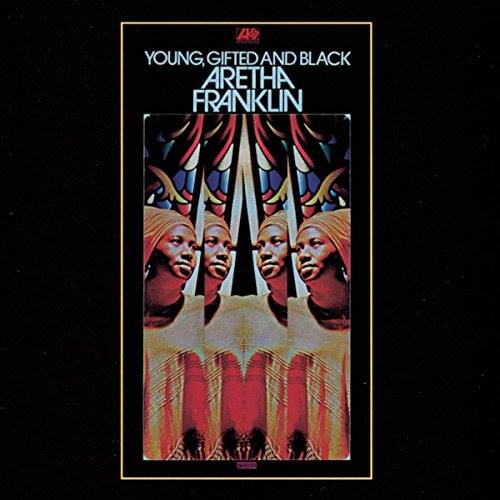
“Young, Gifted and Black” by Aretha Franklin (1972)
Release Date: January 24, 1972 Produced by Tom Dowd, Arif Mardin, Jerry Wexler Genre: R&B, Soul, Southern Soul Label: Atlantic Chart Positions: #11 (US), #53 (Australia) Certifications: Gold (US)
Singles: “Border Song (Wholly Moses)” #37 (US), #35 (Canada), “Rock Steady” #9 (US), #4 (Canada), #44 (Germany), “Oh Me Oh My (I’m A Fool For You Baby)”(b-side) #73 (US, Canada), “Day Dreaming” #5 (US), #9 (Canada), “All The King’s Horses” #26 (US), #70 (Canada), “April Fools” (b-side)
Young, Gifted and Black is the twentieth studio album by American singer Aretha Franklin, Released on January 24, 1972 by Atlantic Records. The album is Top 10 Gold-certified and won the 1972 Grammy Award for Best Female R&B Vocal Performance of the year. It takes its title from the 1958 Nina Simone song "To Be Young, Gifted and Black."
Aretha Franklin released eleven studio album during the 1970s, “Young, Gifted and Black” was her most successful of the decade as well as producing the most hit singles. In the whole of Aretha’s recorded output, the album remains one of her finest efforts. It was cutting edge for the day with it’s blending of Gospel, jazz, funk and R&B creating a sound and style that rang true to the heart of Black-Oriented Radio of the 70s. But the album struck more than just the BOR listeners. It hit with the hippie movement of the time as well as with the college-age generation. This was an album that spoke to many parts of the American culture. It’s not even so much because the songs are about protest or anguish because it is an album full of love songs, but it was the title of the album that struck a chord in many. Many people of the counter-culture were embracing the thought that being gifted and exceptional belongs to all factions of the US population. The title track says it all with its opening lyrics “To be young, gifted and black. Oh, what a lovely and precious thing.” Nina Simone (who wrote the song) followed that line with her cry to the world, “Open your heart is all I need.” This song was a cry for acceptance and love, pure and simple.
“Young, Gifted and Black” is an album full of highlights. Each song builds upon the previous. Quite honestly an album that merits play from beginning to end. Recorded over a seven-month period in 1970 and 1971, "Young Gifted And Black" captures Aretha Franklin at the peak of her artistic and commercial powers. Aretha Franklin was in her prime here, not only in terms of voice but also in terms of confidence -- you can just feel her exuding her status as the best of the best. The album represented a transitional period for Aretha, she was moving from her 60s R&B style to a more gentle soul sound, one could call her “smooth grooves” period. Earlier diehard fans may not have been keen to the idea initially but soon grew to love the new outlook from Aretha.
The album was like a who’s who of popular R&B, soul, jazz and pop music of the time including such luminaries as Billy Preston, Donny Hathway, Dr. John, Hubert Laws and Eric Gale. Aretha’s sisters Carolyn Franklin and Erma Franklin performed backing vocals for the album.
The first single, which was released a full year and two months before the album was an inspirational cover of Elton John’s “Border Song (Wholly Moses).” Franklin took the song to #37 in the US and #35 in Canada.
The album’s second single “Rock Steady” was originally released in February 1971 on the Criteria record label. It was later re-released in October 1971 on Atlantic Records and became a top ten ht reaching US #9 (as well as #2 on the R&B charts). Aretha Franklin wrote the uptempo funk song which was made all the more poignant with Donny Hathaway's swinging organ. The b-side “Oh Me Oh My (I’m A Fool For You Baby)” charted due to heavy airplay on R&B radio stations and reached #73 on the pop charts and #9 on the R&B charts.
The third single is one that many consider being the album’s highlight, “Day Dreaming,” another Aretha Franklin original composition reached #5 on the US pop chart as well as #1 on the R&B chart. The song achieved a rare feat for Franklin in that it was also a hit on the Easy Listening chart reaching #11. The song sold more than a million copies and was certified Gold by the RIAA (“Rock Steady” was also agold-certifiedd hit). The legendary Natalie Cole recorded “Day Dreaming” and was her last single release before her untimely passing. Corinne Bailey Rae also recorded the song which showed up on her debut album from 2006 as a bonus track.
"Day Dreaming"
The fourth and last single from the album is “All The King’s Horses” another Franklin original composition. This one reached #26 on the pop charts and #7 on the R&B charts. The b-side “April Fools” (A Burt Bacharach/Hal David tune) received a small amount of airplay.
In total five songs from “Young, Gifted and Black” charted on the US singles chart.
Nina Simone and poet Weldon Irvine, who contributed the lyrics, wrote the title track “To Be Young, Gifted and Black”. Simone told Irvine she wanted lyrics that "will make black children all over the world feel good about themselves forever." Franklin never released the song as a single but it did receive it’s fair share of airplay in the early 70s and has become one of Aretha's best known recordings. Aretha started the song out slow with a deliberate pace of a traditional spiritual, and rises to triumphant highs punctuated with dramatic stops and starts. The song is accented in a crescendo of church choir celebration. Aretha knew this song had a meaning deeper than the others on the album. Nina Simone wrote the song based on a stage play named "To Be Young, Gifted and Black," which was written in tribute to Lorraine Hansberry's writing and poetry. Hansberry is best known for her 1957 play "A Raisin in the Sun," the story of a black family living under racial segregation in Chicago that tries to better themselves after an insurance payout following the death of the father.
Franklin’s soulful cover of the Beatles’ “The reinvented Long and Winding Road” features Beatles sideman Billy Preston on the organ. Aretha put a bit of a funk twist to her recording of the Delfonics’ “(Didn’t I) Blow You Mind.”
“Neither One Of Us” by Gladys Knight and the Pips (1973)
Release Date: March 1973 Produced by Joe Porter, Johnny Bristol, Clay McMurray, Nick Zesses, Dino Fekaris and Hal Davis Genre: R&B, Soul, Pop Label: Soul Records (Motown) Chart Positions: #9 (US) Certifications: N/A
Singles: “Neither One Of Us” #2 (US), #5 (Brazil), #9 (France), #11 (Canada), #31 (UK), “Daddy Could Swear, I Declare” #19 (US)
“Neither One Of Us” is Gladys Knight and the Pips ninth studio album and their first to make it into the US Top Ten. The Soul Records label released the album shortly after the group left the label for Buddah Records while the title track was rising up the charts.
Two singles were released from the album including the title track “Neither One Of Us,” the song rose to #2 in the US and was a hit in various parts of the world including France, Brazil, Canada and the UK. The song also topped the US R&B charts for four weeks, their fourth of ten to top the chart. It was preceded by the O’Jays’ “Love Train” and followed by The Temptations’ “Masterpiece.” “Neither One Of Us” was written by Jim Weatherly who also wrote “Midnight Train To Georgia” and “Best Thing That Ever Happened To Me” both hits for Gladys and the Pips. In March 1974, at the Grammy Awards ceremony, Gladys Knight & The Pips won their first Grammy Award for Best Pop Vocal Performance by a Duo or Group for "Neither One of Us (Wants To Say Goodbye)." That same night, they won a second Grammy for Best R&B Vocal Performance by a Duo or Group for "Midnight Train to Georgia".
Neither One Of Us
The second single “Daddy Could Swear, I Declare” was a minor hit reaching US #19 and #2 on the US R&B chart.
The album contains a dusky and smoky slower soul ballad rendition of Stevie Wonder’s “For Once In My Life.”
Famed songwriter, arranger, musician Michael O'Martian composed the musical arrangement for the tracks "Who Is She" and "Neither One Of Us."
Release Date: October 28, 1976 Produced by Hal Davis, Michael L. Smith, Michael Sutton, Harold Johnson, Joe Porter, Clayton Ivey, Terry Woodford, Michael Masser, Ronald Miller, William Goldstein Chart Positions: #11 (US), #21 Sweden, #25 Denmark Certifications: N/A Singles: “I Don’t Know Why I Love You,” “Don’t Leave Me This Way” #1 (US, South Africa), #4 (Canada, Netherlands, Sweden), #5 (Germany), #6 (Australia), #7 (Belgium), #11 (Spain), #13 (France, UK), #15 (Italy), #17 (New Zealand), #18 (Austria), “Anyway You Like It,” (no chart data), “If It’s The Last Thing I Do” #46 (US), #81 (Canada)
Any Way You Like It is the fourth album by Thelma Houston, released late October 1976 on Tamla Records. The album features energetic disco songs with fierce vocal performances by Houston on side 1, while side 2 focuses on ballads.
In 1976, Motown gave the go ahead on a second album for Thelma, assembling it from the various sessions she had undertaken since her first LP with producers including the teams of Hal Davis and Michael Sutton, and Clayton Ivey and Terry Woodford. The album includes the major hit single, "Don't Leave Me This Way", Houston's remake of the Harold Melvin & the Blue Notes 1975 song, zoomed to No. 1 in the US charts. In the US, "If It's the Last Thing I Do", a track originally recorded in 1972, was chosen for the second single release on MoWest, while Europe had an edited version of the Stevie Wonder cover, "I Don't Know Why I Love You".
A re-recorded version of "Don't Leave Me This Way" was #19 on the dance charts in December 1994.
Arthur G. Wright, Michael L. Smith, Harold Johnson, Paul Riser, Clayton Ivey, Ted Stovall and Terry Woodford arranged the album.
“Don’t Leave Me This Way,” a song which first appeared on Harold Melvin and the Blue Notes 1975 album “Wake Up Everybody” was released as a single by them in 1977 shortly after Thelma Houston’s disco version hit the charts. The Blue Notes' original version of the song, featuring Teddy Pendergrass' lead vocal was not issued as a single in the United States at the time, the Blue Notes' recording reached #3 on the US Billboard Disco Chart in the wake of Thelma Houston's version. The song proved to be the group's biggest hit in the UK, #5 on the UK singles chart, when released there as a single in 1977. Motown covered “Don’t Leave Me This Way” in 1976. Originally assigned to Diana Ross, it was intended to be the follow-up to her hit "Love Hangover" but was reassigned and given to the upcoming Motown artist Thelma Houston instead. Studio musicians on the track included James Gadson on drums, Henry E. Davis (of the band L.T.D.) on bass, and John Barnes on keyboards.
Houston's version became a massive international hit, topping the soul singles and disco charts as well as reaching #1 on the US singles chart for one week in April 1977. The song peaked at #13 in the UK. Later in the year, it was featured on the soundtrack of the movie, Looking for Mr. Goodbar. In 1978, "Don't Leave Me This Way" won the award for Best R&B Vocal Performance, Female at the 20th Annual Grammy Awards.
"Don't Leave Me This Way"
The album’s next single “Any Way You Like It” was co-written by Thelma Houston but failed to chart. Soon after the fourth single, “If It’s The Last Thing I Do,” a song that Thelma Houston first recorded in 1972 for Motown offshoot label Mowest. The song was never released but Houston gave it another try for her 1976 album and as a single was a moderate success reaching #46 in the US and #81 in Canada. The song also reached #12 on the US R&B chart. The song was recorded by Frank Sinatra in 1957 for his album “Close To You” but was not included on the album. His version was finally released in 2002 as a bonus track on the expanded edition of the album.
One of the album’s more soulful and funky cuts the Stevie Wonder-penned “I Don’t Know Why I Love You” displays Houston’s Gospel vocal abilities. The song was the first single to be released from “Any Way You Like It,” but was only released throughout Europe. Wonder’s version simply titled “I Don’t Know Why” was recorded and released in 1968 on his album “for Once In My Life.” Wonder released it as a single and experienced minor success with the song reaching #39 in the US, #41 in Canada and #14 in the UK.
“Come To Me,” a shimmering ballad and album highlight was co-written by Jermaine Jackson.
Release Date: August 1, 1973 Produced by Joel Dorn Chart Positions: #3 (US), #40 (UK), #6 (Norway), #9 (Netherlands), #11 (Australia), #13 (Canada), #47 (Germany) Certifications: 2xPlatinum (US), Gold (Canada) Singles: “Killing Me Softly With His Song” (#1 US, Canada, New Zealand, Australia, #3 Holland, #4 Netherlands, Norway, #5 France, #6 UK, Brazil, #8 South Africa, #17 Belgium, #19 Austria, #30 Germany, #32 Switzerland)
“Jesse” (#23 Canada, #24 Australia, #30 US)
Killing Me Softly reached US #3 and #2 on the US Soul chart. The Recording Industry Association of America (RIAA) certified the album GOLD on August 27, 1973, and double platinum on January 30, 2006. It was nominated for a Grammy Award for Album of the Year, which it lost to Stevie Wonder's 1973 album Innervisions. The album's title track was released as a single and topped the Billboard Hot 100 and won the 1974 Grammy Award for Record of the Year.
“Killing Me Softly” is Roberta Flack’s fourth studio album (her fifth if you include the collaboration albums with Donny Hathaway). She spent 18 months recording the album with producer Joel Dorn. Dorn, a jazz and R&B producer, has produced albums for Max Roach, Herbie Mann, the Neville Brothers and others. Dorn and Flack took a less is more approach in producing an album full of soulful heartfelt tunes. They left out all the catchy pop hooks that were popular in the 70s and went for a straightforward smooth soulful sound that has paid off as time has past. The album is still as fresh and heart felt as it was in 1973.
The first single “Killing Me Softly With His Song,” written by Charles Fox and Norman Gimbel, became a huge hit single and received major airplay all over AM and FM radio being played on Top 40 Pop, Easy Listening, R&B and Jazz radio stations. Gimbel and Fox also wrote the theme songs to the TV shows Happy Days and Laverne & Shirley. Lori Lieberman was the first to record the song in late 1971, releasing it in early 1972. Helen Reddy has said she was sent the song, but "the demo sat on my turntable for months without being played because I didn't like the title." Roberta Flack first heard the song on an airline, when the Lieberman original was featured on the in-flight audio program. After scanning the listing of available audio selections, Flack would recall: "The title, of course, smacked me in the face. I immediately pulled out some scratch paper, made musical staves then played the song at least eight to ten times jotting down the melody that I heard. When I landed, I immediately called Quincy Jones at his house and asked him how to meet Charles Fox. Two days later I had the music." Shortly afterwards Flack rehearsed the song with her band in the Tuff Gong Studios in Kingston, Jamaica but did not then record it.
In September 1972, Flack was opening for Marvin Gaye at the Greek Theater; after performing her prepared encore song, Flack was advised by Gaye to sing an additional song. Flack – "I said well, I got this song I've been working on called "Killing Me Softly..." and he said "Do it, baby." And I did it and the audience went crazy, and he walked over to me and put his arm around me and said, "Baby, don't ever do that song again live until you record it." Released in January 1973, Flack's version spent a total of five non-consecutive weeks, more weeks than any other record in 1973 at #1. Billboard ranked it as the #3 song for 1973. Charles Fox suggested that Flack's version was more successful than Lieberman's because Flack's "version was faster and she gave it a strong backbeat that wasn't in the original."[7] According to Flack: "My classical background made it possible for me to try a number of things with [the song's arrangement]. I changed parts of the chord structure and chose to end on a major chord. [The song] wasn't written that way."[14] Flack plays electric piano on the track. Several well known jazz musicians performed on the song including bass is by Ron Carter, guitar by Hugh McCracken and drums by Ray Lucas. Flack won the 1973 Grammy Award for Record of the Year and Best Pop Vocal Performance, Female, for the single, with Gimbel and Fox earning the Song of the Year Grammy. According to Lori Lieberman, who performed the original recording in 1972, the song was born of a poem she wrote after experiencing a strong reaction to the Don McLean song "Empty Chairs." She then related this information to Gimbel, who took her feelings and put them into words. Then Gimbel passed the words to Fox, who set them to music.
"Killing Me Softly"
The next single, the beautiful and somber, “Jesse” written by singer/songwriter Janis Ian. The song appeared on Ian’s 1974 album “Stars” of which its title track was inspired by Don McLean. Janis Ian began writing this song in the mid 1960s when she was around 14-15 years old. The song was going to be about a Vietnam vet coming home from the war. But then she thought that was too limiting. She ended up writing the song to have a more universal meaning, as the song could relate to anyone wondering when, or if, a loved one will return home. The song was a semi-hit reaching US #30, Australia #24 and Canada #23.
One of the album’s highlights is the upbeat and optimistic “When You Smile,” with Dixieland flavored guitars, banjo and horns the song has a universal groove that we don’t hear much from Flack. This would have made a great single. Written by jazz musician Ralph MacDonald, Roberta Flack was the first person to record the song. MacDonald also co-wrote “Where Is The Love” a Top 10 hit for Roberta Flack and Donny Hathaway in 1972. MacDonald also co-wrote “Just The Two of Us” a song that has become a standard as released in 1981.
Release Date: August 3, 1973
Produced by Stevie Wonder, Robert Margouleff, Malcolm Cecil
Chart Positions: #4 (US), #8 (UK), #11 (Canada), #26 (Australia), #264 (Japan)
Certifications: Gold (UK, Canada)
Singles: “Higher Ground” (US #4, US R&B #1, UK #29, Canada #9, Netherlands #28)
“Living For The City” (US #8, US R&B #1, UK #15, Canada #17, Germany #20)
“Don’t You Worry ‘Bout A Thing” (US #16, US R&B #2, Canada #13, Netherlands #19)
He’s Misstra Know It All (UK #10)
Stevie Wonder is one of the most popular and prolific musicians in the history of recorded music, having sold well over 100 million records worldwide. He has had ten #1 singes and ten top five albums.
Just a year earlier Stevie added a rock sound to his music with the single “Superstition,” suddenly he was being played on FM classic rock stations as well as the R&B/Soul stations. With 1973’s “Innervisions” Stevie capitalized on that rock style and incorporated heavier guitars and propulsive drum work into songs such as “Higher Ground” and “Living For The City.” 1973 brought on a new direction for Stevie Wonder, rock and funk were now part of his sound. He was recording a heavier FM radio sound getting away from the AM radio format.
Innervisions is Stevie’s 16th studio album, released August 3, 1973, on the Tamla label for Motown Records, a landmark recording of his "classic period". The nine tracks of Innervisions encompass a wide range of themes and issues: from drug abuse in "Too High", through inequality and systemic racism in "Living for the City", to love in the ballads "All in Love Is Fair" and "Golden Lady".
As with many of Stevie Wonder's albums, the lyrics, composition and production are almost entirely his own work, with the ARP synthesizer used prominently throughout the album. The instrument was a common motif among musicians of the time because of its ability to construct a complete sound environment. Wonder was the first black artist to experiment with this technology on a mass scale, and Innervisions was hugely influential on the subsequent future of commercial black music. He also played all or virtually all instruments on six of the album's nine tracks, making most of Innervisions a representative one-man band. Critics received this album with overwhelming positive response.
“Innervisions” was Stevie Wonder’s second of eight consecutive top five albums. The album also won the Grammy Award for “Album of the Year,” this was his first of three albums to win the award, “Fulfillingness’ First Finale” and “Songs In The Key Of Life” are the other two. Wonder has won a total of 22 Grammy awards.
The first single release “Higher Ground” was released a month before the album and quickly sailed up to #4 on the US chart as well as reaching #1 on the US R&B chart, this was Wonder’s 7th out of 19 songs to top the R&B chart. Wonder wrote and recorded the song in a three-hour burst of creativity in May 1973. The album version of the song contains an extra verse and runs 30 seconds longer than the single version. The unique wah-clavinet sound in the song was achieved with a Mu-Tron III envelope filter pedal. The bass line is provided by a Moog synthesizer and using overdubs, Wonder played all instruments on the track, including drums and percussion.
The lyrics in “Higher Ground” deal with getting a second chance ("So darn glad he let me try it again") and making the most of it. Strangely, Wonder recorded it three months before he was almost killed on his way to a benefit concert in Durham, North Carolina. The car he was riding in was behind a truck carrying a load of logs, which stopped suddenly, sending a log through the windshield and hitting Wonder in the head. The accident put Wonder in a coma for four days. His road manager and good friend, Ira Tucker Jr., knew that Stevie liked to listen to music at high volume, so he tried singing this song directly into his ear. At first he got no response, but the next day, he tried again and Wonder's fingers started moving in time with the song - the first sign that he was going to recover. Recalling his time in the coma, Wonder said, "For a few days I was definitely in a much better spiritual place that made me aware of a lot of things that concern my life and my future and what I have to do to reach another higher ground. This is like my second chance for life, to do something or to do more and to face the fact that I am alive."
Wonder was a huge influence on The Red Hot Chili Peppers, who remade “Higher Ground” with a more up-tempo beat on their Mother's Milk album. They even thank him in the lyrics by adding the phrase "You know what Stevie says."
"Higher Ground"
The second single “Living For The City” was another smash hit receiving a huge amount of airplay on both AM and FM radio stations. It was one of the first soul songs to deal directly with systematic racism and use everyday sounds of the street like traffic, voices and sirens, which were combined with the music recorded in the studio. Wonder played all the instruments on the song and was assisted by Malcolm Cecil and Robert Margouleff for recording engineering and synthesizer programming. The song reached US #8 and US R&B #1 and also won a Grammy Award for Best Rhythm & Blues Song. This was the second year in a row he won this award. In the previous year his hit “Superstition” won the award.
The third single “Don’t You Worry ‘Bout A Thing” had a bit more of a pop funk vibe to it while maintaining the more urban edge Wonder had recently adopted. It reached #16 on the Billboard Pop Singles chart, #10 and #2 on the R&B chart. The song's lyrics convey a positive message, focusing on taking things in one's stride and accentuating the positive. The song's second chorus begins with Stevie taking the vocals up an octave with two vocal overdubs singing the same line. He also sings two other background overdub vocals, mimicking a horn line with the Spanish phrase "Todo 'stá bien chévere", which, loosely translated, means "Everything's really great."
The album’s closer, “He’s Misstra Know It All,” was the fourth single release and possibly the most controversial song from the album. The song is a scathing attack on then-US President Richard Nixon, similar to Wonder's song a year later, "You Haven't Done Nothin'". The mellow ballad with a steady beat charted only in the UK and made it to #10. In the US the song did not receive airplay most likely due to the nature of its rebellious lyrics.
Only two years earlier (1975) the Brothers Johnson, a funk duo comprised of brothers George and Louis Johnson, were discovered by the master Quincy Jones. On his 1975 album “Mellow Madness,” Jones included “Is It Love That We’re Missing?” a ballad co-written by George Johnson and performed by the Brothers Johnson. The song garnered enough radio play to catapult the Brothers Johnson into a recording contract with A&M Records. The brothers were a smash right from the start with their 1976 single “I’ll Be Good To You.” Their first album “Looking Out For #1” and reached #9 on the US album chart including #1 on the US R&B chart. 1977 brought more success with the release of their second album, produced by Quincy Jones, “Right On Time.” The album zoomed to US #13 (#2 US R&B), Canada #36 and Australia #43. The album was certified Platinum for sales of more than one million copies. The track “Q” won a Grammy Award for Best R&B Instrumental Performance.
The album features the smash hit “Strawberry Letter 23,” a song written and composed by Shuggie Otis (son of Johnny Otis), Otis recorded it for his 1971 album Freedom Flight.
George Johnson, of the Brothers Johnson, was dating one of Otis's cousins when he came across the album Freedom Flight. Brothers Johnson recorded the song in a funkier, more dance-oriented vein than the original Otis version. Their rendition hit the Billboard Hot 100 and peaked at US #5 (and reached #1 on the US R&B/Soul Singles chart in 1977) Canada #8, Australia #25 and UK #35. Studio guitar player Lee Ritenour recreated Otis's original guitar solo for the Brothers Johnson version. The 12" single was pressed on red strawberry-scented vinyl.
“Boys In The Trees” was one of Carly Simon’s most successful studio albums in her entire career. The album reached #10 in the US and #4 in Canada as well as #27 in Australia. “Boys In The Trees” signified a change in musical style for Carly capitalizing on a stylishly serene approach.
After her huge success with the James Bond theme “Nobody Does It Better,” Carly went into the studio with producer Arif Mardin to record “Boys In The Tree.” During this time period Mardin’s productions were known to incorporate bits of R&B and disco into other genres such as pop and jazz. In 1978 Mardin also produced Chaka Khan’s album “Chaka” which includes the classic “I’m Every Woman”
Three singles were released from “Boys In the Tree” including the international hit “You Belong To Me,” written by Doobie Brothers leader Michael McDonald and Carly Simon. The song was originally recorded by the Doobie Brothers in 1977 and featured on their album “Livin’ On The Faultline.” This was not the first Doobie Brothers song Carly recorded, she also recorded “It Keeps Me Runnin’” a song she featured on her 1976 album “Another Passenger.” Carly took “You Belong To Me” to #6 in the US and #5 in Canada. The second single was a cover of the Everly Brothers classic “Devoted To You,” this was a charming duet performed with James Taylor, this song was not as big a hit as the previous but managed to make it to US #36 and Canada #50. The third single “Tranquillo (Melt My Heart),” written by Carly Simon, James Taylor and Arif Mardin, was a disco tinged rocker that failed to chart but made a great album track.
"You Belong To Me"
Highlights on the album include “De Bat (Fly In Me Face)” a calypso influenced reggae tune shows off Carly’s sense of humor along with backing vocals by James Taylor. “In A Small Moment” is a great predecessor to her work on her 1981 album “Torch.”
The album won a Grammy award for Best Album Package, which went to Tony Lane, and Johnny Lee, who designed the album cover and packaging. The song “You Belong To Me” received a Grammy nomination for Best Female Pop Vocal Performance but lost to Anne Murray’s “You Needed Me.”