Showing posts with label Dr. John. Show all posts

Saturday, May 27, 2017

Aretha Franklin - Young, Gifted and Black (1972)

“Young, Gifted and Black” by Aretha Franklin (1972)

Release Date: January 24, 1972
Produced by Tom Dowd, Arif Mardin, Jerry Wexler
Genre: R&B, Soul, Southern Soul
Label: Atlantic
Chart Positions: #11 (US), #53 (Australia)
Certifications: Gold (US)

Singles: “Border Song (Wholly Moses)” #37 (US), #35 (Canada), “Rock Steady” #9 (US), #4 (Canada), #44 (Germany), “Oh Me Oh My (I’m A Fool For You Baby)”(b-side) #73 (US, Canada), “Day Dreaming” #5 (US), #9 (Canada), “All The King’s Horses” #26 (US), #70 (Canada), “April Fools” (b-side)

Young, Gifted and Black is the twentieth studio album by American singer Aretha Franklin, Released on January 24, 1972 by Atlantic Records. The album is Top 10 Gold-certified and won the 1972 Grammy Award for Best Female R&B Vocal Performance of the year. It takes its title from the 1958 Nina Simone song "To Be Young, Gifted and Black."
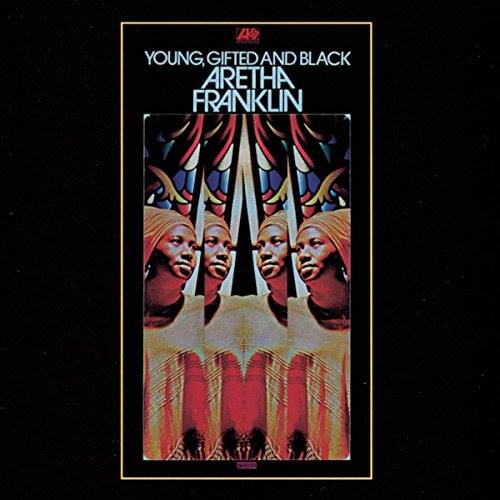

Aretha Franklin released eleven studio album during the 1970s, “Young, Gifted and Black” was her most successful of the decade as well as producing the most hit singles. In the whole of Aretha’s recorded output, the album remains one of her finest efforts. It was cutting edge for the day with it’s blending of Gospel, jazz, funk and R&B creating a sound and style that rang true to the heart of Black-Oriented Radio of the 70s. But the album struck more than just the BOR listeners. It hit with the hippie movement of the time as well as with the college-age generation. This was an album that spoke to many parts of the American culture. It’s not even so much because the songs are about protest or anguish because it is an album full of love songs, but it was the title of the album that struck a chord in many. Many people of the counter-culture were embracing the thought that being gifted and exceptional belongs to all factions of the US population. The title track says it all with its opening lyrics “To be young, gifted and black. Oh, what a lovely and precious thing.” Nina Simone (who wrote the song) followed that line with her cry to the world, “Open your heart is all I need.” This song was a cry for acceptance and love, pure and simple.

“Young, Gifted and Black” is an album full of highlights. Each song builds upon the previous. Quite honestly an album that merits play from beginning to end. Recorded over a seven-month period in 1970 and 1971, "Young Gifted And Black" captures Aretha Franklin at the peak of her artistic and commercial powers. Aretha Franklin was in her prime here, not only in terms of voice but also in terms of confidence -- you can just feel her exuding her status as the best of the best. The album represented a transitional period for Aretha, she was moving from her 60s R&B style to a more gentle soul sound, one could call her “smooth grooves” period. Earlier diehard fans may not have been keen to the idea initially but soon grew to love the new outlook from Aretha.

The album was like a who’s who of popular R&B, soul, jazz and pop music of the time including such luminaries as Billy Preston, Donny Hathway, Dr. John, Hubert Laws and Eric Gale. Aretha’s sisters Carolyn Franklin and Erma Franklin performed backing vocals for the album.

The first single, which was released a full year and two months before the album was an inspirational cover of Elton John’s “Border Song (Wholly Moses).” Franklin took the song to #37 in the US and #35 in Canada.

The album’s second single “Rock Steady” was originally released in February 1971 on the Criteria record label. It was later re-released in October 1971 on Atlantic Records and became a top ten ht reaching US #9 (as well as #2 on the R&B charts). Aretha Franklin wrote the uptempo funk song which was made all the more poignant with Donny Hathaway's swinging organ. The b-side “Oh Me Oh My (I’m A Fool For You Baby)” charted due to heavy airplay on R&B radio stations and reached #73 on the pop charts and #9 on the R&B charts.

The third single is one that many consider being the album’s highlight, “Day Dreaming,” another Aretha Franklin original composition reached #5 on the US pop chart as well as #1 on the R&B chart. The song achieved a rare feat for Franklin in that it was also a hit on the Easy Listening chart reaching #11. The song sold more than a million copies and was certified Gold by the RIAA (“Rock Steady” was also agold-certifiedd hit). The legendary Natalie Cole recorded “Day Dreaming” and was her last single release before her untimely passing. Corinne Bailey Rae also recorded the song which showed up on her debut album from 2006 as a bonus track.

"Day Dreaming"

The fourth and last single from the album is “All The King’s Horses” another Franklin original composition. This one reached #26 on the pop charts and #7 on the R&B charts. The b-side “April Fools” (A Burt Bacharach/Hal David tune) received a small amount of airplay.

In total five songs from “Young, Gifted and Black” charted on the US singles chart.

Nina Simone and poet Weldon Irvine, who contributed the lyrics, wrote the title track “To Be Young, Gifted and Black”. Simone told Irvine she wanted lyrics that "will make black children all over the world feel good about themselves forever." Franklin never released the song as a single but it did receive it’s fair share of airplay in the early 70s and has become one of Aretha's best known recordings. Aretha started the song out slow with a deliberate pace of a traditional spiritual, and rises to triumphant highs punctuated with dramatic stops and starts. The song is accented in a crescendo of church choir celebration. Aretha knew this song had a meaning deeper than the others on the album. Nina Simone wrote the song based on a stage play named "To Be Young, Gifted and Black," which was written in tribute to Lorraine Hansberry's writing and poetry. Hansberry is best known for her 1957 play "A Raisin in the Sun," the story of a black family living under racial segregation in Chicago that tries to better themselves after an insurance payout following the death of the father.

Franklin’s soulful cover of the Beatles’ “The reinvented Long and Winding Road” features Beatles sideman Billy Preston on the organ. Aretha put a bit of a funk twist to her recording of the Delfonics’ “(Didn’t I) Blow You Mind.”

Aretha Franklin (1972)


ARETHA FRANKLIN

Sunday, March 19, 2017

Maria Muldaur (1973)

"Maria Muldaur" by Maria Muldaur (1973)

Considered a one-hit wonder, Maria Muldaur, had been on the music scene for ten years performing with various musicians and bands including a band her then husband, Geoff Muldaur, was in called Jim Kweskin and The Jug Band. After the Jug Band broke up Geoff and Maria released tow albums as a duo in 1968 and 1972. Finally in 1972 Maria began her solo career and released her first album "Maria Muldaur" in 1973. Her album featured some of the great musicians of the time including David Lindley, Ry Cooder, Andrew Gold and Dr. John.


The album featured a mostly bluesy New Orleans jazz style, a sound that Dr. John had been known for throughout his career. The track "Any Old Time," written by country singer/songwriter Jimmie Rodgers, features a decidedly blues vocal with New Orleans styled piano and Hawaiian influenced guitar by David Lindley (we remember Lindley for his classic tune "Mercury Blues"). "Three Dollar Bill" is one of the album's highlights. Co-written by Mac Rebennack (aka Dr. John), "Three Dollar Bill" showcases the great Dr. John in a great horn arrangement and the prolific Jim Gordon on piano. Jim Gordon has worked with many luminaries including Elvin Bishop, Paul Butterfield, Linda Ronstadt, Delaney Bramlett, Jessi Colter, Waylon Jennings, Bonnie Raitt, The Band, Rod Stewart, Rita Coolidge and many others. Andrew Gold, singer and songwriter of the song, "Thank You For Being A Friend" was prominently featured playing acoustic guitar on the jazzy "Vaudeville Man," a song in which Dr. John tinkles the ivories. Maria does a charming rendition of Dolly Parton’s “My Tennessee Mountain Home.”

The album's prominent highlight is the smash single "Midnight At The Oasis" which reached #6 in the US and #21 in the UK in 1973. The song enjoyed a major amount of radio airplay that lasted several years. The song impressed critics and peers alike so much that it was nominated for Record of the Year and Song of the Year at the 17th Annual Grammy Awards held in 1975.

David Nichtern, songwriter of “Midnight At The Oasis said, "I wrote the song before I started working with Maria... the details are a little bit intimate, but let's just say there was a girl, a waterbed, feta cheese and grape leaves, and a Martin 000-18 (acoustic guitar) near by.

I actually produced the demo (in Woodstock) that got Maria her Warner Bros solo artist deal, so I was on the map already with them to that extent. On that demo was a song I wrote called 'I Never Did Sing You a Lovesong' which made it onto her album as well as a track that Wendy Waldman wrote called 'Mad Mad Me (I Love You)' which made it onto the album as it was so I got producer credit for that track.
My memory is that I came out to LA and got to play rhythm guitar on several tracks. From there I got more and more involved with the record. At a rehearsal, I played 'Midnight at the Oasis' for Lenny Waronker and he liked it and wanted to include it on the record. We recorded it with some great musicians - Jim Gordon on drums (who later went crazy and killed his own mother and went to prison for life I think). Freebo played bass, Mark Jordan on piano and me on acoustic guitar. Later, Famous Amos Garrett added that amazing electric guitar part and solo, which in some circles is as famous as the song itself. Warner’s released the album and then Midnight as the first single... they hung in there with it for something like nine months until it took off.... that might not happen today... the rest is herstory as they say..."


In an interview with Maria, she explained: “I was making my first solo album for Warner Brothers in 1973, and I had just recently separated from my then-husband, Geoff Muldaur, who not only was my partner, but also my musical partner, and sort of the mastermind of, musically, whatever we did together. So being a solo artist was completely strange and alien and rather scary territory for me.

And so I was out in California finding myself in the studio with all the top guns: Dr. John, Ry Cooder, David Lindley; I mean, all the fabulous guys that played on my first album. And I had been working with a young guitarist named David Nichtern when I first separated from Geoffrey. He was very encouraging and told me, 'You can do this.' I was just sobbing and I was a mess. We had a little talk and he would say, 'Look, people still know you from the Jug Band, and if I can get work in these little coffee houses, you can, too.' And so we put together a few tunes, and he got us some gigs. This was real low-profile stuff. I'd be crying all the way up to the gig, and he'd say, 'Okay, dry your eyes and wash your face. We're on in half an hour.' And he was just a very supportive little brother to me.

And so when I found myself out in California doing this solo album, I was going to do one of his songs. He's a very lovely songwriter and he'd written this beautiful song called 'I Never Did Sing You a Lovesong.' Very lyrical little waltz-y, kind of a country waltz kind of thing. And he knew I had all these really fabulous musicians at the studio. But he came out on his own dime, because he just felt, well, maybe they'll let him play rhythm guitar on his own tune or something. So he came on out in his little VW bug and slept on a mattress on my living room floor in the Hollywood Hills and came to the studio, was observing everything, and did get to play on his own song.

And then we were almost finished recording, the producer came in the studio and said, 'You know, I've been listening to the rough mixes, and I think we're in pretty good shape.' He said, 'You know, we've got some up tempo stuff and we've got some nice ballads. I think if we had one more medium tempo song, then the album would be nicely balanced out, we'd be in good shape. Does anything come to mind?'

So David was standing right there, and just off the top of my head, kind of as a gesture of gratitude to him because he had been so supportive to me, kind of holding my hand through all of this, which was very overwhelming, you know, I'd never been in that position before of being a solo artist and trying to make my way through an album that was all about me. And I said, 'Well, David has this song. It's a funny little song, really, but it is medium tempo.' I said, 'David, play them 'Midnight at the Oasis' and see what you think.' Which I'd heard before and I thought it was just a goofy little song; I didn't think much of it one way or the other. So he whipped out his guitar and started to play it on the guitar, and I sang it. And the producer cocked his head, he said, 'Oh, that's cute, okay, wanna do that one?' So as a gesture to David, I said, 'Yeah, let's do that one. I have no other bright ideas.' And we called in some great studio players and we cut it. And the rest is history."

After “Midnight At The Oasis” had been a hit Maria came back in 1974 with her second hit “I’m A Woman,” which made it to #12 on the US single chart. Saving her from being a one hit wonder.

"Midnight At The Oasis"