Showing posts with label Atlantic. Show all posts

Sunday, November 11, 2018

Faze-O - Riding High (1977)

“Riding High” by Faze-O (1977)

Release Date: November 1977
Produced by Tight Corporation (Clarence Satchell)
Genre: R&B, Soul, Funk
Label: She Records (a subsidiary of Atlantic Records)

Chart Positions: #98 (US), #19 (US R&B)
Certifications: N/A
Awards: N/A

Singles and Chart Positions: “Riding High” #9 (US R&B)
Singles Certifications: N/A
Other Charting Tracks: N/A

Best Tracks: ALL TRACKS: Solid album from start to finish


Trivia: “Riding High” is one of those classics that most people do not know exists, but those that know this album love it.

Dayton, Ohio band Faze-O released their debut album “Riding High” in 1977. They made their mark on the US charts reaching #98 on the US Top 100 albums chart as well as making it to #19 on the R&B albums chart. The lead single “Riding High” got them into the top 10 reaching #9 on the US R&B singles chart. Unfortunately, this success was not duplicated on their next two albums.

The album was produced by Tight Corporation which is actually the funk band Ohio Players lead by the production talents of Clarence Satchell.

Several of the songs on the album have a similar sound to Ohio Players’ signature sound such as “Funky Reputation,” “Toejam” and “Get Some Booty.”

"Riding High (1977)


The following is a user review I found on AllMusic:

Good ole dirty FUNK played like nobody's business, the album boasts the massive cut "Ridin High" which is their only huge hit and the album cuts Funky Reputation, Toe Jam, Get Some Booty & Test - This Is Faze-O. This album needs no introduction to the FUNK world as it was produced by the biggest FUNK band of the time "Ohio Players" now this is where we get to the reals, all these guys are great musicians in their own right and can throw down the FUNK but deeply listening to the sounds, one who knows their music can point out that they were deep rooted with the band who produced them. FUNK fans it's a must have but for newbies, this is the only one u need and ur good to go.

The following is a short review from Picadilly Records:

Having made an impact on the Billboard charts in 1978 with their most successful single “Riding High”, Faze-O stake their claim as masters of soulful, groovy funk music. Produced by Clarence Satchell of the Ohio Players, the whole album percolates with heavy guitar and a medley of fresh, funky keyboards.

The following is a review found on Funk My Soul:

A spacey soul classic with a sound that never gets old!
Faze-O will be forever remembered for their massive cut “Riding High” a stretched out slow funk jam that has amazing keyboards, floating guitars, and a super-dope groove that’s stayed fresh from the moment it was first set to wax back in 1977! This album’s the group’s first, and best — and it’s a really wonderful record that blends together funky fusion and heavy soul filled with killer cuts arranged by the Ohio Players, and with lots of great keyboards by the group! Includes, of course, the hit “Riding High” — plus “Toe Jam” and “Funky Reputation.

This group was produced by the Ohio Players and this album by these midwest funkers have all the earmarks of an Ohio Players production: deep and heavy drums and fills, funky ass bass, familiar horn lines, burbling keyboards, clavinets, and synths, and funky vocals. The track that gets the most attention from this album is “riding high”, an all time funk bomb! There wasn’t a time back in the late 70’s that you did not hear this cut on the radio or at one of your relatives or friends houses, especially at a late night party. This is a real mid-tempo smooth ride all the way until the end of the song. 2 songs on the album deserve special attention: the throbbing bass/synth funk of “funky reputation”, a blazing funk jam that you just have to blast out of your speakers on a hot saturday afternoon, and also “get some booty”(!) (yes, that is the title of this short,3 minute track! don’t worry, nothin’ nasty, just a fast paced funk frenzy with much emphasis on getting the boo-tay on the dance floor!). Other songs follow in the Ohio Player(s) style, but these 5 guys make a good funky sound all on their own.

The following review is December Decmber 3, 1977 issue of Billboard Magazine:

Five man disco/R&B group debuts on the new She label distributed by Atlantic. The sound is a cross between Slave and The Ohio Players who arranged all seven selections. Synthesizer, percussion, clavinet and guitar spark the instrumentals which range from out and out funk and R&B flavored mid-tempo ballads. Best Cuts: Riding High, Funky Reputation, Toe Jam.

The song “Riding High” is a classic R&B tune that is occasionally heard on the airwaves from time to time. Many consider it to be a Quiet Storm classic.

Faze-O


FAZE-O

Saturday, May 27, 2017

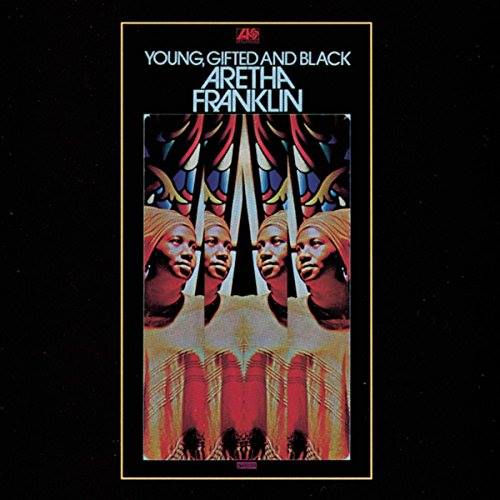
Aretha Franklin - Young, Gifted and Black (1972)

“Young, Gifted and Black” by Aretha Franklin (1972)

Release Date: January 24, 1972
Produced by Tom Dowd, Arif Mardin, Jerry Wexler
Genre: R&B, Soul, Southern Soul
Label: Atlantic
Chart Positions: #11 (US), #53 (Australia)
Certifications: Gold (US)

Singles: “Border Song (Wholly Moses)” #37 (US), #35 (Canada), “Rock Steady” #9 (US), #4 (Canada), #44 (Germany), “Oh Me Oh My (I’m A Fool For You Baby)”(b-side) #73 (US, Canada), “Day Dreaming” #5 (US), #9 (Canada), “All The King’s Horses” #26 (US), #70 (Canada), “April Fools” (b-side)

Young, Gifted and Black is the twentieth studio album by American singer Aretha Franklin, Released on January 24, 1972 by Atlantic Records. The album is Top 10 Gold-certified and won the 1972 Grammy Award for Best Female R&B Vocal Performance of the year. It takes its title from the 1958 Nina Simone song "To Be Young, Gifted and Black."


Aretha Franklin released eleven studio album during the 1970s, “Young, Gifted and Black” was her most successful of the decade as well as producing the most hit singles. In the whole of Aretha’s recorded output, the album remains one of her finest efforts. It was cutting edge for the day with it’s blending of Gospel, jazz, funk and R&B creating a sound and style that rang true to the heart of Black-Oriented Radio of the 70s. But the album struck more than just the BOR listeners. It hit with the hippie movement of the time as well as with the college-age generation. This was an album that spoke to many parts of the American culture. It’s not even so much because the songs are about protest or anguish because it is an album full of love songs, but it was the title of the album that struck a chord in many. Many people of the counter-culture were embracing the thought that being gifted and exceptional belongs to all factions of the US population. The title track says it all with its opening lyrics “To be young, gifted and black. Oh, what a lovely and precious thing.” Nina Simone (who wrote the song) followed that line with her cry to the world, “Open your heart is all I need.” This song was a cry for acceptance and love, pure and simple.

“Young, Gifted and Black” is an album full of highlights. Each song builds upon the previous. Quite honestly an album that merits play from beginning to end. Recorded over a seven-month period in 1970 and 1971, "Young Gifted And Black" captures Aretha Franklin at the peak of her artistic and commercial powers. Aretha Franklin was in her prime here, not only in terms of voice but also in terms of confidence -- you can just feel her exuding her status as the best of the best. The album represented a transitional period for Aretha, she was moving from her 60s R&B style to a more gentle soul sound, one could call her “smooth grooves” period. Earlier diehard fans may not have been keen to the idea initially but soon grew to love the new outlook from Aretha.

The album was like a who’s who of popular R&B, soul, jazz and pop music of the time including such luminaries as Billy Preston, Donny Hathway, Dr. John, Hubert Laws and Eric Gale. Aretha’s sisters Carolyn Franklin and Erma Franklin performed backing vocals for the album.

The first single, which was released a full year and two months before the album was an inspirational cover of Elton John’s “Border Song (Wholly Moses).” Franklin took the song to #37 in the US and #35 in Canada.

The album’s second single “Rock Steady” was originally released in February 1971 on the Criteria record label. It was later re-released in October 1971 on Atlantic Records and became a top ten ht reaching US #9 (as well as #2 on the R&B charts). Aretha Franklin wrote the uptempo funk song which was made all the more poignant with Donny Hathaway's swinging organ. The b-side “Oh Me Oh My (I’m A Fool For You Baby)” charted due to heavy airplay on R&B radio stations and reached #73 on the pop charts and #9 on the R&B charts.

The third single is one that many consider being the album’s highlight, “Day Dreaming,” another Aretha Franklin original composition reached #5 on the US pop chart as well as #1 on the R&B chart. The song achieved a rare feat for Franklin in that it was also a hit on the Easy Listening chart reaching #11. The song sold more than a million copies and was certified Gold by the RIAA (“Rock Steady” was also agold-certifiedd hit). The legendary Natalie Cole recorded “Day Dreaming” and was her last single release before her untimely passing. Corinne Bailey Rae also recorded the song which showed up on her debut album from 2006 as a bonus track.

"Day Dreaming"

The fourth and last single from the album is “All The King’s Horses” another Franklin original composition. This one reached #26 on the pop charts and #7 on the R&B charts. The b-side “April Fools” (A Burt Bacharach/Hal David tune) received a small amount of airplay.

In total five songs from “Young, Gifted and Black” charted on the US singles chart.

Nina Simone and poet Weldon Irvine, who contributed the lyrics, wrote the title track “To Be Young, Gifted and Black”. Simone told Irvine she wanted lyrics that "will make black children all over the world feel good about themselves forever." Franklin never released the song as a single but it did receive it’s fair share of airplay in the early 70s and has become one of Aretha's best known recordings. Aretha started the song out slow with a deliberate pace of a traditional spiritual, and rises to triumphant highs punctuated with dramatic stops and starts. The song is accented in a crescendo of church choir celebration. Aretha knew this song had a meaning deeper than the others on the album. Nina Simone wrote the song based on a stage play named "To Be Young, Gifted and Black," which was written in tribute to Lorraine Hansberry's writing and poetry. Hansberry is best known for her 1957 play "A Raisin in the Sun," the story of a black family living under racial segregation in Chicago that tries to better themselves after an insurance payout following the death of the father.

Franklin’s soulful cover of the Beatles’ “The reinvented Long and Winding Road” features Beatles sideman Billy Preston on the organ. Aretha put a bit of a funk twist to her recording of the Delfonics’ “(Didn’t I) Blow You Mind.”

Aretha Franklin (1972)


ARETHA FRANKLIN

Tuesday, May 9, 2017

Led Zeppelin - Houses Of The Holy

“Houses Of The Holy” by Led Zeppelin (1973)

Release Date: March 28, 1973
Produced by Jimmy Page
Genre: Hard Rock, Heavy Metal, Blues Rock
Label: Atlantic

Chart Positions: #1 (US, UK, Canada, Australia), #3 (Austria, Netherlands, Japan), #4 (Norway), #8 (Germany), #9 (New Zealand, Spain), #11 (Finland), #12 (Portugal), #15 (Sweden), #17 (Italy), #20 (Switzerland, Belgium), #24 (Denmark), #29 (France)
Certifications: 11xPlatinum (US), Platinum (UK, France), Gold (Germany, Argentina, Spain)

Singles: “Over The Hills and Far Away” #51 (US), #63 (Canada), “D’yer Mak’er” #20 (US), #2 (France), #7 (Canada, Poland)

One of the most iconic record covers of the 1970s is Led Zeppelin’s fifth album, Houses of the Holy, released on 28 March 1973 by Atlantic Records. It is their first album composed of entirely original material and it represents a turning point in musical direction for the band, who had begun to record songs with more layering and production techniques.


This was Led Zeppelin's final studio release on Atlantic Records before forming their own label, Swan Song Records, in 1974. It was also the only Led Zeppelin album that contained complete printed lyrics for each song. Although intended for release in January 1973, delays in producing the album cover meant that it was not released until March, when the band was on its 1973 European tour. They had trouble designing and printing the unique album cover by the artistic company Hipgnosis, with the band completely rejecting the initial artwork and the first prints of the final artwork accidentally coming out with a strong purple tint. When they finally got the artwork correct, the album was banned from sale in many locations because of the naked children on the cover who pay homage to the Arthur C. Clarke novel Childhood’s End. The album was nominated for a Grammy Award in the category of best album package.

The Houses of the Holy album cover was not a small army of naked children with wigs on, it was only two kids, a brother and sister, who were photographed over the course of ten days at dawn and at dusk. One of them went on to become a world famous TV presenter, Stefan Gates, of the BBC’s popular Cooking in the Danger Zone show.

Gates, who was five at the time said in an interview years later, “For the Zeppelin cover we went to Ireland during the Troubles. I remember arriving at the airport and seeing all these people with guns. We stayed in this little guest house near the Giant’s Causeway and to capture the so-called magic light of dawn and dusk we’d shoot first thing in the morning and at night. I’ve heard people saying they put wigs on several children. But there was only me and my sister and that’s our real hair. I used to love being naked when I was that age so I didn’t mind. I’d whip off my clothes at the drop of a hat and run around having a great time, so I was in my element. My sister was older so she was probably a bit more self-conscious.”

Produced by guitarist Jimmy Page (like all Zeppelin albums), the album featured sophisticated layered guitars, the addition of obscure instrumentation, and other rich production techniques. The album featured styles and sub-genres not heard on previous Led Zeppelin albums, such as funk, reggae, and doo-wop. The album is an indirect tribute to their fan base, who were showing up in record numbers to their live shows.  It perfectly straddles the bands early, more blues-based period from their later work, which consisted of more richly produced studio albums that tilted more towards pop and modern rock. Bass player and keyboardist John Paul Jones temporarily left the band for a few days during this album’s recording but soon returned and stayed with the band until the end.

There were also several recorded songs not included on Houses of the Holy but released on later albums such as Physical Graffiti and Coda. “Physical Graffiti” contained the songs “The Rover,” “Houses of the Holy” and “Black Country Woman.” While “Coda” contained “Walter’s Walk.”

In 1976 Led Zeppelin released their first live album named “The Song Remains The Same” the opening track of “Houses of the Holy.” Prior to the album's sessions the song had been rehearsed with the working title "Worcester and Plumpton Races," which was a reference to Page and Plant's homes. Successive titles were "The Overture" and "The Campaign." Finally as Plant was fine tuning the lyrics the title "The Song Remains The Same" was born.

"The Rain Song" was written in response to a conversation Jimmy Page had with George Harrison. Harrison asked Page why Led Zeppelin had never recorded any ballads.

The first single release “Over The Hills and Far Away” was a moderate hit in North America reaching #51 in the US and #63 in Canada. This evolved from the Yardbirds song "White Summer," an acoustic solo by Jimmy Page. Many of the same riffs and chords are in it. After The Yardbirds broke up, Led Zeppelin continued to play "White Summer" live. Jimmy Page and Robert Plant originally constructed the song in 1970 at Bron-Yr-Aur, a small cottage in Wales where they stayed after completing a gruelling North American concert tour. The song was first called "Many, Many Times", as shown on a picture of the original master on the Led Zeppelin website.

"D'yer Mak'er" (1973)

The second single “D’yer Mak’er” did better on the charts reaching US #20, #2 in France and #7 in both Poland and Canada. The title is a play on the word "Jamaica" when spoken in a British accent. The name of the song is derived from an old joke, where two friends have the following exchange: "My wife's gone to the West Indies." "Jamaica?" (which has a similar pronunciation as "D'you make her?") "No, she wanted to go". This song was meant to imitate reggae and its "dub" derivative emerging from Jamaica in the early 1970s. Its genesis is traced to Led Zeppelin's rehearsals at Stargroves in 1972, when drummer John Bonham started with a beat similar to 1950s doo-wop, and then twisted it into a slight off beat tempo, upon which a reggae influence emerged. The distinctive drum sound was created by placing three microphones a good distance away from Bonham's drums. Led Zeppelin had a curious history of single releases in America. While the band was active, they released just 10 singles, which typically did just well enough to get a mention from Casey Kasem on American Top 40. "D'yer Mak'er" was one of those singles (backed with "The Crunge"), peaking at #20. Zeppelin was never a "singles band," so these releases were intended to drive sales of the albums, which they did. They often sold well enough to make the charts, however, leaving poor Mr. Kasem to wonder how to pronounce the title to this one.

The third single “The Ocean” was released only in Germany and Austria and charted only in Germany at #8. "The Ocean" refers to the sea of fans seen from the stage at Led Zeppelin concerts, to whom this song was dedicated. The voice on the intro is drummer John Bonham. When he says, "We've done four already, but now we're steady and then they went, 1... 2... 3... 4...," he is referring to the takes. They had tried to record it 4 times prior but couldn't get it right, so as a pep talk he said his famous line. In the last line, the "Girl who won my heart" is Robert Plant's daughter Carmen, who was 3 years old at the time.

The album is filled with highlight after highlight, “The Crunge” is a funk tribute to Wilson Pickett, Otis Redding and James Brown and evolved out of a jam session built around Bonham’s off-beat drums and a bass riff by Jones. This song was used as the b-side to the single “D’yer Mak’er.” “Dancing Days” used as the b-side to “Over The Hills and Far Away” was the closest that Led Zeppelin ever came to writing a pop song. It was inspired by an Indian tune that Jimmy Page and Robert Plant heard while traveling in Bombay.

"Houses of the Holy (1973) Inside Gatefold Artwork

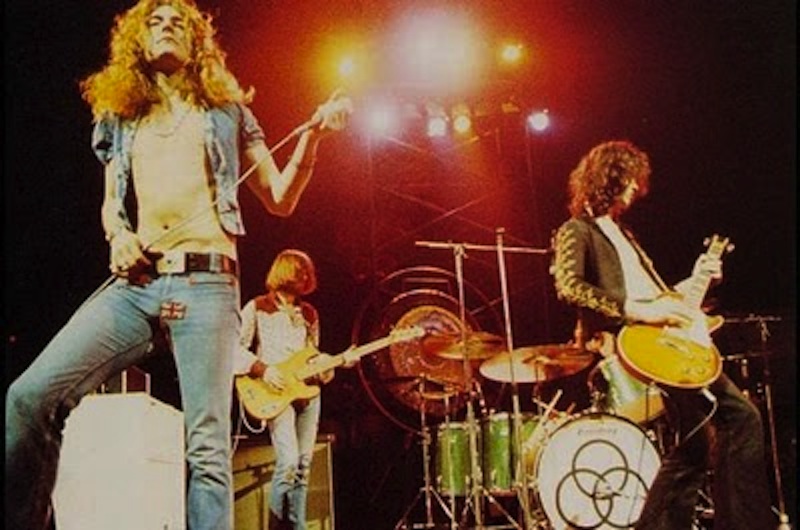
Led Zeppelin (1973)


LED ZEPPELIN

Sunday, April 30, 2017

Average White Band - Cut The Cake (1975)

“Cut The Cake” by Average White Band (1975)

Release Date: June 1975
Produced by Arif Mardin
Label: Atlantic

Chart Positions: #4 (US), #28 (UK), #21 (New Zealand)
Certifications: Gold (US)

Singles: “Cut The Cake” #10 (US), #31 (UK), “If I Ever Lose This Heaven” #39 (US), “School Boy Crush” #33 (US)

Cut the Cake is the third album released by Average White Band, released in 1975. This album included the hit single "Cut the Cake", the title track, which reached #10 on the US singles chart. Average White Band (also AWB) are a Scottish funk and R&B band that had a series of soul and disco hits between 1974 and 1980. They are best known for their million-selling instrumental track "Pick Up the Pieces" and the 1975 hit “Cut The Cake.


The follow-up album to the immensely successful AWB in 1974, recording was plagued by creative and artistic differences, with several members of the band walking out of the studio on three occasions. One point of conflict was the band's mourning for original drummer, Robbie McIntosh, who died of a heroin overdose in 1974. Producer Arif Mardin considered pulling the plug on the project due to this tension but ultimately persevered and oversaw its completion.

"Cut The Cake"

In the informative liner notes that he wrote for Rhino's early-'90s reissue of Cut the Cake, writer A. Scott Galloway explains that this excellent album was recorded under less-than-ideal circumstances. The Average White Band's original drummer, Robbie McIntosh, died of a heroin overdose in 1974, and the surviving members were still in mourning when they started working on their third album, Cut the Cake (which originally came out on LP in 1975). Steve Ferrone, a black drummer from London, England, was hired as a replacement -- ironically, he became the first black member of a Scottish soul/funk band that had a very African-American sound and a largely African-American following. Despite the fact that AWB's members still had McIntosh's death on their minds when they were writing and recording Cut the Cake, this isn't a depressing or consistently melancholy album; far from it. In fact, parts of the album are downright fun, especially up-tempo funk gems like "School Boy Crush," "Groovin' the Night Away" and the hit title song (which made it to number seven on Billboard's R&B singles chart). Cut the Cake is also the album that gave us the ballad "Cloudy" (one of the more melancholy tracks) and AWB's version of "If I Ever Lose This Heaven," a smooth soul classic that was originally recorded by Quincy Jones in 1973. The song wasn't a chart-buster -- it peaked at number 25 on Billboard's R&B singles chart -- but it did become a favorite amongst AWB fans and enjoyed a lot of exposure on quiet storm formats. AWB's members certainly don't sound like they're in mourning on Cut the Cake. If anything, they honor McIntosh's memory by showing their resilience and delivering one of their finest and most engaging albums.

Average White Band (1975)


AVERAGE WHITE BAND

Thursday, March 30, 2017

Roberta Flack - Killing Me Softly (1973)

“Killing Me Softly” by Roberta Flack (1973)

Release Date: August 1, 1973
Produced by Joel Dorn
Chart Positions: #3 (US), #40 (UK), #6 (Norway), #9 (Netherlands), #11 (Australia), #13 (Canada), #47 (Germany)
Certifications: 2xPlatinum (US), Gold (Canada)
Singles: “Killing Me Softly With His Song” (#1 US, Canada, New Zealand, Australia, #3 Holland, #4 Netherlands, Norway, #5 France, #6 UK, Brazil, #8 South Africa, #17 Belgium, #19 Austria, #30 Germany, #32 Switzerland)
“Jesse” (#23 Canada, #24 Australia, #30 US)

Killing Me Softly reached US #3 and #2 on the US Soul chart. The Recording Industry Association of America (RIAA) certified the album GOLD on August 27, 1973, and double platinum on January 30, 2006. It was nominated for a Grammy Award for Album of the Year, which it lost to Stevie Wonder's 1973 album Innervisions. The album's title track was released as a single and topped the Billboard Hot 100 and won the 1974 Grammy Award for Record of the Year.


“Killing Me Softly” is Roberta Flack’s fourth studio album (her fifth if you include the collaboration albums with Donny Hathaway). She spent 18 months recording the album with producer Joel Dorn. Dorn, a jazz and R&B producer, has produced albums for Max Roach, Herbie Mann, the Neville Brothers and others. Dorn and Flack took a less is more approach in producing an album full of soulful heartfelt tunes. They left out all the catchy pop hooks that were popular in the 70s and went for a straightforward smooth soulful sound that has paid off as time has past. The album is still as fresh and heart felt as it was in 1973.

The first single “Killing Me Softly With His Song,” written by Charles Fox and Norman Gimbel, became a huge hit single and received major airplay all over AM and FM radio being played on Top 40 Pop, Easy Listening, R&B and Jazz radio stations. Gimbel and Fox also wrote the theme songs to the TV shows Happy Days and Laverne & Shirley. Lori Lieberman was the first to record the song in late 1971, releasing it in early 1972. Helen Reddy has said she was sent the song, but "the demo sat on my turntable for months without being played because I didn't like the title." Roberta Flack first heard the song on an airline, when the Lieberman original was featured on the in-flight audio program. After scanning the listing of available audio selections, Flack would recall: "The title, of course, smacked me in the face. I immediately pulled out some scratch paper, made musical staves then played the song at least eight to ten times jotting down the melody that I heard. When I landed, I immediately called Quincy Jones at his house and asked him how to meet Charles Fox. Two days later I had the music." Shortly afterwards Flack rehearsed the song with her band in the Tuff Gong Studios in Kingston, Jamaica but did not then record it.

In September 1972, Flack was opening for Marvin Gaye at the Greek Theater; after performing her prepared encore song, Flack was advised by Gaye to sing an additional song. Flack – "I said well, I got this song I've been working on called "Killing Me Softly..." and he said "Do it, baby." And I did it and the audience went crazy, and he walked over to me and put his arm around me and said, "Baby, don't ever do that song again live until you record it." Released in January 1973, Flack's version spent a total of five non-consecutive weeks, more weeks than any other record in 1973 at #1. Billboard ranked it as the #3 song for 1973. Charles Fox suggested that Flack's version was more successful than Lieberman's because Flack's "version was faster and she gave it a strong backbeat that wasn't in the original."[7] According to Flack: "My classical background made it possible for me to try a number of things with [the song's arrangement]. I changed parts of the chord structure and chose to end on a major chord. [The song] wasn't written that way."[14] Flack plays electric piano on the track. Several well known jazz musicians performed on the song including bass is by Ron Carter, guitar by Hugh McCracken and drums by Ray Lucas. Flack won the 1973 Grammy Award for Record of the Year and Best Pop Vocal Performance, Female, for the single, with Gimbel and Fox earning the Song of the Year Grammy. According to Lori Lieberman, who performed the original recording in 1972, the song was born of a poem she wrote after experiencing a strong reaction to the Don McLean song "Empty Chairs." She then related this information to Gimbel, who took her feelings and put them into words. Then Gimbel passed the words to Fox, who set them to music.


"Killing Me Softly"

The next single, the beautiful and somber, “Jesse” written by singer/songwriter Janis Ian. The song appeared on Ian’s 1974 album “Stars” of which its title track was inspired by Don McLean. Janis Ian began writing this song in the mid 1960s when she was around 14-15 years old. The song was going to be about a Vietnam vet coming home from the war. But then she thought that was too limiting. She ended up writing the song to have a more universal meaning, as the song could relate to anyone wondering when, or if, a loved one will return home. The song was a semi-hit reaching US #30, Australia #24 and Canada #23.

One of the album’s highlights is the upbeat and optimistic “When You Smile,” with Dixieland flavored guitars, banjo and horns the song has a universal groove that we don’t hear much from Flack. This would have made a great single. Written by jazz musician Ralph MacDonald, Roberta Flack was the first person to record the song. MacDonald also co-wrote “Where Is The Love” a Top 10 hit for Roberta Flack and Donny Hathaway in 1972. MacDonald also co-wrote “Just The Two of Us” a song that has become a standard as released in 1981.

Roberta Flack (1973)


ROBERTA FLACK