Saturday, May 13, 2017

Kraftwerk - Autobahn (1974)

“Autobahn” by Kraftwerk (1974)

Release Date: November 1, 1974
Produced by Ralf Hütter, Conny Plank, Florian Schneider
Genre: Electronic, Avant-Garde,  Krautrock
Label: Phillips, Vertigo
Chart Positions: #4 (UK), #5 (US, Canada), #7 (Germany, New Zealand), #9 (Australia), #11 (Netherlands), #27 (Sweden)
Certifications: Gold (France), Silver (UK)

Singles: “Mitternacht,” “Kometenmelodie 2,” “Autobahn” #3 (France), #4 (New Zealand), #9 (Germany), #11 (UK), #12 (Holland, Canada), #15 (South Africa), #16 (Netherlands), #20 (Ireland), #22 (Belgium), #25 (US), #27 (Belgium), #30 (Australia)

Autobahn is the fourth studio album by German electronic band Kraftwerk, released in November 1974. The 22-minute title track "Autobahn" was edited to 3:27 for single release and reached number 25 in the US, number 9 in Australia and performed even higher around Europe, reaching number 4 in the UK and number 7 in Germany. This commercial success came after the band had released three experimental and purely instrumental albums.

The album possesses many ironies in it music. The arrangements are precise to the point of suggesting mechanism yet able to showcase the group's gift for simple, wistful melodies. Kraftwerk is able to capture and make beautiful the sensations of everyday activity - such as going for a drive along the highway (or autobahn if you may).  The album is based on the very first road opened in Germany in 1932, a year before Hitler's ascension to Chancellorship. The album however has nothing to do with Hitler and everything to do with an enjoyable trip on the autobahn.


Autobahn is an electronic album that includes violin, flute, piano and guitar used along with synthesizers. Autobahn is where the group's hypnotic electronic pulse genuinely came into its own. The main difference between Autobahn and its predecessors is how it develops an insistent, propulsive pulse that makes the repeated rhythms and riffs of the shimmering electronic keyboards and trance-like guitars all the more hypnotizing. Within Autobahn, the roots of electro-funk, ambient, and synth pop are all evident -- it's a pioneering album. The album brought Kraftwerk into the spotlight charting in high positions throughout the world with its highest peak positions in the UK (#4) and US (#5). he album cover, which features a colorful drawing of a motorway on a summer day, was painted by Emil Schult, who also co-wrote the lyrics to the title song.

Autobahn (Single Edit 1974)

There were three singles released from the album the first “Mitternacht” (Midnight) went almost unnoticed and failed to chart. The second single, an instrumental track, “Kometenmelodie” (Comet Melody 2) also failed to chart. Finally it was the third single “Autobahn” that burned up the charts around the world. “Autobahn” is a 22 minute long that was crafted to reproduce a journey on the German motorway. Band member Ralf Hutter recorded the passing cars in the background by dangling a microphone out of the window of his old grey Volkswagen, as it traveled down the autobahn. However, these recordings were not suitable for the song, so they recreated the car sounds using synthesizers. The song was was edited to a more modest 3 minute and 28 seconds running time and was released to the US market while a differently edited version of 3 minutes and 8 seconds was released in the UK. There has been confusion as to what Kraftwerk sings in the vocals. Some people have thought they were saying “fun, fun, fun on the autobahn,” but they were actually singing, "wir fahren, fahren, fahren auf der Autobahn" which means "we drive, drive, drive on the Autobahn.” The song was a huge hit reaching the Top 30 in more than a dozen countries around the world including its highest peak positions in France (#3), New Zealand (#4) and Germany (#9).

The influence of "Autobahn" only continued to grow with influence as each year has gone by. Hints of the Kraftwerk sound began to show up in the music of the artists such as David Bowie, Africa Bambaataa and Depeche Mode. 

Kraftwerk (1974)


KRAFTWERK

Thursday, May 11, 2017

Commodores - Hot On The Tracks (1976)

“Hot On The Tracks” by Commodores (1976)

Release Date: June 1976
Produced by James Anthony Carmichael and Commodores
Genre: R&B, Soul, Funk
Label: Motown
Chart Positions: #12 (US), #28 (Canada), #39 (New Zealand)
Certifications: N/A

Singles: “Just To Be Close To You” #7 (US), #12 (Canada), #62 (UK), “Come Inside,” “Let’s Get Started,” “Fancy Dancer” #39 (US), #2 (France), #65 (Canada)

Hot on the Tracks is the fourth studio album by the Commodores, released by Motown Records in 1976. It includes the Top Ten single "Just to Be Close to You". The album was the band's first to top the R&B albums chart, where it stayed for six non-consecutive weeks, and peaked at number twelve on the pop albums chart.


Song after song this album never strays from its focus of funk and R&B jams. Several songs groove with a tight dance beat that gets you movin’. This was their last album that was pure funk and soul.

This was Commodores' last album true funk and soul album before taking the complete dive in pop and adult contemporary sound such as the classics "Easy" and "Three Times A Lady." "Hot On The Tracks" has a wonderful tight quality - never slick or too smooth, but just nicely put together - commercial, but not so much that it loses it's soul. It's a mixture of funk and sweet soul, done with a focused well crafted approach, and enough of a blend of the two style to keep things interesting.

Just To Be Close To You (1976)

The first single “Just To Be Close To You” was Commodores’ second Top Ten hit hot on the heels of “Sweet Love.” "Just to Be Close to You," initially met with strong resistance from pop radio stations. The song stayed at number one on the R&B chart for two weeks, and reached number seven on the US singles chart in the fall of 1976. The second single, a great funk groove, “Come Inside” failed to chart though continued the reputation they built on delivering heavy jams blended with soulful vocal harmonies. “Let’s Get Started,” the album’s third single reached #3 on the US Dance charts bringing a great dance jam to the table. The hard stompin’ guitar led jam; “Fancy Dancer” was the fourth and final single from the album. The song soared to the Top 40 reaching US #39 and #2 in France.

Commodores (1976)


COMMODORES

Tuesday, May 9, 2017

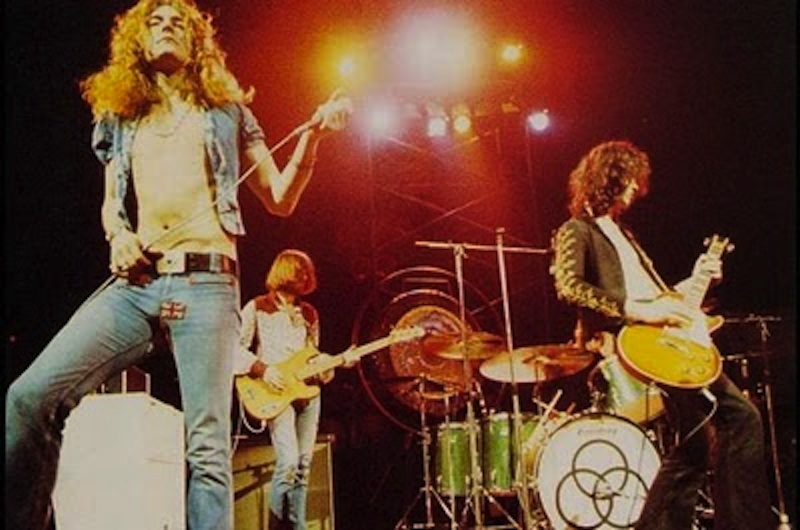
Led Zeppelin - Houses Of The Holy

“Houses Of The Holy” by Led Zeppelin (1973)

Release Date: March 28, 1973
Produced by Jimmy Page
Genre: Hard Rock, Heavy Metal, Blues Rock
Label: Atlantic

Chart Positions: #1 (US, UK, Canada, Australia), #3 (Austria, Netherlands, Japan), #4 (Norway), #8 (Germany), #9 (New Zealand, Spain), #11 (Finland), #12 (Portugal), #15 (Sweden), #17 (Italy), #20 (Switzerland, Belgium), #24 (Denmark), #29 (France)
Certifications: 11xPlatinum (US), Platinum (UK, France), Gold (Germany, Argentina, Spain)

Singles: “Over The Hills and Far Away” #51 (US), #63 (Canada), “D’yer Mak’er” #20 (US), #2 (France), #7 (Canada, Poland)

One of the most iconic record covers of the 1970s is Led Zeppelin’s fifth album, Houses of the Holy, released on 28 March 1973 by Atlantic Records. It is their first album composed of entirely original material and it represents a turning point in musical direction for the band, who had begun to record songs with more layering and production techniques.


This was Led Zeppelin's final studio release on Atlantic Records before forming their own label, Swan Song Records, in 1974. It was also the only Led Zeppelin album that contained complete printed lyrics for each song. Although intended for release in January 1973, delays in producing the album cover meant that it was not released until March, when the band was on its 1973 European tour. They had trouble designing and printing the unique album cover by the artistic company Hipgnosis, with the band completely rejecting the initial artwork and the first prints of the final artwork accidentally coming out with a strong purple tint. When they finally got the artwork correct, the album was banned from sale in many locations because of the naked children on the cover who pay homage to the Arthur C. Clarke novel Childhood’s End. The album was nominated for a Grammy Award in the category of best album package.

The Houses of the Holy album cover was not a small army of naked children with wigs on, it was only two kids, a brother and sister, who were photographed over the course of ten days at dawn and at dusk. One of them went on to become a world famous TV presenter, Stefan Gates, of the BBC’s popular Cooking in the Danger Zone show.

Gates, who was five at the time said in an interview years later, “For the Zeppelin cover we went to Ireland during the Troubles. I remember arriving at the airport and seeing all these people with guns. We stayed in this little guest house near the Giant’s Causeway and to capture the so-called magic light of dawn and dusk we’d shoot first thing in the morning and at night. I’ve heard people saying they put wigs on several children. But there was only me and my sister and that’s our real hair. I used to love being naked when I was that age so I didn’t mind. I’d whip off my clothes at the drop of a hat and run around having a great time, so I was in my element. My sister was older so she was probably a bit more self-conscious.”

Produced by guitarist Jimmy Page (like all Zeppelin albums), the album featured sophisticated layered guitars, the addition of obscure instrumentation, and other rich production techniques. The album featured styles and sub-genres not heard on previous Led Zeppelin albums, such as funk, reggae, and doo-wop. The album is an indirect tribute to their fan base, who were showing up in record numbers to their live shows.  It perfectly straddles the bands early, more blues-based period from their later work, which consisted of more richly produced studio albums that tilted more towards pop and modern rock. Bass player and keyboardist John Paul Jones temporarily left the band for a few days during this album’s recording but soon returned and stayed with the band until the end.

There were also several recorded songs not included on Houses of the Holy but released on later albums such as Physical Graffiti and Coda. “Physical Graffiti” contained the songs “The Rover,” “Houses of the Holy” and “Black Country Woman.” While “Coda” contained “Walter’s Walk.”

In 1976 Led Zeppelin released their first live album named “The Song Remains The Same” the opening track of “Houses of the Holy.” Prior to the album's sessions the song had been rehearsed with the working title "Worcester and Plumpton Races," which was a reference to Page and Plant's homes. Successive titles were "The Overture" and "The Campaign." Finally as Plant was fine tuning the lyrics the title "The Song Remains The Same" was born.

"The Rain Song" was written in response to a conversation Jimmy Page had with George Harrison. Harrison asked Page why Led Zeppelin had never recorded any ballads.

The first single release “Over The Hills and Far Away” was a moderate hit in North America reaching #51 in the US and #63 in Canada. This evolved from the Yardbirds song "White Summer," an acoustic solo by Jimmy Page. Many of the same riffs and chords are in it. After The Yardbirds broke up, Led Zeppelin continued to play "White Summer" live. Jimmy Page and Robert Plant originally constructed the song in 1970 at Bron-Yr-Aur, a small cottage in Wales where they stayed after completing a gruelling North American concert tour. The song was first called "Many, Many Times", as shown on a picture of the original master on the Led Zeppelin website.

"D'yer Mak'er" (1973)

The second single “D’yer Mak’er” did better on the charts reaching US #20, #2 in France and #7 in both Poland and Canada. The title is a play on the word "Jamaica" when spoken in a British accent. The name of the song is derived from an old joke, where two friends have the following exchange: "My wife's gone to the West Indies." "Jamaica?" (which has a similar pronunciation as "D'you make her?") "No, she wanted to go". This song was meant to imitate reggae and its "dub" derivative emerging from Jamaica in the early 1970s. Its genesis is traced to Led Zeppelin's rehearsals at Stargroves in 1972, when drummer John Bonham started with a beat similar to 1950s doo-wop, and then twisted it into a slight off beat tempo, upon which a reggae influence emerged. The distinctive drum sound was created by placing three microphones a good distance away from Bonham's drums. Led Zeppelin had a curious history of single releases in America. While the band was active, they released just 10 singles, which typically did just well enough to get a mention from Casey Kasem on American Top 40. "D'yer Mak'er" was one of those singles (backed with "The Crunge"), peaking at #20. Zeppelin was never a "singles band," so these releases were intended to drive sales of the albums, which they did. They often sold well enough to make the charts, however, leaving poor Mr. Kasem to wonder how to pronounce the title to this one.

The third single “The Ocean” was released only in Germany and Austria and charted only in Germany at #8. "The Ocean" refers to the sea of fans seen from the stage at Led Zeppelin concerts, to whom this song was dedicated. The voice on the intro is drummer John Bonham. When he says, "We've done four already, but now we're steady and then they went, 1... 2... 3... 4...," he is referring to the takes. They had tried to record it 4 times prior but couldn't get it right, so as a pep talk he said his famous line. In the last line, the "Girl who won my heart" is Robert Plant's daughter Carmen, who was 3 years old at the time.

The album is filled with highlight after highlight, “The Crunge” is a funk tribute to Wilson Pickett, Otis Redding and James Brown and evolved out of a jam session built around Bonham’s off-beat drums and a bass riff by Jones. This song was used as the b-side to the single “D’yer Mak’er.” “Dancing Days” used as the b-side to “Over The Hills and Far Away” was the closest that Led Zeppelin ever came to writing a pop song. It was inspired by an Indian tune that Jimmy Page and Robert Plant heard while traveling in Bombay.

"Houses of the Holy (1973) Inside Gatefold Artwork

Led Zeppelin (1973)


LED ZEPPELIN

Saturday, May 6, 2017

Joni Mitchell - Blue (1971)

“Blue” by Joni Mitchell (1971)

Release Date: June 22, 1971
Produced by Joni Mitchell
Genre: Folk
Label: Reprise
Chart Positions: #15 (US), #9 (Canada), #3 (UK), #24 (Norway)
Certifications: Platinum (US), 2xPlatinum (UK)

Singles: “Carey” #27 (Canada), #93 (US), “California” (No chart data)
Best Tracks: ALL TRACKS. Again Joni gives us a solid collection of music.

“Blue” was Joni’s fourth studio album and her first to reach the Top Ten in her native homeland Canada.  “Blue” is regarded, by music critics, to be one of the greatest albums of all-time.


The pivotal experience in Mitchell's life that drove the emergence of the album was her relationship with James Taylor. She had broken up with Graham Nash and begun an intense relationship with Taylor by the summer of 1971, visiting him on the set of the movie Two-Lane Blacktop, the aura of which is referred to in "This Flight Tonight". The songs "Blue" and "All I Want" have specific references to her relationship with Taylor, such as a sweater that she knitted for him at the time, and his heroin addiction. Despite his difficulties, Mitchell evidently felt that she had found the person with whom she could pair-bond in Taylor, and was devastated when he broke off the relationship. She retreated to the studio to record Blue.

In 1979 Mitchell reflected, "The Blue album, there's hardly a dishonest note in the vocals. At that period of my life, I had no personal defenses. I felt like a cellophane wrapper on a pack of cigarettes. I felt like I had absolutely no secrets from the world and I couldn't pretend in my life to be strong or to be happy. But the advantage of it in the music was that there were no defenses there either."

Mitchell continued to use alternate tunings on her guitar to allow easier access to augmented chords and notes in unexpected combinations. Due to the stark and bare revelations in the album, when it was first played for Kris Kristofferson he is reported to have commented, "Joni! Keep something of yourself!

Two singles were released from the album “Carey” was Joni’s follow-up single to her classic hit “Big Yellow.” In Canada the song fared well reaching #27 on their singles chart. Mitchell has stated that the "Carey" in question was a memorable character named Cary Raditz (or "Carrot" Raditz), a cane-carrying chef with bright red hair that she met in Matala during her European odyssey of 1970. At times it was rumored the song was about James Taylor. The second single “California” was recorded while Joni was living in France but longing for the creative climate she had experienced in California. In the song she expresses the depth of her longing for California by singing that if she was back in California she would even be willing to kiss a policeman, despite considering herself a member of the counterculture.

Little Green

“Little Green,” an album highlight was written by Joni about the daughter she had given up for adoption in 1965, when she was a poor folk singer in Toronto. The existence of her daughter, originally called Kelly Dale, was not publicly known until 1993, when a roommate from Mitchell's art-school days in the 1960s sold the story of the adoption to a tabloid magazine. Mitchell commented on the situation in an interview quoted in a 1998 article: "I was dirt poor. An unhappy mother does not raise a happy child. It was difficult parting with the child, but I had to let her go." Mitchell was reunited with her daughter, Kilauren Gibb, in 1997.

In his review for Rolling Stone Magazine, Timothy Crouse wrote regarding the song "All I Want," The accompaniment - James Taylor and Joni strumming a nervous, Latin-flavored guitar part over a bass heartbeat that throbs throughout the song - perfectly expresses Joni's excitement and anticipation."

The title track, "Blue," was supposedly penned for James Taylor. Blue is a nickname she gave Taylor during that time period.

James Taylor and Joni Mitchell (1971)


JONI MITCHELL

Thursday, May 4, 2017

Gladys Knight and The Pips - Neither One Of Us (1973)

“Neither One Of Us” by Gladys Knight and the Pips (1973)

Release Date: March 1973
Produced by Joe Porter, Johnny Bristol, Clay McMurray, Nick Zesses, Dino Fekaris and Hal Davis
Genre: R&B, Soul, Pop
Label: Soul Records (Motown)
Chart Positions: #9 (US)
Certifications: N/A

Singles: “Neither One Of Us” #2 (US), #5 (Brazil), #9 (France), #11 (Canada), #31 (UK), “Daddy Could Swear, I Declare” #19 (US)

“Neither One Of Us” is Gladys Knight and the Pips ninth studio album and their first to make it into the US Top Ten. The Soul Records label released the album shortly after the group left the label for Buddah Records while the title track was rising up the charts.


Two singles were released from the album including the title track “Neither One Of Us,” the song rose to #2 in the US and was a hit in various parts of the world including France, Brazil, Canada and the UK. The song also topped the US R&B charts for four weeks, their fourth of ten to top the chart. It was preceded by the O’Jays’ “Love Train” and followed by The Temptations’ “Masterpiece.” “Neither One Of Us” was written by Jim Weatherly who also wrote “Midnight Train To Georgia” and “Best Thing That Ever Happened To Me” both hits for Gladys and the Pips. In March 1974, at the Grammy Awards ceremony, Gladys Knight & The Pips won their first Grammy Award for Best Pop Vocal Performance by a Duo or Group for "Neither One of Us (Wants To Say Goodbye)." That same night, they won a second Grammy for Best R&B Vocal Performance by a Duo or Group for "Midnight Train to Georgia".

Neither One Of Us

The second single “Daddy Could Swear, I Declare” was a minor hit reaching US #19 and #2 on the US R&B chart.

The album contains a dusky and smoky slower soul ballad rendition of Stevie Wonder’s “For Once In My Life.”

Famed songwriter, arranger, musician Michael O'Martian composed the musical arrangement for the tracks "Who Is She" and "Neither One Of Us."

Gladys Knight and The Pips (1973)


GLADYS KNIGHT AND THE PIPS

Tuesday, May 2, 2017

David Bowie - Heroes (1977)

“Heroes” by David Bowie (1977)

Release Date: October 14, 1977
Produced by David Bowie and Tony Visconti
Genre: Art-Rock, Rock, Experimental Rock, Ambient
Label: RCA
Chart Positions: #35 (US), #3 UK, Netherlands), #6 (Australia), #13 (Norway, Sweden), #15 (New Zealand), #19 (Austria, France), #34 (Switzerland), #38 (Italy), #44 (Canada, Germany), #57 (Japan)
Certifications: Platinum Gold (UK, Canada)

Singles: “Heroes” #24 (UK), #8 (Holland, Ireland), #9 (France, Netherlands), #11 (Australia), #14 (Austria), #17 (Belgium, Italy), #19 (Germany, Denmark), #20 (Spain), #34 (New Zealand), #37 (Sweden), “Beauty and the Beast” #7 (France), #30 (Belgium), #39 (UK)

+++ 70s Music: Album by Album certifies David Bowie's "Heroes" as one of the great albums of all-time. +++

“Heroes” was David Bowie’s 12th studio album and his third installment of the Berlin Trilogy, which also includes 1977’s “Low” and 1979’s “Lodger.”


The album was recorded with Brian Eno and Tony Visconti, "Heroes" continued the ambient experiments of Bowie's previous album Low (released earlier that year) and featured the contributions of guitarist Robert Fripp. Of the three albums, it was the only one wholly recorded in Berlin.

Upon its release, it was met with positive critical reception and was named NME Album of the Year. The title track remains one of Bowie's best known and acclaimed songs. David Bowie composed all the lyrics and music with the exception of “Heroes,” “Moss Garden” and “Neuköln” were co-written with Brain Eno and “The Secret Life of the Arabia” co-written by Brian Eno and Puerto Rican guitarist Carlos Alomar.

Every track on the album was a first take. According to producer Brian Eno, the first take of every song ultimately need up being the best one.

Two singles were released from the album; “Heroes” which was a hit throughout the world and though it is considered a classic in the US the song never made it on to the US singles charts. Written by written by Bowie and Brian Eno, “Heroes” was inspired by the sight of Bowie's manager Tony Visconti embracing his girlfriend by the Berlin Wall, the song tells the story of two lovers, one from East and one from West Berlin. Visconti can be heard in the song banging on a metal ashtray that was found in the studio. The song was also released in German and French. The German version is called "Helden" and the French is called "Heros."

"Heroes"

The second single “Beauty and the Beast” was a minor hit in select countries in Europe.

One of the album's most popular tracks "V-2 Scneider" was written as a tribute to Florian Scnieder, a co-founder of the German electronic band Kraftwerk. Bowie has said Kraftwerk influenced him heavily in producing his Berlin albums.

David Bowie (1977)

Dvid Bowie (Heroes Tour 1978)


Check out The David Bowie Resource Center: https://www.facebook.com/groups/1789895121229585/


DAVID BOWIE

Sunday, April 30, 2017

Average White Band - Cut The Cake (1975)

“Cut The Cake” by Average White Band (1975)

Release Date: June 1975
Produced by Arif Mardin
Label: Atlantic

Chart Positions: #4 (US), #28 (UK), #21 (New Zealand)
Certifications: Gold (US)

Singles: “Cut The Cake” #10 (US), #31 (UK), “If I Ever Lose This Heaven” #39 (US), “School Boy Crush” #33 (US)

Cut the Cake is the third album released by Average White Band, released in 1975. This album included the hit single "Cut the Cake", the title track, which reached #10 on the US singles chart. Average White Band (also AWB) are a Scottish funk and R&B band that had a series of soul and disco hits between 1974 and 1980. They are best known for their million-selling instrumental track "Pick Up the Pieces" and the 1975 hit “Cut The Cake.


The follow-up album to the immensely successful AWB in 1974, recording was plagued by creative and artistic differences, with several members of the band walking out of the studio on three occasions. One point of conflict was the band's mourning for original drummer, Robbie McIntosh, who died of a heroin overdose in 1974. Producer Arif Mardin considered pulling the plug on the project due to this tension but ultimately persevered and oversaw its completion.

"Cut The Cake"

In the informative liner notes that he wrote for Rhino's early-'90s reissue of Cut the Cake, writer A. Scott Galloway explains that this excellent album was recorded under less-than-ideal circumstances. The Average White Band's original drummer, Robbie McIntosh, died of a heroin overdose in 1974, and the surviving members were still in mourning when they started working on their third album, Cut the Cake (which originally came out on LP in 1975). Steve Ferrone, a black drummer from London, England, was hired as a replacement -- ironically, he became the first black member of a Scottish soul/funk band that had a very African-American sound and a largely African-American following. Despite the fact that AWB's members still had McIntosh's death on their minds when they were writing and recording Cut the Cake, this isn't a depressing or consistently melancholy album; far from it. In fact, parts of the album are downright fun, especially up-tempo funk gems like "School Boy Crush," "Groovin' the Night Away" and the hit title song (which made it to number seven on Billboard's R&B singles chart). Cut the Cake is also the album that gave us the ballad "Cloudy" (one of the more melancholy tracks) and AWB's version of "If I Ever Lose This Heaven," a smooth soul classic that was originally recorded by Quincy Jones in 1973. The song wasn't a chart-buster -- it peaked at number 25 on Billboard's R&B singles chart -- but it did become a favorite amongst AWB fans and enjoyed a lot of exposure on quiet storm formats. AWB's members certainly don't sound like they're in mourning on Cut the Cake. If anything, they honor McIntosh's memory by showing their resilience and delivering one of their finest and most engaging albums.

Average White Band (1975)


AVERAGE WHITE BAND