Friday, June 9, 2017

Bread - Baby I’m-a Want You (1972)

“Baby I’m-a Want You’” by Bread (1972)

Release Date: January 1972
Produced by David Gates
Genre: Soft-Rock, Pop, Adult Contemporary, Easy Listening
Label: Elektra
Chart Positions: #3 (US), #9 (Canada, UK), #23 (Australia)
Certifications: Gold (US)
Singles: “Baby I’m-a Want You” #1 (Canada), #3 (US), #5 (Brazil), #8 (France, Australia), #14 (UK), “Everything I Own” #5 (US), #6 (Canada), #12 (Australia), #32 (UK), “Diary” #15 (US), #20 (Canada), #32 (UK)

“Baby I’m-a Want” was Bread’s fourth studio album released in January 1972. By this point in time Bread had 4 top ten hits with their fifth on the way. They were moving into peak of their career with “Baby I’m-a Want You,” which contained 3 Top 15 hits and was their best selling and highest peaking album in the US and Canada.


“Baby I’m-a Want You” featured Bread at their peak showcasing both their soft and hard sides. Yes, Bread had a hard edge to them in some of their tracks such as “Mother Freedom” with its crunchy James Griffin guitar solo. They alternate fast songs with slow ones and in doing so help to get the overall effect of expression in-the-round, which their earlier albums lacked. The superb soft rocker "Baby I'm-A Want You" made a brilliant opening which set the tempo for the album. The songs range from wistful sentimentality ("Diary") to spirited protest ("This Isn't What the Government," a poor man's "Taxman" with an anti-war slant).

There is no doubt as to Bread's musicianship, for all its members are accomplished and respected studio musicians. Robb Royer left the group before recording “Baby I’m-a Want You” (though his presence is felt due to a couple of tracks he co-wrote with James Griffin), replaced by the versatile Larry Knetchel. This slight realignment makes this one of Bread's strongest records.

The lead single “Baby I’m-a Want You” was released a few months before the album and reached #3 in the US and #1 in Canada. The song was a big hit throughout the world including Top Ten in France, Australia and Brazil. Written by keyboardist and singer David Gates, who says, "I had written the song on piano, and when we recorded it on piano, it had no life. I went home demoralized because I knew it was a good song. So I tried it on guitar and raised it a whole key, then redid it. It made all the difference in the world." “Baby I’m-a Want You” was certified Gold by the RIAA for US sales.

The second single “Everything I Own” was released a few days after the album and zoomed into the Top 10 in the US, Canada and Australia. The song is a classic known by many music lovers and has been recorded by many musicians including Boy George who took the song to #1 in the UK in 1987.  David Gates wrote “Everything I Own” in honor of his father after he passed. If you listen to the words, 'You sheltered me from harm, kept me warm, gave my life to me, set me free,' it says it all."

"Everything I Own" (1972)

The third and final single “Diary,” was another beautiful and heart-touching song. It wasn’t quite as big a hit as the two previous singles but it did reach #15 in the US and #20 in Canada. This song is about a boy who is in love with a girl. He finds her diary and reads it, only to find out she is in love with someone else. Bread keyboard player David Gates made up the story. The unusual sound that plays through the track is a guitar run through a synthesizer.

Bread 1972


BREAD

Wednesday, June 7, 2017

Crystal Gayle - When I Dream (1978)

“When I Dream” by Crystal Gayle (1978)

Release Date: June 2, 1978
Produced by Allen Reynolds
Genre: Country, pop, blues, jazz
Label: United Artists
Chart Positions: #52 (US), #25 (UK), #50 (Canada)
Album Certifications: Platinum (US), Gold (Canada), Silver (UK)

Singles: “Talking In Your Sleep” #11 (UK, Canada), #18 (US), #1 (US Country, Canada Country), #3 (US Adult Contemporary, Canada Adult Contemporary), “Why Have You Left The One You Left Me For” #1 (US Country, Canada Country), #16 (Canada Adult Contemporary), #22 (US Adult Contemporary), “When I Dream” #84 (US), #3 (US Country), #20 (US Adult Contemporary), “Heart Mender” #58 (US Country), “Hello I Love You” #4 (South Africa)
Singles Certification: “Talking In Your Sleep” (UK Silver)

Best Tracks: ALL TRACKS – Solid from start to finish

When I Dream is the fifth studio album by American country and pop music singer Crystal Gayle. It was released on June 2, 1978, at the height of her career. It was her second consecutive album to reach #2 on the US Billboard Country Music charts. Two singles from the album reached #1 on the Country Singles chart: "Talking in Your Sleep" (also a Top 20 Pop hit) and "Why Have You Left the One You Left Me For".  

By now it was evident that Crystal Gayle was a powerhouse all of her own. She did not need to ride on the coattails of her sister, the legendary Loretta Lynn. Crystal had the talent and the style to make even if she did not come from country music royalty.


See more on Crystal Gayle @ The Crystal Gayle Resource Center: https://www.facebook.com/groups/1449577508682080/

The album achieved a gold disc the year it was released but was certified platinum by the RIAA in 1982. It was also Gayle's second album to chart in the UK, where it reached #25, and was awarded a silver disc by the BPI. In Canada, the album was a huge hit being certified Gold and made it to #1 on Canada’s country music album chart. The album was #2 on the US country music chart.

As a result of the album’s success Crystal Gayle in January 1979 Crystal was given an American Music Award for Favorite Country Female Artist and the Top Female Vocalist Award by the Academy of Country Music. She also received two Grammy Award nominations for the song “Talking in Your Sleep” in the Best Country and Western Vocal Performance by a Female. As well she received two Country Music Association (CMA) Awards nominations for Entertainer of the Year and Female Vocalist of the Year and the song “Talking In Your Sleep” received a nomination for Song of the Year by the CMA.

The lead single “Talking In Your Sleep” was written by Bobby Woods and British songwriter Roger Cook. Roger Cook had been well known in the UK as one of the lead vocalists with the group Blue Mink who achieved four Top Ten hits in the UK. Cook also co-wrote “Hello I Love You,” “Let Your Feelings Flow,” “Hollywood,” “Livin’ In These Troubled Times” and “Tennessee” all of which were recorded by Crystal Gayle. Roger Cook was a renowned songwriter that co-wrote the million-selling hits “You Got Your Troubles” (The Fortunes), “I’d Like To Teach The World To Sing” (The Hillside Singers, The New Seekers) and “Long Cool Woman In A Black Dress (The Hollies). Songwriter Bobby Woods co-wrote hits for country music artists Billy “Crash” Craddock and Billie Jo Spears. One of his best-known compositions is “What’s Your Name, What's Your Number” which was a 1977 hit for the Andrea True Connection. Cook also co-wrote the songs “Half The Way” and “He Is Beautiful To Me” both recorded by Crystal. The teams of Bobby Woods and Roger Cook wrote the song “Keepin’ Power” which showed up on Crystal’s 1981 album “Hollywood Tennessee.”

The song “Talking In Your Sleep” was a huge hit shortly after “Don’t It Make My Brown Eyes Blue.” It was a sophisticated pop ballad sung beautifully by Crystal. It made it to #18 in the US and #11 in both the UK and Canada. On the country music charts, it was #1 in both the US and Canada and reached #3 on the Adult Contemporary charts in both the US and Canada. It was awarded a Silver certification in the UK for sales of more than 200,000 copies.

"Talking In Your Sleep" (1978)

The handclapping “Why Have You Left The One You Left Me For” was the album’s second single. The song did not make it to the pop charts but continued Crystal Gayle’s run of #1 hits on the country music charts reaching the top in the UK and Canada. The upbeat song adorned with a great session of handclaps and electric guitar chords received a fair amount of play in country and western bars across the US throughout the later 70s and 80s.

The third single “When I Dream” brought Crystal back to the lower reaches of the pop charts peaking at #84 on the US Billboard chart. It also made it to #3 on both the US and Canadian country music charts. This song is considered a classic amongst Crystal Gayle fans.

The fourth and last single “Heart Mender” made it to #58 on the US country music chart.

Crystal’s rendition of the classic torch song “Cry Me A River” (a hit in 1955 for Julie London) is an album highlight and was used as the b-side for the single “Why Have You Left The One You Left me For.” Many fans have felt the song could have been a great a-side single for Crystal.

“The Wayward Wind” a hit in 1956 for Gogi Grant (in the US) and Tex Ritter (in the UK). Crystal took the song and gave it her own twist an album highlight popular with fans.

“Paintin’ This Old Town Blue” a blues jazz-influenced tune stands out on the album.

The album closes with Crystal’s intimate recording of Johnny Cash’s “I Still Miss Someone.” Johnny first recorded this song back in 1958 with his nephew Roy Cash, Jr.  Crystal Gayle’s tender rendition features a glistening doubled tracking of her lead vocals.

Crystal Gayle (When I Dream open album gatefold cover) 1978

Crystal Gayle July 1978 Billboard Magazine Article


CRYSTAL GAYLE

Friday, June 2, 2017

Electric Light Orchestra - Face The Music (1975)

“Face The Music” by Electric Light Orchestra (1975)

Release Date: September 1975
Produced by Jeff Lynne
Genre: Symphonic Rock, Art Rock
Label: Jet (UK), United Artists (US)
Chart Positions: #8 (US), #7 (Italy), #11 (Netherlands), #30 (Australia), #31 (Canada), #41 (Sweden), #251 (Japan)
Certifications: Gold (US, Canada)

Singles: “Evil Woman” #2 (France), #6 (Canada), #8 (Switzerland, New Zealand), #10 (US, UK, Ireland), #20 (Denmark), #21 (Netherlands, Norway), #23 (Australia), “Strange Magic” #10 (France), #14 (US), #20 (Canada), #38 (UK), #85 (Australia), “Nightrider” (No chart data)

ELO's fifth studio album, “Face The Music,” was released in 1975 and was the first to be recorded in Musicland Studios Munich, which was producer, songwriter, musician Giorgio Moroder’s studio. The band featured a new line-up with bassist Kelly Groucutt and cellist Melvyn Gale replacing Mike de Albuquerque and Mike Edwards respectively. New member Kelly Groucutt sang lead vocals on "Poker" and "Down Home Town" (while Lynne sang harmony) as well as one of the verses in "Nightrider." (Usually, Lynne sang all lead vocals.)


At the time of recording “Face The Music,” Jeff Lynne was generating songs at a breakneck pace. ELO's formula first jelled into a sleek hit-making machine with this album on which Jeff Lynne's producing chops first matched his songwriting prowess. Lynne and ELO were well on their way to becoming full-fledged superstars.

“Face the Music” begins with the minute-and-a-half intro of “Fire on High” containing everything from a chanting church choir performing Handel’s “Messiah” to a backward masking message courtesy of drummer Bev Bevan, who declares, “The music is reversible, but time is not. Turn back, turn back, turn back, turn back.” Along with similar uses of the technique sprinkled throughout the album, these reversed snippets were clearly a shot at allegations that Eldorado‘s title track included backward Satanic messages. Snippets of Messiah by Handel can be heard during the album-opening as well.

It’s no secret that the biggest influence on ELO frontman Jeff Lynne was the Beatles. He created the group with the purpose of filling the void left in the wake of the 1970 breakup of the Fab Four. But Lynne went in the opposite direction of his idols; he initially focused on the experimental elements the Beatles tried out on their later albums and then built a collection of songs that made for a more streamline work deeper into the band’s career.

The first single “Evil Woman” was one of the most respectable chart hits of its era, and one of the best songs that Lynne ever wrote. He wrote the song on a piano at Musicland studios on the last days of recording, writing it within 30 minutes. The line "There's a hole in my head where the rain comes in," was inspired by the Beatles song, "Fixing a Hole." Originally the song was slated as filler for “Face The Music” but ended up being released as a single and was the band’s first solid hit worldwide.

“Strange Magic” quickly followed “Evil Woman” onto the charts and was another big hit. The second single from the album showed off Jeff Lynne’s writing in a more ethereal and dreamy vein.

"Strange Magic" (1975)

“Nightrider” was the third single release and was a tip of the hat to Lynne's first major band, The Nightriders. Despite ELO's rising popularity, the song failed to chart. The song was also included as the B-side on ELOs 1977 US hit single "Do Ya".

“Fire On High” was played quite a bit on FM radio stations across the US that many thought it was single. The song has gone on the achieve notoriety and has been used numerous times as background "bumper music" for radio commercials and sporting events over the years. The song was the UK B-side to the band's 1976 worldwide hit single "Livin' Thing", issued in blue vinyl. It was also later included — in an edited form minus the backward vocals — as the flip side of the United States hit single "Sweet Talkin' Woman" in 1978.

The dreamy ballad “One Summer Dream” closes the album with an ethereal emotion and beautifully sung by Jeff Lynne. An edited version of the song was used as the b-side to the 1978 hit single “Mr. Blue Sky.”

In the January 1, 1976 issue of Rolling Stone Magazine Charley Walers' review of the album appeared as follows:
Face the Music is more fine work from the Electric Light Orchestra, which rather quietly has evolved into a most consistent septet. Leader Jeff Lynne remains one of a few Sixties rockers who has developed a new and more adventurous style with a minimum of chaff in the process. In this setting he has successfully integrated a recognizable string trio (an achievement in itself) with his own melodic strings, producing a stately music without being stuffy or saccharine. Nor do the cellos and violin seem a mere afterthought. All eight compositions are strong and fully realized: "Poker" with its hard rock guitar explosions, the oddly workable C&W flirtation "Down Home Town" and an instrumental with lavish but spirited orchestration. The seven outdo themselves, however, on "One Summer Dream," a beautiful and evocative tune sung touchingly by Lynne. A trifle sentimental perhaps, but lyrically and musically, it displays more emotion (not to mention pure ability) than one ordinarily hears from a rock group. Most importantly the song, and the rest of Face the Music as well, reiterates that rock can be complex, ambitious and "arty," yet still remain rock. 

The following is Billboard Magazine review of "Face The Music": 
 Another beautiful set from the seven Brits who helped pioneer the merger of classical and rock on a mass basis. Divided fairly equally into smooth, flowing melodies fronted by equally relaxing singing and easy rockers, the guitar, vocals and writings of Jeff Lynne remain dominant. New to the group, however, is Kelly Groucutt, who handles bass and takes over on lead vocals from time to time. With a softer voice than Lynne's, Groucutt provides the balance that has been missed in past albums. Guitars, violins and cellos melt together easily under Lynne's production, and the unlikely combination works as well as anything the band has ever done. Musically, a truly beautiful LP. Best cuts: "Waterfall," "Evil Woman," "Poker," "Down Home Town."
- Billboard, 1975.
Electric Light Orchestra (1975)


Electric Light Orchestra + ELO

Wednesday, May 31, 2017

Village People - Cruisin'" (1978)

“Cruisin'" by Village People (1978)

Release Date: September 25, 1978
Produced by Jacques Morali
Genre: Disco
Label: Casablanca
Chart Positions: #1 (Germany, Austria), #2 (Canada), #3 (US, Sweden, France), #5 (Norway), #6 (Netherlands, New Zealand), #24 (UK), #27 (Japan)
Certifications: 3xPlatinum (Canada), Platinum (US), Gold (Germany)

Singles: “Hot Cop” (#2 US Disco), “YMCA” #1 (Switzerland, Germany, Austria, Netherlands, Belgium, Sweden, New Zealand, UK, France, Ireland, Canada, Australia), #2 (US, Norway), #3 (South Africa), #10 (Japan)

Cruisin' is the third studio album by the American disco group Village People, released on September 25, 1978. Features the hits "Hot Cop" and "Y.M.C.A." which peaked at number two on the Billboard Hot 100.


After the success of Macho Man, the Jacques Morali-produced Village People unleashed their biggest ever hit upon an eager public with the September 1978 release of their third LP, Cruisin'. Having already become symbols of the outrageous hedonism of the disco movement, the band now thrust their high camp into the mainstream, and what was once intended to draw people to the clubs now brought an entire nation to the milieu.

YMCA (1978)

The first single release “Hot Cop” did not fare well on the charts but did reach #2 on Billboard’s Hot Disco Songs in the US. Victor Willis sang the lead vocal on the song as it served to be his theme song as he played the part of the “Cop” in the band. It received a good amount of dance club airplay but not enough sales to propel it onto the pop charts. Less than two months later Village People quickly released “YMCA,” the band’s defining moment. The song seemed to be everywhere as it reached #1 in at least a dozen countries around the world and the top ten in another half dozen or so. “YMCA” sold more than 10 million copies worldwide. Catchy, hooky, and singalongable, the song tongue-in-cheek-ily espoused the many, and often surprising benefits of paying a visit to that now immortalized club/hostel. It even spawned a dance complete with calisthenic arm movements -- clubbers were doing it, kids were doing it, even their parents were doing it. The only question was, did anybody actually ever listen to the lyrics? You haven't lived until you've seen your grandmother going to the Y.M.C.A. The song was a global phenomenon.


Village People (1978)


VILLAGE PEOPLE

Saturday, May 27, 2017

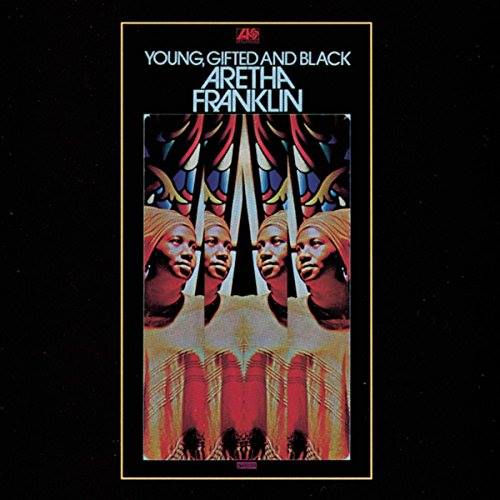
Aretha Franklin - Young, Gifted and Black (1972)

“Young, Gifted and Black” by Aretha Franklin (1972)

Release Date: January 24, 1972
Produced by Tom Dowd, Arif Mardin, Jerry Wexler
Genre: R&B, Soul, Southern Soul
Label: Atlantic
Chart Positions: #11 (US), #53 (Australia)
Certifications: Gold (US)

Singles: “Border Song (Wholly Moses)” #37 (US), #35 (Canada), “Rock Steady” #9 (US), #4 (Canada), #44 (Germany), “Oh Me Oh My (I’m A Fool For You Baby)”(b-side) #73 (US, Canada), “Day Dreaming” #5 (US), #9 (Canada), “All The King’s Horses” #26 (US), #70 (Canada), “April Fools” (b-side)

Young, Gifted and Black is the twentieth studio album by American singer Aretha Franklin, Released on January 24, 1972 by Atlantic Records. The album is Top 10 Gold-certified and won the 1972 Grammy Award for Best Female R&B Vocal Performance of the year. It takes its title from the 1958 Nina Simone song "To Be Young, Gifted and Black."


Aretha Franklin released eleven studio album during the 1970s, “Young, Gifted and Black” was her most successful of the decade as well as producing the most hit singles. In the whole of Aretha’s recorded output, the album remains one of her finest efforts. It was cutting edge for the day with it’s blending of Gospel, jazz, funk and R&B creating a sound and style that rang true to the heart of Black-Oriented Radio of the 70s. But the album struck more than just the BOR listeners. It hit with the hippie movement of the time as well as with the college-age generation. This was an album that spoke to many parts of the American culture. It’s not even so much because the songs are about protest or anguish because it is an album full of love songs, but it was the title of the album that struck a chord in many. Many people of the counter-culture were embracing the thought that being gifted and exceptional belongs to all factions of the US population. The title track says it all with its opening lyrics “To be young, gifted and black. Oh, what a lovely and precious thing.” Nina Simone (who wrote the song) followed that line with her cry to the world, “Open your heart is all I need.” This song was a cry for acceptance and love, pure and simple.

“Young, Gifted and Black” is an album full of highlights. Each song builds upon the previous. Quite honestly an album that merits play from beginning to end. Recorded over a seven-month period in 1970 and 1971, "Young Gifted And Black" captures Aretha Franklin at the peak of her artistic and commercial powers. Aretha Franklin was in her prime here, not only in terms of voice but also in terms of confidence -- you can just feel her exuding her status as the best of the best. The album represented a transitional period for Aretha, she was moving from her 60s R&B style to a more gentle soul sound, one could call her “smooth grooves” period. Earlier diehard fans may not have been keen to the idea initially but soon grew to love the new outlook from Aretha.

The album was like a who’s who of popular R&B, soul, jazz and pop music of the time including such luminaries as Billy Preston, Donny Hathway, Dr. John, Hubert Laws and Eric Gale. Aretha’s sisters Carolyn Franklin and Erma Franklin performed backing vocals for the album.

The first single, which was released a full year and two months before the album was an inspirational cover of Elton John’s “Border Song (Wholly Moses).” Franklin took the song to #37 in the US and #35 in Canada.

The album’s second single “Rock Steady” was originally released in February 1971 on the Criteria record label. It was later re-released in October 1971 on Atlantic Records and became a top ten ht reaching US #9 (as well as #2 on the R&B charts). Aretha Franklin wrote the uptempo funk song which was made all the more poignant with Donny Hathaway's swinging organ. The b-side “Oh Me Oh My (I’m A Fool For You Baby)” charted due to heavy airplay on R&B radio stations and reached #73 on the pop charts and #9 on the R&B charts.

The third single is one that many consider being the album’s highlight, “Day Dreaming,” another Aretha Franklin original composition reached #5 on the US pop chart as well as #1 on the R&B chart. The song achieved a rare feat for Franklin in that it was also a hit on the Easy Listening chart reaching #11. The song sold more than a million copies and was certified Gold by the RIAA (“Rock Steady” was also agold-certifiedd hit). The legendary Natalie Cole recorded “Day Dreaming” and was her last single release before her untimely passing. Corinne Bailey Rae also recorded the song which showed up on her debut album from 2006 as a bonus track.

"Day Dreaming"

The fourth and last single from the album is “All The King’s Horses” another Franklin original composition. This one reached #26 on the pop charts and #7 on the R&B charts. The b-side “April Fools” (A Burt Bacharach/Hal David tune) received a small amount of airplay.

In total five songs from “Young, Gifted and Black” charted on the US singles chart.

Nina Simone and poet Weldon Irvine, who contributed the lyrics, wrote the title track “To Be Young, Gifted and Black”. Simone told Irvine she wanted lyrics that "will make black children all over the world feel good about themselves forever." Franklin never released the song as a single but it did receive it’s fair share of airplay in the early 70s and has become one of Aretha's best known recordings. Aretha started the song out slow with a deliberate pace of a traditional spiritual, and rises to triumphant highs punctuated with dramatic stops and starts. The song is accented in a crescendo of church choir celebration. Aretha knew this song had a meaning deeper than the others on the album. Nina Simone wrote the song based on a stage play named "To Be Young, Gifted and Black," which was written in tribute to Lorraine Hansberry's writing and poetry. Hansberry is best known for her 1957 play "A Raisin in the Sun," the story of a black family living under racial segregation in Chicago that tries to better themselves after an insurance payout following the death of the father.

Franklin’s soulful cover of the Beatles’ “The reinvented Long and Winding Road” features Beatles sideman Billy Preston on the organ. Aretha put a bit of a funk twist to her recording of the Delfonics’ “(Didn’t I) Blow You Mind.”

Aretha Franklin (1972)


ARETHA FRANKLIN

Thursday, May 25, 2017

Weather Report - Tale Spinnin' (1975)

“Tale Spinnin’” by Weather Report (1975)
Release Date: May 1975
Produced by Wayne Shorter, Josef Zawinul
Genre: Jazz Fusion, Jazz, Jazz-Rock
Label: Columbia
Chart Positions: #35 (US), #3 (US Jazz), #12 (US R&B)
Certifications: N/A
Singles: N/A

Tale Spinnin' is the fifth album by Weather Report, recorded and released in 1975, featuring the addition of Leon "Ndugu" Chancler on the drums. Ndugu was recruited after Josef Zawinul heard him play with Carlos Santana. After the record, Ndugu was asked to join the band as a permanent member, but declined in favor of continuing to work with Carlos Santana.


“Tale Spinnin’” finds Weather Report sporting a more Latin-tinged sound with a funk undercurrent. It was the combination of Ndugu on drums and Alphonso Johnson that brought the funk rhythm to “Tale Spininn’” in a way that moved them into a “world” music sound before “world” music was even a genre. But most important in creating this “world” music style was Joe Zawinul’s increased precision in his use of synthesizer and much more pronounced than on previous albums. Zawinul experiments with an array of unusual instruments such as the melodica, which is a handheld keyboard that is played by blowing through a mouthpiece and pressing the keys. He also plays a West African talking drum, a two-headed drum whose pitch can be regulated to mimic the tone and phonics of human speech. Other instruments he introduced to the album are xylophone and cymbals. Finally we have Wayne Shorter whose masterful performance of soprano and tenor saxophone sets the mood and ambiance of the music.

"When it came time to record "Tale Spinnin'," Joe Zawinul commented, "We didn't have a band and we had to make a record." It was a drummer that the band needed. Zawinul and Wayne Shorter rehearsed all the music with a drummer but Zawinul was not happy with the results. Weather Report was in the studio rehearsing while Jean-Luc Ponty was next door recording his album "Upon The Wings of Music." Ndugu Leon Chancler, on hiatus from Santana, was playing drums for Ponty. It was during a break that Zawinul and Shorter asked Chancler if he would like to do a session with them. That session lasted a week. These recordings became "Tale Spinnin'."

Although the album is full of highlights none of the songs were released as singles. Though several did receive airplay on FM album-oriented jazz radio stations in the 70s.

“Between The Thighs” brings the funk out in an enormous way most notably within Shorter’s sax solos bringing on the brass in an urban way as never before heard on a Weather Report album accompanied by Zawinul’s funky keyboard spells and synthesized idiosyncrasies. This is one of the album’s more dramatic entries. “Freezing Fire” continues in the same vein with a more pronounced otherworldly arp synthesizer performance by Joe Zawinul.

The album closes with the mesmerizing ballad “Five Short Stories” in which each note is carefully crafted and precisely communicated with skill and emotion.

The album’s most prominent highlight is “The Man In The Green Shirt,” this song displays the complex compositions that Joe Zawinul is capable of producing. Leon Ndugu Chancler's drum patterns sweep through the album with a quick and steady tempo. Just as impressive is Alphonso Johnson’s amazing bass that rips through the song like the fluttering of a falcon’s wings yet contains a sort of pacifying effect that sends a warm feel to the soul. Driving the song again is Joe Zawinul’s smooth groovin' achievements on the synthesizer, though this time with an even more fascinating and incredible force. The song skyrockets into a stratosphere that takes you beyond the world of music and into a futuristic galaxy of human emotion and comfortable numbness.

On the original LP inner sleeve, Zawinul explained the background behind "The Man In The Green Shirt":
"I was in Saint John in the Virgin Islands on the 4th of July and there was this incredible old man, black and old, the blackest eyes you ever saw. Now everybody was dancing and nobody paid any attention to him; he was wearing a long green shirt. The music was unbelievable-they had the St. Thomas Steel Band, the original one, the best in the world. The man in the green shirt was there, out there dancing by himself, and I've never seen anyone dance like this incredible old black man in my life. It was his age, his maturity, his wisdom."

The Man In The Green Shirt (1975)

Eric Kriss wrote the following review in September 1975 for Down Beat Magazine:
“After several years of experimentation–both successful and unsuccessful–Weather Report has arrived, so to speak, at the crossroads of space conceptualization, a magical point at which all the musicians seem to feel each other without effort. The result is this brilliant album, Tale Spinnin’, a mixture of folk song and sophisticated jazz in a charming, unpretentious synthesis… Most of the compositions, even those written by Zawinul, bear the unmistakable stamp of Shorter’s thinking. Like Shorter’s recent solo release, Native Dancer, the melody lines are crystal clear and seem to be suspended over a canyon of flowing rhythms… I highly recommend this LP, especially to those who haven’t listened to Weather Report lately. My imagination has been captured, and that doesn’t happen often.”

Weather Report (1975)


WEATHER REPORT

Tuesday, May 23, 2017

Bob Dylan - Blood On The Tracks (1975)

“Blood On The Tracks” by Bob Dylan (1975)

Release Date: January 17, 1975
Produced by Bob Dylan
Genre: Folk Rock, Classic Rock
Label: Columbia
Chart Positions: #1 (US, Canada, New Zealand), #2 (Norway), #4 (UK, Australia), #5 (Netherlands), #35 (Japan), #45 (Germany), #54 (Ireland)
Certifications: 2xPlatinum (US), Platinum (UK, Canada)

Singles: “Tangled Up In Blue” #31 (US)

Blood on the Tracks is the fifteenth studio album by American singer-songwriter Bob Dylan, released on January 20, 1975 by Columbia Records. The album marked Dylan's return to Columbia Records after a two-album stint with Asylum Records. Dylan began recording the album in New York City in September 1974. In December, shortly before Columbia was due to release the record, Dylan abruptly re-recorded much of the material in a studio in Minneapolis. The final album contains five tracks from New York and five from Minneapolis.


In a 1975 radio discussion with Mary Travers, Bob Dylan stated that “Blood On The Tracks” was a personally painful work. He has claimed it was not autobiographical yet many of the songs seem to mirror what he was experiencing during the break-up of his marriage.

“Blood On The Tracks” is one of Dylan’s best selling albums having reached #1 in the US, Canada and New Zealand. The album reached #2 in Norway as well as #4 in the UK and Australia.

Initially, Dylan considered recording Blood on the Tracks with an electric backing group, and contacted Mike Bloomfield who had played lead guitar on Dylan's Highway 61 Revisited album. When the two met, Dylan ran through the songs he was planning to record, but he played them too quickly for Bloomfield to learn. In the end, Dylan rejected the idea of recording the album with a band, and instead substituted stripped-down acoustic arrangements for all of his songs.

Dylan had finished recording and mixing, and, by November, had cut a test pressing on the album. Columbia began to prepare to release the album before Christmas.

Dylan played the test pressing for his brother, David Zimmerman, who persuaded Dylan the album would not sell because the overall sound was too stark. Robert Christgau also heard the early version of the album and called it "a sellout to the memory of Dylan's pre-electric period". At his brother's urging, Dylan agreed to re-record five of the album's songs in Sound 80 in Minneapolis, with backing musicians recruited by David. The new takes were accomplished in two days at the end of December 1974. Blood on the Tracks was released into stores on January 20, 1975.

While recording the album Dylan kept a tiny notebook in which he worked out lyrics and other aspects of the songs that became the album "Blood On The Tracks." This notebook and others numbering up to around 6,000 pieces have been kept in a secret archive for several decades. He sold this archive for $20 million in 2016.

“Tangled Up In Blue,” the albums only single release, was a minor hit reaching #31 in the US but failed to chart anywhere else. The Telegraph has described the song as "The most dazzling lyric ever written, an abstract narrative of relationships told in an amorphous blend of first and third person, rolling past, present and future together, spilling out in tripping cadences and audacious internal rhymes, ripe with sharply turned images and observations and filled with a painfully desperate longing."

During the song Dylan sings "some are carpenter's wives," which was a reference to Laura Nyro. NYro had been part of the New York music scene in the late 1960s and was very much inspired by Dylan. You may remember some of the hits she wrote such as "Wedding Bell Blues" and "Stoned Soul Picnic" (both hits for The Fifth Dimension), "And When I Die" (Blood Sweat and Tears, "Eli's Coming" (Three Dog Night) and "Stoney End" (Barbra Streisand).

The sixth verse, which begins: "I lived with them on Montague Street," is a direct reference to John Lennon. Lennon had moved into Ringo Starr's Montague Square apartment in 1968 (with Yoko) after Cynthia kicked him out.

Dylan wrote "Tangled Up In Blue" in the summer of 1974 at a farm he had just bought in Minnesota. He had been touring with The Band earlier that year. Dylan sometimes introduced this on stage by saying it took "10 years to live and 2 years to write." Dylan said he wrote this song after spending an entire weekend mesmerized by Joni Mitchell's album "Blue."

"Tangled Up In Blue"

Album highlight “Shelter From The Storm” has been covered by several musicians through the decades. Dylan got the title from a line in Creedence Clearwater Revival's "Who'll Stop The Rain?": "I went down Virginia, seekin' shelter from the storm..."

In his April 1975 review for The New Republic J.T. Lhamon Jr writes, "The last verse of the last song on the album describes how the performer finds his highest art by attending to himself in order to attend to others: 'Life is sad, life is a bust / All you can do is what you must / You do what you must do and you do it well / I do it for you, ah honeybaby, can't you tell?' And that's it right there: that immediate consistent and thorough involvement with an audience both characterizes rock as the primary popular form of our time and determines it's promising esthetic."

Bob Dylan (1975)


BOB DYLAN